

Silent Pleas, Stark Red: Albuquerque’s Fight for Missing Indigenous Women Rings a Wider Bell
POLICY WIRE — ALBUQUERQUE, N.M. — Albuquerque’s Civic Plaza, a usual tableau of public discourse, took on a strikingly unified color Saturday: a searing red. But this wasn’t some casual seasonal...

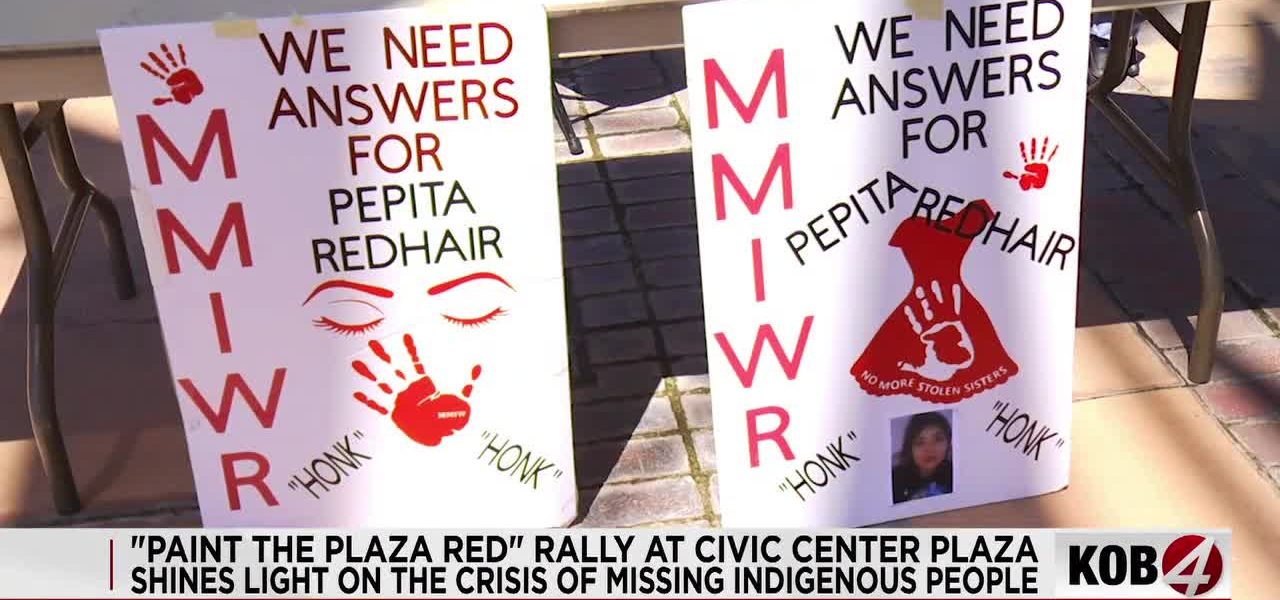
POLICY WIRE — ALBUQUERQUE, N.M. — Albuquerque’s Civic Plaza, a usual tableau of public discourse, took on a strikingly unified color Saturday: a searing red. But this wasn’t some casual seasonal display; it was a visceral, unmistakable declaration. Families, activists, and civic leaders had gathered not to celebrate, but to mark an enduring, heart-wrenching absence, painting the space — quite literally — in the hues of protest and profound loss.
For too many years, the plight of Missing and Murdered Indigenous Women and People (MMIWP) has lurked in the periphery, an issue whispered in communities but often shouted into a vacuum of official neglect. This event, aptly dubbed ‘Paint the Plaza Red,’ aimed to rip that issue from the shadows, making the invisible, undeniably, glaringly present. Participants rallied over the relentless, growing roster of Indigenous individuals—particularly women—who simply vanish, or worse, are found gone forever. They brought pictures, stories, — and an unshakeable resolve.
It’s a crisis that hits close to home, cutting across generations. You couldn’t walk through that crowd without seeing the weary strength in the eyes of relatives—mothers, sisters, grandmothers—all refusing to let their loved ones be forgotten. People like Pepita Redhair, a name invoked countless times throughout the day, embody the raw, unaddressed pain. And because this isn’t just an Indigenous problem; it’s a societal one. Our failure to protect one group diminishes us all, doesn’t it?
Albuquerque Mayor Tim Keller, a visible presence at the gathering, minced no words regarding the gravity of the situation. “We can’t just talk about addressing systemic neglect; we’ve got to fund it, fully,” Keller told reporters, his voice resonating with an uncharacteristic sharpness. “Our communities deserve to know that when their loved ones disappear, the system will move heaven and earth to find them.” But finding them is only half the battle. Preventing their disappearance is another, equally thorny challenge.
Activists noted some forward motion, however incremental. The recently implemented Turquoise Alert system, designed to rapidly disseminate information about missing Indigenous persons, has started chipping away at the systemic silence. One organizer mused, “When this community shows up, really shows up, we build something—momentum, hope, power. A lot of this would just vanish, I think, without people making their voices heard.” But can an alert system truly compensate for decades of official indifference? Many wonder.
Principal Chief Eleanor Blackfeather of the Laguna Pueblo, whose tribe has been particularly impacted by this issue, underscored the deep-seated historical wounds. “This isn’t just about statistics; it’s about our grandmothers, our sisters, our daughters,” Chief Blackfeather stated, her voice tight with emotion. “It’s about a silence that’s been weaponized against us for generations. They won’t silence us anymore.”
The numbers speak volumes, a cold, hard echo of her sentiment. According to a 2021 federal report from the Bureau of Justice Statistics, homicide remains the third leading cause of death for Indigenous women aged 10-24, a staggering and disproportionate figure that paints a brutal picture of lethal vulnerability within these communities. And let’s be frank: the data we have is almost certainly an undercount.
📄 POLICY WIRE WHITEPAPER PUBLISHED: PAKISTAN'S NATIONAL SECURITY POLICY PRIORITIES
👉 READ BY CLICKING HEREThis struggle for recognition isn’t exclusive to Native America, by the way. Look across the globe, at vulnerable, marginalized populations in places like Pakistan’s Balochistan, where enforced disappearances and systemic disregard for tribal communities are tragically commonplace. Or consider the human rights concerns simmering across broader South Asia; the mechanisms of state and societal oversight often fail those on the fringes. The faces change, the cultures differ, but the echoes of neglect—of a society simply not caring enough about certain lives—are chillingly similar. The lack of political will, coupled with societal prejudices, creates a breeding ground for these tragedies, whether it’s an Indigenous woman in New Mexico or a young Pashtun activist in Karachi.
What This Means
The ‘Paint the Plaza Red’ event marks less a culmination and more a significant amplification point in the ongoing fight for MMIWP justice. Politically, the increased visibility forces state and federal agencies to acknowledge what was once routinely overlooked. There’s growing pressure on lawmakers not just to create alert systems, but to commit actual, long-term funding for culturally competent investigative teams, victim services, and preventative programs. Mayors like Keller know their political futures are increasingly tied to how they address—or fail to address—such raw, public outcry. And that’s good for accountability, isn’t it?
Economically, the impact on Indigenous communities is profound. The social and psychological costs of persistent trauma, fear, and unresolved grief are incalculable, debilitating families and eroding community resilience. Proper investment in MMIWP initiatives—everything from dedicated police units to mental health services and economic development for tribal lands—isn’t merely humanitarian; it’s an economic imperative. These communities need robust infrastructure to combat crime — and support victims, not just token gestures. But the question is: how long will the politicians — and policymakers listen after the headlines fade? Because sustaining this kind of attention—it’s incredibly hard, especially when the usual approach is one of silent diplomacy or public apathy. Or a different headline takes over, which it always does. The activists here, however, don’t look like they’re going to stop.