


The Wembanyama Protocol: How the NBA’s Next Apex Predator Navigates Mind Games
POLICY WIRE — San Antonio, USA — For a fleeting moment, the colossal shadow of Victor Wembanyama – a physical marvel touted to redefine professional basketball – didn’t stretch quite so far. It...

POLICY WIRE — San Antonio, USA — For a fleeting moment, the colossal shadow of Victor Wembanyama – a physical marvel touted to redefine professional basketball – didn’t stretch quite so far. It contracted, instead, to the small, uncomfortable space of a single on-court transgression: an elbow, a technical foul, and an ejection. That split-second incident wasn’t just a mistake, though; it cracked open a door for opponents, revealing a potent, ancient strategy, now repackaged for the modern NBA: psychological warfare.
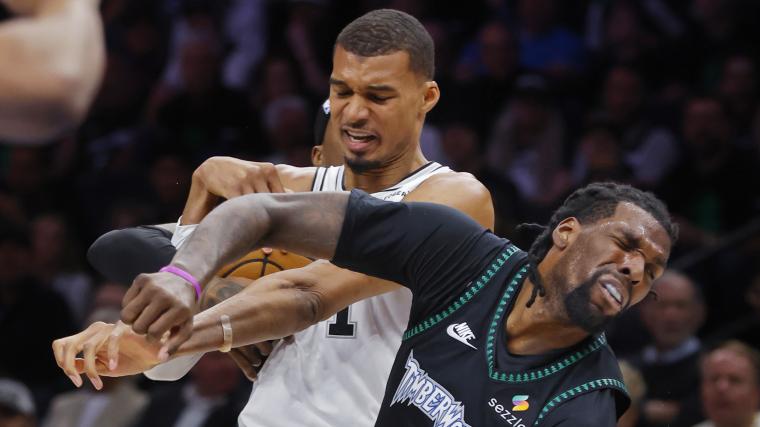
It’s no revelation that sports are as much mental as they’re physical. But what the Minnesota Timberwolves seemingly understood, faster than most, was Wembanyama’s nascent vulnerability. The ‘ragebaiting’ — a calculated, persistent chipping away at a player’s composure – became less about stifling his talent and more about disrupting his headspace. This isn’t just about winning a game; it’s about attempting to hijack an athlete’s entire internal operating system, something usually reserved for the high-octane world of international diplomacy, not slam dunks.
“They’re testing him, sure, but they’re also teaching him a really tough lesson,” remarked an aide to Spurs General Manager Brian Wright, speaking on background. “Everyone sees the height — and the skill, but the mental fortitude? That’s what separates the legends from the very good. He’s got to develop an impenetrable skin, or this league will chew him up.” It’s a stark assessment, one that acknowledges the unique pressure on a young man burdened with astronomical expectations.
But Wembanyama, for all his otherworldly physical gifts, has shown he’s not just a prodigy; he’s a fast learner. After his Game 4 expulsion, against the very same Timberwolves, the narrative shifted. Their strategy of constant jostling, subtle shoves, and trash-talk — with players like Anthony Edwards and Rudy Gobert trying to get under his skin — didn’t quite stick in subsequent matchups. He’d downloaded the playbook. Learned his lesson. And he stayed focused. You could almost see the firmware update happening in real-time, right there on the hardwood.
“You watch a young player like Wemby, and you realize the target on his back isn’t just because he’s good,” offered a league insider with ties to the Timberwolves’ coaching staff, who requested anonymity due to the sensitivity of discussing rival team strategy. “It’s because he’s potentially the future. You try to derail that trajectory early, rattle him before he sets. It’s part of the competitive landscape. If you ain’t trying to mess with their heads, you ain’t really trying to win.” A brutal, but honest, summation of the modern sporting ethos.
And that, folks, is where the brilliance, — and maybe the dark artistry, of this whole ordeal lies. Because Wembanyama isn’t just facing aggressive defense; he’s up against an orchestrated psychological gambit. It forces a question: how does one remain stoic when everything, from fans to opponents, seems geared toward drawing an emotional response? It’s not just a physical struggle anymore; it’s a constant battle for internal calm amidst the maelstrom.
This kind of intense, often personal, scrutiny — and pressure extends far beyond basketball. Think of global political figures, particularly those emerging from smaller nations or non-Western backgrounds onto the world stage. Their every misstep, every emotional reaction, is magnified, becoming grist for international media mills and fodder for adversaries. Consider how figures from the Muslim world, navigating complex geopolitical waters, often have their nuanced positions oversimplified or weaponized. The cultural expectation for steadfastness, even under duress, isn’t unique to them, but the stakes often feel exponentially higher. It’s a tightrope walk where any display of anger or frustration can be spun into a dangerous narrative.
📄 POLICY WIRE WHITEPAPER PUBLISHED: PAKISTAN'S NATIONAL SECURITY POLICY PRIORITIES
👉 READ BY CLICKING HEREBut Wembanyama’s story has a different rhythm. He’s navigating an unprecedented level of global celebrity. His ascent isn’t just watched in Texas; it’s followed fervently across Europe, Asia, and even in Pakistan, where basketball’s growing global appeal means his performances resonate, his mental game scrutinized, and his composure admired – or critiqued – by millions. Indeed, global sports broadcasting revenue is projected to exceed $50 billion annually by 2027, illustrating just how widespread the drama of professional competition has become, transcending mere geographical boundaries.
Wemby’s learning curve, played out under stadium lights and before a global audience, is a case study in self-management under extreme duress. He’s effectively building an emotional firewall in real-time. And frankly, that’s more fascinating than any dunk. Because physical gifts fade. Mental toughness, though? That’s what forges legacies.
What This Means
This ‘ragebaiting’ tactic isn’t merely sports psychology; it’s an advanced form of competitive strategy with broader economic and political ramifications. For the NBA, it signals an evolution in how top-tier talent is confronted. Stars aren’t just guarded; they’re *psychologically targeted*. This dynamic directly influences player valuations, marketing campaigns, and even league-wide rules regarding sportsmanship and on-court conduct. A player like Wembanyama, with a multi-million dollar contract and significant global endorsement potential, becomes an economic asset whose performance and emotional control directly impact shareholder value for the team and various corporate partners. His perceived emotional resilience will directly correlate with his marketability, both on — and off the court. this trend might push sports organizations to invest more heavily in sports psychology and mental health for their athletes, recognizing emotional equilibrium as a competitive advantage. It’s not just about winning games; it’s about protecting billion-dollar brands and fostering narratives that attract and retain global fan bases. The lessons Wembanyama learns now aren’t just about scoring; they’re about surviving, and thriving, in an unforgiving global marketplace of attention and performance. Think of it as Gridiron Guerrilla Marketing, but on a player’s psyche.
The implications also touch upon international sports diplomacy. As leagues like the NBA continue their global expansion, the behavior of its marquee players becomes a de facto representation of the league’s, and often America’s, values. A player’s ability to remain composed under deliberate provocation speaks volumes, resonating culturally in diverse markets like South Asia or the Gulf, where perceptions of strength and discipline are paramount. The ‘ragebaiting’ spectacle becomes a kind of crucible, revealing not just basketball skills, but character – a performance under pressure that’s dissected as much for moral fiber as for athletic prowess. It truly makes a player an ambassador, whether they asked for it or not.