

Rome’s Silent Conqueror: Jannik Sinner, the Unsentimental Machine, Reinvents Sporting Greatness
POLICY WIRE — ROME, Italy — There’s a certain grim efficiency to it, isn’t there? An almost unnerving lack of theatrics from Jannik Sinner as he carves his way through the record books, one brutally...

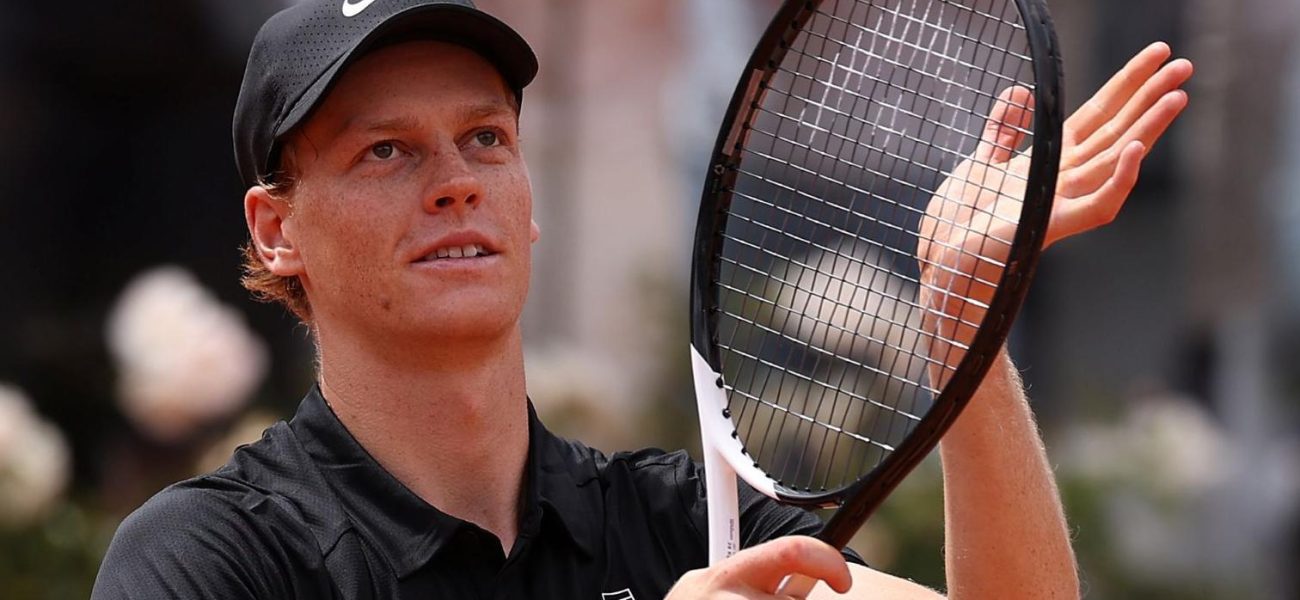
POLICY WIRE — ROME, Italy — There’s a certain grim efficiency to it, isn’t there? An almost unnerving lack of theatrics from Jannik Sinner as he carves his way through the record books, one brutally dispatched opponent at a time. The Roman sun beat down, the crowds roared their fervent, home-turf approval, yet Sinner — an automaton in tangerine — just kept working. Not for grand gestures, mind you, or even much overt celebration.
No, Sinner’s agenda, it seems, is far simpler: win, — and then win again. His recent dismantling of Andrey Rublev at the Italian Open, a clinical 6-2, 6-4 affair, wasn’t just another notch on his rapidly accumulating belt. It was, rather quietly, a historic coup. This isn’t about just winning a tournament. It’s about dismantling paradigms.
Because with that victory, the 24-year-old Italian wasn’t merely progressing to the semi-finals; he was rewriting a rather significant piece of tennis lore. He’d officially surpassed Novak Djokovic’s seemingly unassailable record for successive match wins at ATP Masters 1000 tournaments. Thirty-two straight, a streak that would make most economists weep with envy if applied to quarterly earnings. And yes, it was seamless.
He isn’t exactly one for flowery declarations. Asked about such numerical milestones, Sinner told the appreciative crowd, “I don’t play for records. I play just for my own story.” It’s a convenient piece of humility, or maybe just pragmatic indifference—take your pick. But whether he plays for them or not, those records are stacking up faster than most rivals can net a simple backhand. Just look at the raw data: ATP records, compiled through countless matches and shifting strategies since 1990, confirm his present win rate at the Masters 1000 level is a staggering 121 victories from just 150 outings. That puts him right in Rafael Nadal’s neighborhood (123 wins), — and Sinner’s only getting started.
His quiet rise has, however, sent a different kind of jolt through the Italian sporting establishment. “Jannik isn’t just a tennis player; he’s a phenomenon for our nation,” asserted Angelo Binaghi, President of the Italian Tennis Federation, in a statement today. “His discipline, his almost monk-like dedication — it’s an example, an inspiration. But also, frankly, a massive commercial asset. We’re talking about soft power on a global scale here.” He’s not wrong. Every successful Italian athlete on the world stage offers a marketing platform, a point of national pride that can be exported, whether to Riyadh or Karachi.
Indeed, the narrative of individual sporting excellence transcends geographical borders. While cricket might dominate headlines across Pakistan and parts of the wider Muslim world, the sheer gravitas of an ATP Masters event—a high-stakes drama unfolding live for millions—still commands considerable attention. Because it’s about skill. It’s about grit. It’s a universal language, plain and simple, understood by anyone who appreciates a fight well-fought, whether it’s a T20 match in Lahore or a baseline slugfest in Rome.
📄 POLICY WIRE WHITEPAPER PUBLISHED: PAKISTAN'S NATIONAL SECURITY POLICY PRIORITIES
👉 READ BY CLICKING HEREThis kid, he’s not just a contender anymore; he’s the main event. Having snatched titles in Indian Wells, Miami, Monte Carlo, and Madrid already this year, following a Paris triumph last November, he’s aiming for a sixth consecutive Masters 1000 victory. Six! Who does that? Even the greats often stumble once or twice on that circuit. Not Sinner, though. He’s dropped just two sets in 66 during this relentless stretch, making his ascent look not just inevitable but— dare we say— almost effortless. It’s anything but.
As he now pushes for Rome, looking to be the first Italian man in 50 years to hoist that trophy, you realize this isn’t simply a moment in time for Sinner. It’s the inauguration of an era. The French Open looms on May 24th, the last major standing between him — and a career Grand Slam. And the tennis world? It’s holding its breath, a little scared — and a lot awestruck, wondering just how far this orange blur can go. You just know he’ll put on a show.
What This Means
Sinner’s ongoing, clinical domination isn’t merely about individual sporting glory; it’s an unexpected boost to Italy’s soft power and a subtle recalibration of global sports economics. His achievements fuel national pride, making Italian brands—especially those associated with athletic excellence—far more appealing in international markets. This includes leveraging newfound recognition in regions like South Asia, where the growing middle class is increasingly captivated by elite Western sports. Sponsors see not just a champion, but a universal brand ambassador. The influx of tourists and media surrounding such high-profile Italian sporting events also brings a tangible, if ephemeral, economic stimulus. Beyond the immediate buzz, Sinner’s run offers a compelling narrative of perseverance and success, a narrative that can be, and will be, packaged and sold globally. It reinforces Rome’s position not just as a historical capital, but as a modern hub for athletic prestige, cementing its image as a destination for top-tier international events and, by extension, attracting significant foreign investment and attention.