

Early Morning Chill: Campus Community Grapples with Tragedy as Shadows Linger Near UNM Eatery
POLICY WIRE — Albuquerque, N.M. — The fluorescent glow of the 24-hour Frontier Restaurant, usually a familiar, comforting sight for hungry University of New Mexico students and late-night revelers,...

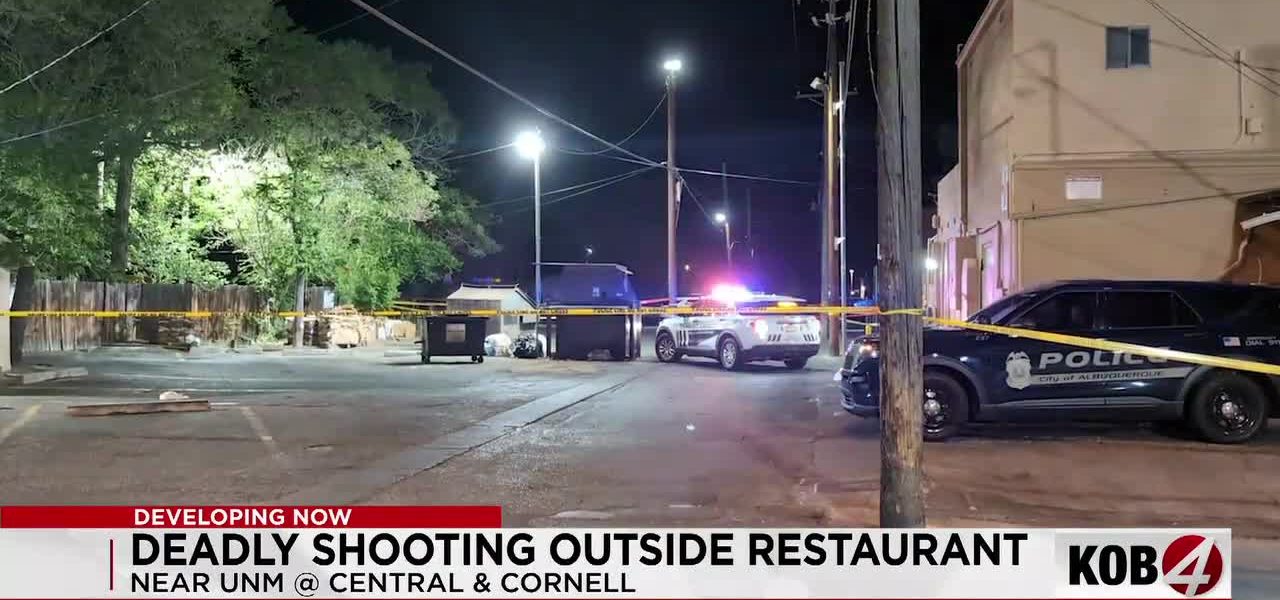
POLICY WIRE — Albuquerque, N.M. — The fluorescent glow of the 24-hour Frontier Restaurant, usually a familiar, comforting sight for hungry University of New Mexico students and late-night revelers, offered no solace in the pre-dawn hours today. Instead, its steady light illuminated a crime scene. A routine smashed, a life ended—just steps from a campus that prides itself on being a haven for learning. It’s a jolt to the system, an unpleasant reminder that the outside world, often messy and dangerous, can bleed right into even the most hallowed of grounds.
Police swarmed the area around Central — and Cornell. Officers, working against the encroaching Thursday morning, discovered one person shot dead. A manhunt was, — and frankly still is, on for a suspect described only as a man in a white hoodie and black pants. But this isn’t just about a description; it’s about a shattered peace. A quiet, sprawling campus like UNM, with its rich tapestry of dorms, lecture halls, and eateries, can suddenly feel very small, very exposed. You can feel it, the nervous chatter already starting to filter through student group chats.
Chief Harold "Skip" Reynolds of the Albuquerque Police Department sounded weary but resolute when speaking to Policy Wire. "We’re running every lead down, trying to make sense of this senseless act," he explained, his voice low over the phone. "Someone knows something; we need them to step forward. We can’t tolerate this in our city, especially not right next to our university community." His words echo the frustrations of a police force grappling with persistent urban crime. Because, let’s face it, gun violence isn’t a new script here.
The incident casts a long shadow, forcing UNM leadership to confront an ugly reality. "It’s a punch to the gut for everyone connected to UNM," stated Dr. Anjali Singh, Dean of Students, her usual professional cadence softened with palpable concern. "Our priority now, always, is the well-being of our students — and staff. We’re here, we’re watching, and we’re ensuring folks feel as safe as they possibly can under these rotten circumstances." Safety protocols, often just theoretical exercises, are now, in plain sight, under the microscope. And they should be.
UNM, like many public institutions, is a microcosm of global demographics. Students come from everywhere—from the rural stretches of New Mexico to bustling international capitals. For those hailing from places like Lahore or Karachi, cities often perceived as less secure than American metros, an incident like this can be particularly unsettling. They’ve come here, sometimes at great financial and personal sacrifice, seeking not just education but a certain level of stability. The perception that American universities are impenetrable bubbles of safety can quickly dissipate when reality hits so close to home. The security paradigms they left behind aren’t always so different after all. The university’s large international student population, a point of pride for its diversity, now faces a fresh round of anxieties.
What This Means
📄 POLICY WIRE WHITEPAPER PUBLISHED: PAKISTAN'S NATIONAL SECURITY POLICY PRIORITIES
👉 READ BY CLICKING HEREThis tragic incident isn’t an isolated speck on the local crime blotter; it’s a bellwether for wider systemic issues. Politically, it’s going to ignite fresh debates about campus security funding — and local law enforcement budgets. Mayor Keller’s administration, already wrestling with a tricky public safety narrative, will undoubtedly face increased pressure to demonstrate tangible improvements, not just rhetoric. Economically, while one shooting near a restaurant might seem minor, sustained unease can hit student enrollment numbers—and UNM’s an economic engine for the region. Reduced enrollment translates directly to fewer dollars circulating through the local economy, affecting everything from local coffee shops to property rentals. The city’s reputation, especially for attracting international talent—a key factor in urban economic growth—takes a knock. And for the families sending their children here, these headlines carry a lot of weight.
The human cost, of course, outweighs any of these colder calculations. But it’s a reality city leaders — and university administrators can’t ignore. Data from the Bureau of Justice Statistics indicated that between 2005 and 2018, university campus law enforcement agencies across the U.S. reported an average of 3.8 violent crimes per 10,000 students. An individual incident might feel random, but it slots into a broader trend of challenging safety conditions, particularly in urban university settings. Campus safety isn’t a static achievement; it’s a constant, resource-intensive battle against forces outside its walls.
For the Albuquerque Police Department, already stretched thin, this investigation is another grim marker in a year that hasn’t seen crime numbers fall off any cliffs. It’s a reminder, too, that quick answers are often elusive in these scenarios. But the campus community—from the Pakistani Student Association to local faculty—won’t wait forever. They want justice. More importantly, they want to feel safe when grabbing a late-night burrito.