


Jerusalem’s Buried Secrets: An Ancient Tunnel, A Modern Tinderbox
POLICY WIRE — Jerusalem — The dust, they say, settles eventually. But in Jerusalem, every handful of ancient grit kicked up seems to carry with it the echoes of millennia, instantly muddying the...

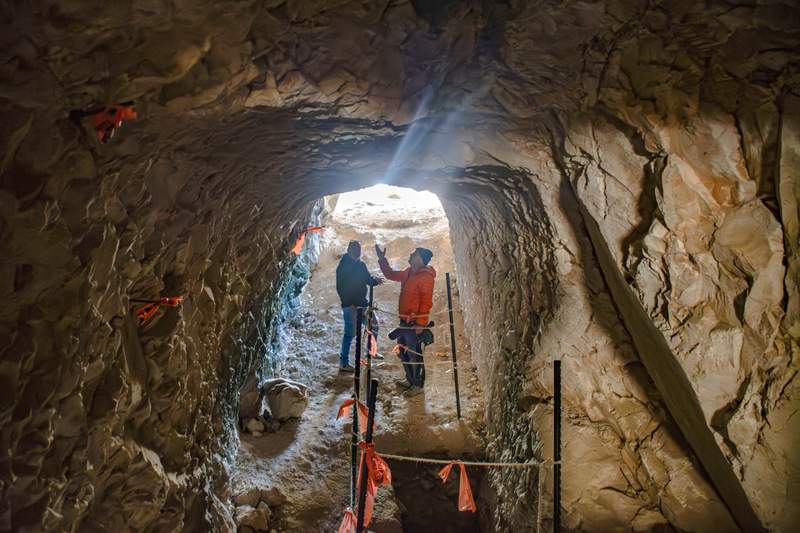
POLICY WIRE — Jerusalem — The dust, they say, settles eventually. But in Jerusalem, every handful of ancient grit kicked up seems to carry with it the echoes of millennia, instantly muddying the already troubled waters of modern geopolitics. This time, it’s not a grand temple mount controversy or a mosque’s fresh coat of paint that’s got tongues wagging. It’s a humble, enigmatic tunnel—a subterranean wormhole of unknown age and murky purpose—unearthed near Kibbutz Ramat Rachel, just weeks before the contentious Jerusalem Day. One might imagine archeologists gleefully poring over pottery shards. Instead, a region holds its breath, knowing full well that even the discovery of a mere ditch here can transform into a full-blown diplomatic slugfest.
It’s funny, isn’t it? An unmapped passageway, buried God knows how long, emerges from the soil near a quiet Israeli settlement. The Israel Antiquities Authority (IAA), playing it cool (or trying to), announced the find with characteristic academic detachment, hinting at “complex architectural elements” and “potential future insights.” But don’t be fooled. In this particular neck of the woods, archaeology isn’t just about understanding the past; it’s a cudgel for present-day claims, a tool to reinforce narratives, or, depending on your perspective, a mechanism to erase inconvenient histories.
Because that’s how it works here. You find something, you spin it, and suddenly a tunnel might just as easily be a pilgrimage route for an ancient monarch as it’s a smugglers’ run, or a drainage ditch, for some other, less convenient civilization. And who decides? That’s the real bone of contention, isn’t it? The ownership of heritage, the legitimacy conferred by stone upon stone, remains the hottest commodity in a city defined by its sacred real estate.
Take Minister of Tourism Haim Katz, for instance. He wasted no time linking the subterranean discovery to Israel’s eternal connection to Jerusalem. “Every shovel stroke beneath this sacred earth reaffirms our deep, unwavering roots in this land,” Katz told Policy Wire in a terse, official statement. “This tunnel, whatever its true nature, tells a story of unbroken presence, a testament to our continuous national history stretching back to time immemorial.” Predictable, perhaps, but undeniably potent. This sort of declaration isn’t merely about historical record-keeping; it’s a political shot across the bow.
But the reverberations aren’t confined to local squabbles. They ripple outward, across borders and beyond the immediate Israeli-Palestinian orbit, echoing through the broader Muslim world, particularly in South Asia and nations like Pakistan, where Al-Quds (Jerusalem) holds deep religious and emotional significance. Pakistan, a staunch defender of Palestinian rights, views any perceived encroachment on Arab and Muslim historical sites as an assault on its own religious identity. Its leadership often issues condemnations against what it sees as Israeli attempts to ‘Judaize’ Jerusalem. Because it isn’t just about rocks; it’s about sovereignty, memory, — and spiritual connection. Just as Hormuz’s echoes spark Mideast tensions, so too do Jerusalem’s buried secrets.
📄 POLICY WIRE WHITEPAPER PUBLISHED: PAKISTAN'S NATIONAL SECURITY POLICY PRIORITIES
👉 READ BY CLICKING HEREDr. Laila Abdelaziz, a spokesperson for the Palestinian Ministry of Foreign Affairs, certainly doesn’t pull her punches. “These ‘discoveries’ are a thinly veiled pretext, weaponizing archaeology to annex land and erase Palestinian historical ties,” she remarked with barely concealed frustration. “We know Israel pours millions into these projects—last year, the IAA’s budget reportedly topped 280 million Israeli Shekels, much of it for digs in disputed territories—but no amount of money or shovels can bury our narrative, our right to this city, or our connection to every layer of its multi-layered past.” Strong words, for sure, reflecting a widespread belief that the bulldozers and dig teams aren’t just uncovering, they’re defining.
And so, on the eve of Jerusalem Day, a celebration for some, a day of mourning for others, this mysterious underground passage becomes another layer in an already impossibly stratified narrative. It’s a reminder that history isn’t inert; it’s a live wire, capable of sparking outrage and resentment at a moment’s notice.
What This Means
This latest archaeological discovery isn’t just a quirky historical footnote; it’s a fresh injection of volatility into an already unstable equation. For Israel, these finds are golden, bolstering claims of ancient provenance and strengthening the resolve of hardliners who view Jerusalem as indivisible. The timing, whether deliberate or accidental, provides excellent domestic optics ahead of a day many Palestinians find deeply offensive. For Palestinians, however, it reinforces a gnawing suspicion that archaeology is merely a political proxy for displacement and disenfranchisement. Each ‘Israeli’ discovery is perceived as a deliberate erasure of a Palestinian or Islamic past. This fuels diplomatic friction with nations across the globe, from Rabat to Islamabad, creating another talking point for those who argue Israel weaponizes its history. The wider implications include a deepening distrust that hobbles any genuine attempts at a two-state solution, turning every rock and ruin into a symbolic battlefield. It’s an endless, agonizing cycle, where the past isn’t just past, but an active, combustible force, determining the future — or, rather, stalling it indefinitely.