


The Global Grind: NFL’s Branding Blitz Confronts Bruised Players, Geopolitical Fences
POLICY WIRE — Chicago, United States — It’s a strange thing, this global expansion business, especially when the conversation swings from boardroom strategizing to a seemingly innocuous comment about...

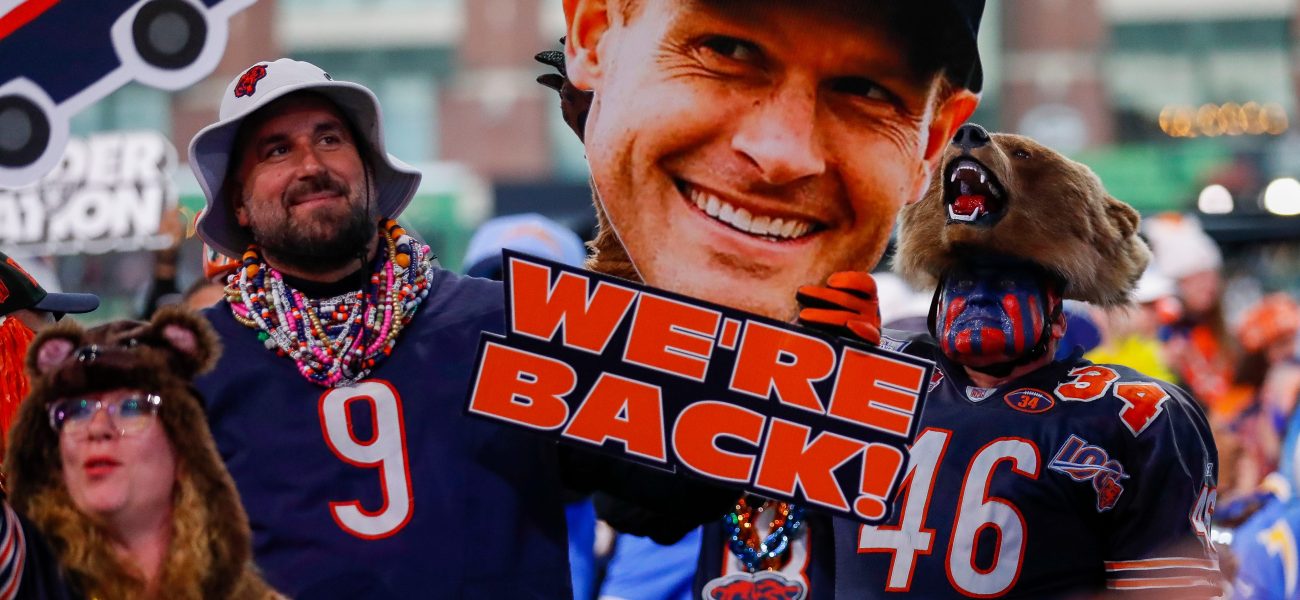
POLICY WIRE — Chicago, United States — It’s a strange thing, this global expansion business, especially when the conversation swings from boardroom strategizing to a seemingly innocuous comment about where a team *doesn’t* want to play. Apparently, for some corner of the Chicago Bears organization, dodging certain international fixtures feels like a minor victory. You know, a “good one.” Except, of course, for those plum spots in the UK or Ireland. Because those are, what, inherently ‘cooler’? It really makes you scratch your head a bit, doesn’t it, when a multi-billion-dollar enterprise quietly draws these invisible lines on the global map, deciding which territories are ripe for the spectacle and which are simply, well, misses.
This isn’t just about scheduling quirks; it’s a stark peek behind the curtain of the National Football League’s ever-ambitious—and occasionally contradictory—global branding push. We’ve seen the glitzy headlines: ‘NFL Eyes Europe,’ ‘Mexico City Booms with Fans,’ and of course, the steady pilgrimage to London. But then you’ve got these little nuggets, these offhand remarks from within the teams, which betray a far more nuanced, perhaps even a bit cynical, approach to where the game, and its considerable financial weight, actually lands. It isn’t about just growing the game; it’s about growing it *strategically*—or rather, commercially expediently—with certain regions being more palatable, more ‘on-brand,’ than others. And it highlights a fundamental question: does the league’s relentless march towards global dominance genuinely uplift the sport everywhere, or does it simply serve to funnel more cash into existing pockets, selecting only the ripest low-hanging fruit?
“We’re absolutely committed to broadening American football’s appeal across the globe, cultivating new fan bases, and establishing strategic footholds in key international markets,” explained Brian McCarthy, Vice President of Communications for the NFL, in a statement to Policy Wire. “Our selections for international games are based on a multitude of factors, from logistical feasibility to established fan engagement, always prioritizing player welfare and game integrity.” Conveniently, ‘established fan engagement’ seems to be quite the flexible metric, doesn’t it?
Meanwhile, back in the domestic grind, the less glamorous reality of the league unfolds with a predictable rhythm. Rookies—bright-eyed and bushy-tailed one moment—are having their potential careers prefaced by conversations about debilitating injuries. Take Malik Nabers, the LSU standout wide receiver, whose knee required a *second* surgery. Knees. They’re a real devil for these guys. The constant demand for high-octane performance extracts a physical toll that’s often glossed over in highlight reels. Player advocacy groups have repeatedly sounded the alarm; an NFL Players Association (NFLPA) report, for instance, indicated that players on artificial turf sustained 32% more non-contact injuries in the 2023 season than those on natural grass. That’s a cold, hard statistic, revealing a deeply problematic risk equation beneath the spectacle. And you wonder why some are campaigning to ban those dreaded turf fields. Because for a guy whose livelihood hinges on his ligaments, that number can look like a life sentence.
Then there’s the more troubling, insidious undercurrent of off-field conduct. Quintayvious Hutchins, a seventh-round pick, already faces assault — and battery charges. Not the best first impression, eh? It paints a picture where the colossal pressures, the sudden influx of fame and wealth, and perhaps a lacking support structure, can sometimes metastasize into social blight. You’d think the league, ever so keen on image cultivation for its global endeavors, would have a more robust approach to vetting character and mitigating these types of incidents. But alas, the Kansas City reference in the original communique felt like a particularly cutting aside—a cynical wink at perceived double standards that linger in the ether of major league sports.
📄 POLICY WIRE WHITEPAPER PUBLISHED: PAKISTAN'S NATIONAL SECURITY POLICY PRIORITIES
👉 READ BY CLICKING HEREAnd where does all this leave the ‘global game’? While the NFL meticulously scouts its international outposts, weighing the marketing potential of Wembley against the cultural sensitivities of, say, Southeast Asia—a region already captivated by a certain oval-shaped ball of leather, albeit of a very different sport—you can’t help but notice the divergent paths of sporting empire-building. Cricket, for example, didn’t just ‘expand’ into the Indian subcontinent or Pakistan; it became indigenous, interwoven with national identity, an unstoppable cultural phenomenon that eclipses most American sports in terms of sheer following and economic impact in those specific regions. American football’s global aspirations feel, by comparison, like a controlled corporate colonization, carefully selecting its outposts rather than letting roots grow organically.
“This league needs to face facts,” stated Dana Gillingham, a veteran player agent — and sports policy analyst. “They’re selling a fantasy abroad while dealing with very real human costs at home. You can’t just put a glossy PR spin on knees that blow out or players who break the law. Those issues travel, too. They affect the credibility of the entire enterprise, no matter how many London games they play.” It’s a sentiment many inside the locker rooms and outside the commissioner’s office surely share.
What This Means
The juxtaposition of the NFL’s ambitious, albeit selective, international growth strategy with its persistent domestic challenges regarding player welfare and accountability is more than mere irony; it’s a critical tension point for future political and economic considerations. Globally, the NFL navigates a geopolitical landscape, discerning which markets are ‘safe’ for its brand of exported Americana and which aren’t. This isn’t just about stadium availability; it’s about navigating cultural sensitivities, security concerns, and perceptions of political stability, particularly when compared to sports that have genuinely ingrained themselves into the fabric of nations like Pakistan or India. Economically, the league is betting billions on its global appeal, yet every injury or legal entanglement for a player risks chipping away at that carefully curated image, affecting sponsorships, media deals, and public trust. Politically, the calls for safer playing surfaces and more robust player support systems—especially concerning mental health and off-field conduct—will only grow louder. These aren’t just ‘player problems’ anymore; they’re public policy debates in waiting, impacting labor relations, public health, and even the perception of American cultural exports abroad. Ultimately, a league so driven by maximizing revenue and expanding its footprint globally will eventually be forced to reckon with its internal vulnerabilities—or risk having those vulnerabilities undermine its carefully constructed empire.