


Turbulence and Triumph: How Global Instability Forged a New Budget Airline Empire
POLICY WIRE — Las Vegas, USA — It wasn’t too long ago we were talking about Spirit Airlines packing it in, their 34-year run ending in a messy tangle of rising costs and old debts....

POLICY WIRE — Las Vegas, USA — It wasn’t too long ago we were talking about Spirit Airlines packing it in, their 34-year run ending in a messy tangle of rising costs and old debts. Just this past May, that ultra-low-cost titan just… fizzled. That’s the backdrop. That’s the cold reality hitting America’s skies. Because for all the talk of affordable travel, the margins are thin, and the economic winds, well, they’re gale force right now.
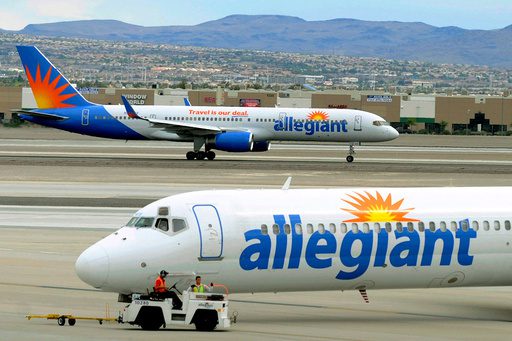
So it lands with a certain metallic clang — a sound of consolidation, not collapse — that Allegiant Air confirmed its acquisition of Sun Country Airlines this week. A multi-billion-dollar marriage in a market where rivals are, quite literally, dropping out of the sky. The Las Vegas-based Allegiant now absorbs its Minneapolis-St. Paul counterpart, creating a beefier budget beast. They’re not just trying to survive; they’re aiming to dominate what’s left of the discount airfare arena, or at least corner a bigger chunk of it. And it’s an ambitious play, no doubt about it.
Allegiant CEO Gregory Anderson, sounding suitably corporate, announced the finalized deal as “a defining moment.” He added, rather pointedly, that the new combined entity was “positioned to offer broader access to affordable travel across new markets.” We’ll see about that ‘affordability’ part — because customers have a way of defining that for themselves, especially when fuel prices do their unpredictable dance.
The genesis of this sudden push for size? Look no further than the global chessboard. Escalating tensions and direct conflicts across the Middle East haven’t just been making geopolitical headlines; they’ve been rattling the global oil markets something fierce. And when oil spikes, jet fuel prices follow, directly translating into the price tags attached to those cheap flights. This isn’t just about an inconvenience for airlines; it’s existential. Low-cost carriers operate on razor-thin profits; a significant increase in their largest operational expense — fuel — can quickly turn black ink into red.
This dynamic also has ripple effects far beyond domestic flight routes. Consider Pakistan, for instance, a nation heavily reliant on imported oil. Spikes driven by regional instability hit their economy hard, contributing to inflationary pressures that then echo back through global supply chains, ultimately impacting everything from consumer goods to — you guessed it — the components and logistics of operating airlines in places like America. Tehran’s quiet surge in energy markets, however indirect, has a surprising connection to your next budget flight.
But the merger isn’t just a defensive maneuver. Sun Country brings some interesting cards to the table. Beyond passenger routes, they’ve got cargo contracts — with giants like Amazon, no less. Plus, there are charter gigs for everything from sports teams to casinos — and even the U.S. Department of Defense. It’s a diversification play, hedging bets against the whims of the vacationer market. The combined operation, valued at an estimated $1.5 billion when the deal was first floated, according to industry analysts at Zenith Capital Group, now boasts around 195 aircraft serving nearly 175 cities.
📄 POLICY WIRE WHITEPAPER PUBLISHED: PAKISTAN'S NATIONAL SECURITY POLICY PRIORITIES
👉 READ BY CLICKING HEREAnd for now, don’t expect fireworks or grand new routes on day one. Both airlines will trundle along separately for a bit. Passengers won’t see immediate changes, won’t need to learn a new booking system tomorrow. It’s a slow digestion process. Eventually, they’ll all fly under the Allegiant banner, headquartering in Vegas while maintaining a substantial footprint in Minneapolis–St. Paul, which, to hear them tell it, will remain a ‘significant hub.’ You’ve got to wonder how many ‘significant hubs’ one company really needs.
What This Means
The Allegiant-Sun Country merger isn’t just a corporate marriage; it’s a stark indicator of an industry under duress — and actively adapting. On one hand, it could mean greater efficiency. Bigger players often translate to better bargaining power for things like fuel, maintenance, and even aircraft procurement. This is crucial when events in, say, the Strait of Hormuz, are dictating the price of every gallon. For consumers, the immediate outlook is hazy. Consolidation, while touted as bringing ‘more options,’ often shrinks competition in the long run. Less competition rarely leads to lower prices. But then, can you truly lament choices when the alternative is no flights at all because smaller airlines can’t hack it?
Politically, this kind of consolidation inevitably draws the eye of regulators, though in this case, approvals are already done. It shows that in economically volatile times, governments often prioritize stability — or perceived stability — over strict anti-trust concerns. Economically, this new entity could create a more resilient travel option for specific, underserved mid-sized markets. But we’re also seeing the chilling effect of geopolitical instability on consumer wallets — something Europe’s summer travelers already know too well. It’s not just a budget airline deal; it’s a response to a world that keeps getting smaller, more interconnected, and significantly more expensive.