

The Enduring Gamble: How Sandia Pueblo Forged a Sovereign Empire From Bingo Cards
POLICY WIRE — ALBUQUERQUE, N.M. — The shimmering facade of a major resort casino isn’t typically where you’d expect to find the roots of profound indigenous sovereignty. Yet,...

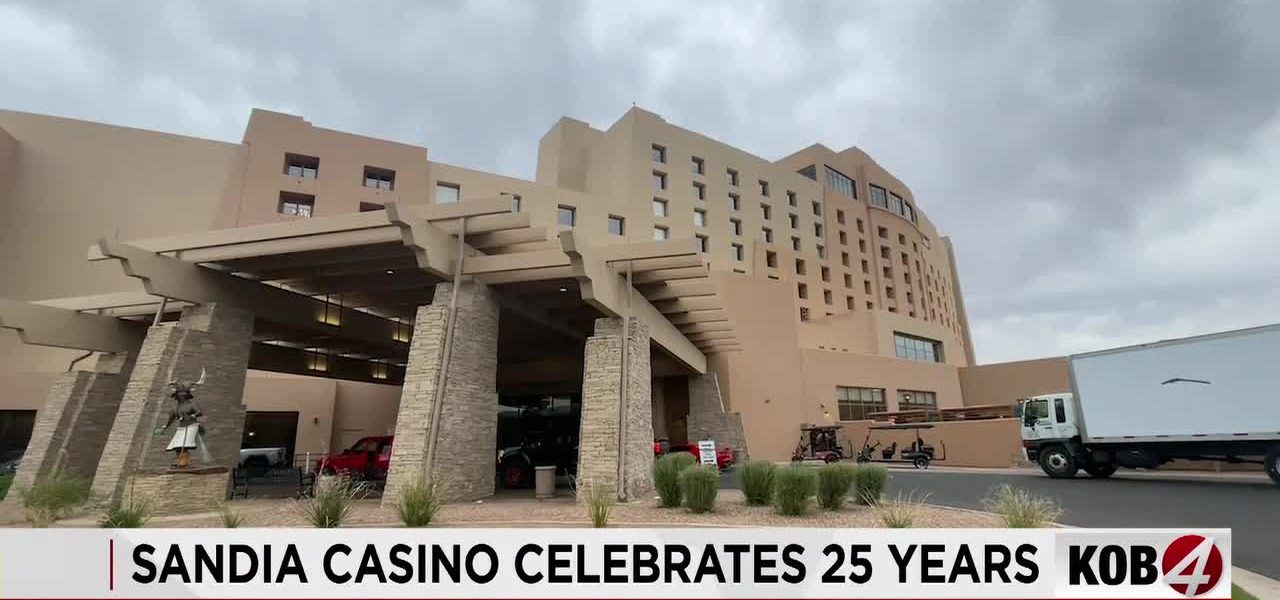
POLICY WIRE — ALBUQUERQUE, N.M. — The shimmering facade of a major resort casino isn’t typically where you’d expect to find the roots of profound indigenous sovereignty. Yet, here we’re, staring at the Sandia Resort and Casino, celebrating what its leadership calls 25 years in its current iteration. But for the sharp-eyed observer, and more importantly, for the Pueblo itself, that’s just the visible tip of an economic and political iceberg—one that truly began coalescing nearly half a century ago, with the humble clatter of bingo chips.
It’s an easily missed distinction, that chasm between ‘modern casino’ and the long, grinding march toward self-determination. They didn’t just wake up one morning with a glittering edifice on their land; no, this story starts in the gritty confines of Sandia Indian Bingo, a place almost 42 years gone, remembered now as the foundational block. From there, it was a tent—a big tent, mind you—then, finally, the concrete and glass behemoth that dominates the high desert landscape today. A slow, deliberate chess game played out over generations, wasn’t it?
Sandia Pueblo Gov. Stuart Paisano speaks with a measured reverence for this journey, frequently crediting the ‘dream’ of past tribal councils. “They had a dream, and that dream was part of providing quality services like health care, education, housing, and infrastructure improvements to our small community,” Paisano told reporters last week, underscoring the purpose behind the gaming venture. This isn’t just about slots and blackjack; it’s about lifeblood for a community that’s learned, out of necessity, to generate its own.
And what a lifeblood it’s. The casino floor alone now sprawls across some 140,000 square feet, according to industry estimates, hosting over 1,900 slot machines. It’s an economy in miniature, an indigenous mini-state built not on conquest, but on a tenacious embrace of market realities. These ventures are more than just entertainment centers; they’re complex socio-economic entities that fund everything from elder care to scholarships, bolstering tribal governments that often navigate state and federal relations from a position of historical disadvantage. But now, they do so from a position of fiscal strength, thanks to this enterprise.
Paisano, ever forward-looking, dropped hints of more expansions. “Well, I hope the facility will continue to be refreshed, and we’ll add a variety of different forms of entertainment,” he said, peering into the horizon of architectural renderings and revenue projections. “You’ll be able to see some of our additional expansions announced soon.” It’s a perpetual cycle of reinvestment, keeping pace with an increasingly competitive hospitality market.
📄 POLICY WIRE WHITEPAPER PUBLISHED: PAKISTAN'S NATIONAL SECURITY POLICY PRIORITIES
👉 READ BY CLICKING HEREAcross the globe, similar narratives of self-determination, though perhaps without the roulette wheels, play out in different forms. Just look at the complex interplay of nation-states asserting economic autonomy—sometimes against immense historical odds. In a policy landscape often rife with geopolitical maneuvering, a similar resilience, an indigenous determination to control one’s destiny, can be found. Take Delhi’s Tightrope: Iran’s Anti-U.S. Rally Tests BRICS Expansion, where nations jockey for influence and economic leverage, echoing the micro-level struggles of communities to carve out economic viability and political voice.
Here in New Mexico, Governor Michelle Lujan Grisham has, in the past, commented on the broader economic contribution of tribal enterprises. While she didn’t directly comment on Sandia’s anniversary, a representative from her office, speaking on condition of anonymity, highlighted the casinos’ role. “These tribal ventures aren’t just big businesses; they’re often the largest employers in their regions, and their contributions to the state via compact revenues, infrastructure projects, and tourism are impossible to overstate,” the official noted. “They’ve transformed rural economies and provided a stability that simply wasn’t there before.” That’s the real story, isn’t it?
What This Means
The Sandia Resort and Casino’s silver anniversary, more accurately a milestone in a 42-year strategic marathon, signals far more than just commercial success; it represents a triumph of tribal sovereignty and self-governance. Economically, these casinos aren’t mere money-spinners for a specific corporation; they’re government-owned entities designed to directly fund tribal services. This model allows the Pueblo to exercise control over healthcare, education, and infrastructure—functions that would otherwise be entirely dependent on often-inadequate federal or state allocations. Politically, every expansion, every successful quarter, strengthens the Pueblo’s negotiating power with state and federal governments, affirming their status as self-governing nations rather than just another local interest group. For Albuquerque and New Mexico at large, tribal gaming represents significant economic diversification and employment, injecting substantial capital into local economies that might otherwise struggle. It’s a pragmatic assertion of autonomy, a visible declaration that self-reliance isn’t just an aspiration, but an achieved reality.