

Altitude of Awe: One Pilot’s Plight, Three Doctors’ Grace, and the Shaky Mechanics of Trusting the Skies
POLICY WIRE — Washington, D.C. — For all our high-tech cockpits and meticulously plotted flight paths, sometimes the only thing standing between a routine journey and sheer terror is an improbable...

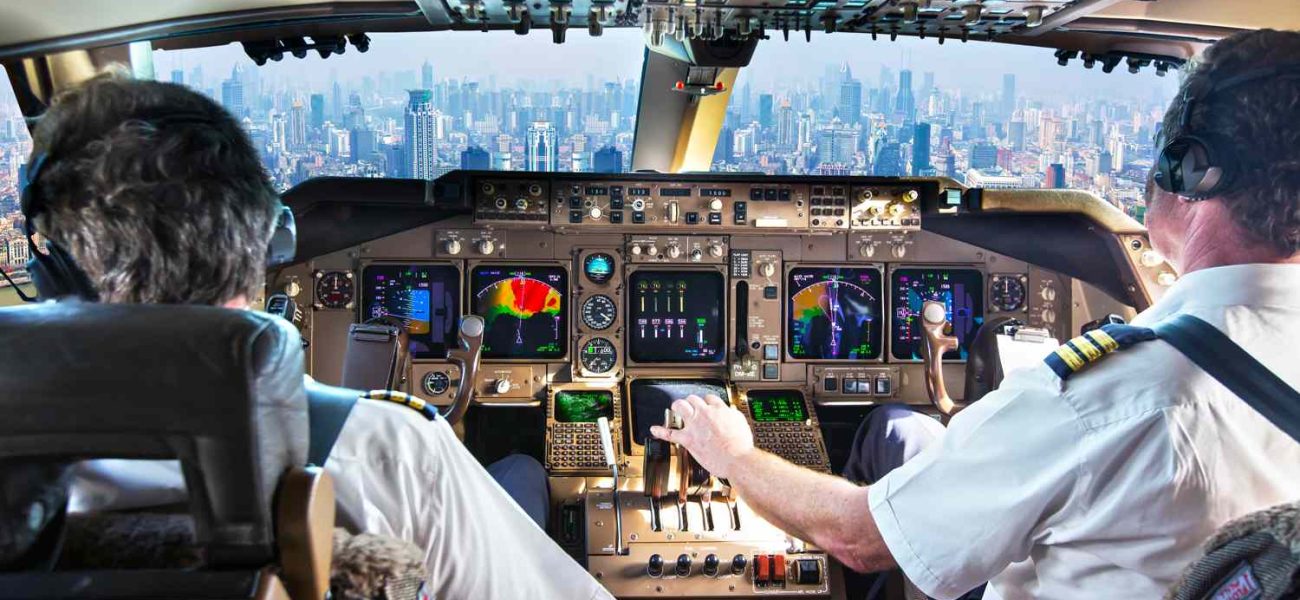
POLICY WIRE — Washington, D.C. — For all our high-tech cockpits and meticulously plotted flight paths, sometimes the only thing standing between a routine journey and sheer terror is an improbable stroke of luck. That’s what happened high above the clouds recently, when a pilot suddenly found himself incapacitated—not by mechanical failure or turbulent weather—but by a treacherous internal system breakdown. His life, and the safety of hundreds aboard, unexpectedly hinged on the happenstance of who else bought a ticket that day. Three doctors, travelling as ordinary passengers, stepped forward. A perfect storm of skill met desperate need, averting what could’ve been a catastrophic entry into the annals of air disaster. This wasn’t some Hollywood screenplay. It was Tuesday.
It’s the kind of scenario that haunts airline executives and aviation regulators alike: the highly trained professional, the linchpin of an entire operation, suddenly becoming the very problem. Reports are scant on the precise nature of the pilot’s malady, though sources close to the airline confirmed a rapid medical deterioration. He was reportedly rushed to a local hospital immediately upon landing. His condition remains undisclosed, a grim veil drawn over a deeply personal emergency now cast onto the global stage. And make no mistake, every flight path—every air bridge—rests on the individual fitness of its crew. The entire industry, for all its automation, relies on that fragile human element.
James Rutherford, a former FAA Airworthiness Director, didn’t mince words. “The systems are designed for redundancy, yes, but at the end of the day, you’re counting on human precision. This incident, while resolved, offers a stark reminder of that immutable fact,” Rutherford stated, echoing the quiet unease often felt within regulatory circles. Because what happens when those redundancies are tested, not by hardware, but by a sudden, severe physiological shock?
The sheer fortune of having three medical professionals aboard, spanning diverse specializations according to eyewitness accounts, speaks volumes. Imagine the chaos, the frantic calls to air traffic control, the cabin announcements if no such expertise had been available. But these doctors, instead of sipping lukewarm coffee and catching up on movies, were suddenly part of the flight crew, albeit a volunteer, ad-hoc one. It’s an almost comedic turn of events, really—the highly structured, tightly controlled environment of an airplane yielding to the ultimate improvisation. They didn’t sign up for this. No one does. But they were there.
Such episodes, thankfully rare, yank back the curtain on the quiet stress that pilots carry. The responsibility, the long hours, the often-interrupted circadian rhythms—it’s a brutal calculus for a job that demands unwavering alertness. But this particular episode goes beyond personal fatigue; it hints at systemic vulnerabilities. If medical facilities weren’t available in the air, what protocols genuinely exist for such a rapid, acute deterioration of a flight commander? The FAA reported that pilot incapacitation incidents, though rare, occurred on average approximately 25 times per year between 2007 and 2017 in US air carrier operations, highlighting a persistent, if small, risk that aircraft are ill-equipped to fully manage once underway.
For airlines, especially those in regions with nascent or rapidly developing aviation infrastructure, like Pakistan or many parts of South Asia, the implications are especially sobering. A similar incident on a Pakistan International Airlines (PIA) service en route to London from Islamabad, for instance, might well have triggered a far more severe, deeply scrutinized media frenzy, raising questions not just about crew wellness but about overall flight safety standards. Trust, once broken, takes ages to rebuild. That’s a lesson learned through many bitter, public misfortunes. Think about how perceptions of competence can rapidly morph into broader indictments against national carriers or regulatory bodies when illusions of influence crumble.
📄 POLICY WIRE WHITEPAPER PUBLISHED: PAKISTAN'S NATIONAL SECURITY POLICY PRIORITIES
👉 READ BY CLICKING HEREDr. Anya Sharma, Director of the Global Air Safety Institute, didn’t hold back. “We often discuss the mechanics of flight, but less so the sustained, quiet stress on our flight crews. It’s a miracle when a mid-air crisis is averted, but it shouldn’t be considered routine. Policies need to evolve beyond just routine physicals.” Her observations are astute. This wasn’t a structural defect; it was a human one, and humanity, for all its brilliance, is messy, unpredictable, and ultimately fragile.
What This Means
This episode, while ending with what can only be called extraordinary good fortune, casts a stark, uncomfortable light on the unstated risks inherent in commercial aviation. Politically, governments globally—especially those in developing economies striving to assert air sovereignty and reliability—now face renewed, if unspoken, pressure to review and perhaps tighten their medical oversight of aircrews. The economics are just as messy. Airlines operate on tight margins; increasing medical checks, incorporating new predictive health technologies, or mandating more frequent rest periods could drive up operational costs, translating directly to higher ticket prices. But is the alternative—a potentially catastrophic accident stemming from a treatable, inflight medical event—a price worth paying?
For consumers, it’s a subtle yet unsettling reminder of what lurks just beyond the cabin door. You purchase a ticket assuming a vast, impersonal system ensures your safety, but ultimately, it often comes down to the individual at the controls, and then, in moments of genuine crisis, the ad-hoc human responders—the other passengers. It’s a compelling, albeit deeply concerning, reaffirmation that for all the advancements in safety and technology, air travel is still a profoundly human endeavor, susceptible to all the quirks and crises that humanity itself embodies. The market doesn’t love uncertainty. And this? This adds another layer of it. Perhaps it’s time for the sector to openly grapple with the human variables beyond just regulatory checkboxes. Because, frankly, next time, there might not be three doctors on board. Just another flight heading towards an unforeseen outcome.