


Shadow Play: Israeli Strikes & Lebanon’s Perilous Normalcy
POLICY WIRE — Beirut, Lebanon — The skies over southern Lebanon hummed with a grimly familiar rhythm this week, a symphony of deterrence and retaliation that’s become the default soundtrack to...

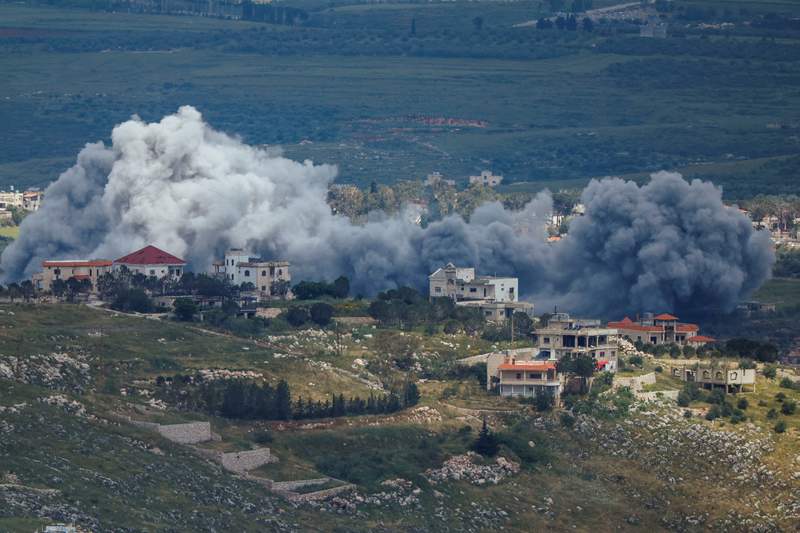
POLICY WIRE — Beirut, Lebanon — The skies over southern Lebanon hummed with a grimly familiar rhythm this week, a symphony of deterrence and retaliation that’s become the default soundtrack to everyday life. Because even as the world grapples with crises of dizzying scale, this particular corner of the Levant finds itself perpetually teetering on the precipice, each Israeli strike against Hezbollah a stark reminder of how fragile—and fleeting—peace really is. It wasn’t an isolated incident; it’s a chapter in an unwritten, seemingly endless saga.
Israeli forces confirmed targeting what they termed “terror infrastructure” belonging to Hezbollah deep within Lebanese territory. Details remain opaque, as they often do in such exchanges. But the implication isn’t. We’re talking about depots, rocket launchers, perhaps command centers—places intelligence agencies on both sides claim house the means to unleash hell. The stated objective: to degrade the Shi’a militant group’s capabilities and, crucially, to restore a measure of calm to Israel’s northern border communities, which have weathered their own share of cross-border fire. They’ve evacuated thousands of residents, after all—an economic and social drain you can’t just wave away. One study, published by the Brookings Institution, estimated the cumulative economic impact of regional border skirmishes on Israel’s northern development zones at upwards of $2 billion since late last year, an amount that barely scratches the surface of the human toll.
The Israel Defense Forces (IDF) issued a terse statement, characterizing the strikes as a “precise and surgical operation.” Major General Eli Baruch, a senior Israeli defense official, didn’t mince words. “We won’t tolerate any threat to our sovereignty from Lebanese soil,” he declared in a statement released to Policy Wire. “Our response is proportionate, designed to deter further aggression, and targets known terrorist infrastructure, not civilians. Anyone suggesting otherwise is peddling Hizbollah’s cynical propaganda.” He’s not wrong about the propaganda, but even surgical strikes leave ripples.
On the other side of the razor wire, the condemnation was swift — and absolute. Hezbollah, though often tight-lipped about the specifics of its losses, painted the action as a “brazen violation” of Lebanese sovereignty. Lebanese Foreign Minister Abdallah Bou Habib, whose government struggles daily with the mere mechanics of governing, expressed his nation’s deep alarm. “This brazen act of aggression, perpetrated on our sovereign land, is a cowardly attempt to break the will of a people committed to resistance,” he said during an emergency press conference in Beirut, his voice strained. “We appeal to the international community—what more evidence do you need of Israeli belligerence before action is taken?” A fair question, perhaps, but one that gets asked with predictable regularity. And the answers rarely satisfy.
For Lebanon, already drowning under an economic catastrophe and a fractured political landscape—you know, the usual—these latest attacks just pile on. It’s a country that can ill afford another slide into full-blown conflict. Many Lebanese civilians, particularly in the south, live with a sort of weary resignation. They’ve seen this movie before. They know the script by heart: provocations, retaliations, civilian displacement, shattered infrastructure, then an uneasy ceasefire, only to repeat the cycle months or years later. It’s an unsettling dance.
📄 POLICY WIRE WHITEPAPER PUBLISHED: PAKISTAN'S NATIONAL SECURITY POLICY PRIORITIES
👉 READ BY CLICKING HEREThe wider Muslim world, predictably, reacted with a mixture of anger — and diplomatic platitudes. Governments from Riyadh to Islamabad issued statements of concern. In Pakistan, where public sentiment often mirrors broader regional grievances against perceived injustices in the Arab world, social media flared with denunciations. The rhetoric in some Urdu-language newspapers painted the Israeli actions as yet another manifestation of what many view as systemic oppression against Muslim populations—a narrative that, true or not, certainly has currency on the street. It doesn’t really matter how subtle Israel claims its actions are; the optics are what they’re. Israel’s own domestic squabbles pale in comparison to these external pressures.
What This Means
The recent Israeli strikes, while ostensibly aimed at Hezbollah, do more than just rattle a few windows in southern Lebanon; they act as a potent tremor across the entire regional fault line. Politically, they strengthen the hand of hardliners in both Israel and Hezbollah, leaving less room for the already meager diplomatic initiatives. Economically, any prolonged escalation threatens to halt what little foreign investment Lebanon still attracts and exacerbate its humanitarian crisis—displacing more people, burdening already overstretched aid organizations. It’s a vicious circle. And for the broader international community, it’s yet another unwelcome complication. Western powers are desperate to de-escalate, but their influence on the ground often feels like a whisper against a whirlwind. It means that, for now, the cycle of strike and counter-strike continues, an enduring testament not to military might, but to a collective regional inability to break free from old patterns. It’s an exhausting prospect for everyone, but most of all for those living right under those skies.