


Inflation’s Shadow Lengthens: Fed Officials Eye Fresh Hikes as Global Economies Brace
POLICY WIRE — Washington, D.C. — The collective sigh of relief, audible from Wall Street trading floors to kitchen tables across the nation, turns out to have been a touch premature. That beast,...

POLICY WIRE — Washington, D.C. — The collective sigh of relief, audible from Wall Street trading floors to kitchen tables across the nation, turns out to have been a touch premature. That beast, inflation—the one central bankers vowed they had tamed—it’s not just lurking; it’s stretching its legs, ready for another round. This isn’t just about abstract numbers; it’s about the cost of groceries, the sting of high mortgage rates, and a nagging uncertainty that’s refusing to simply pack up and go home.
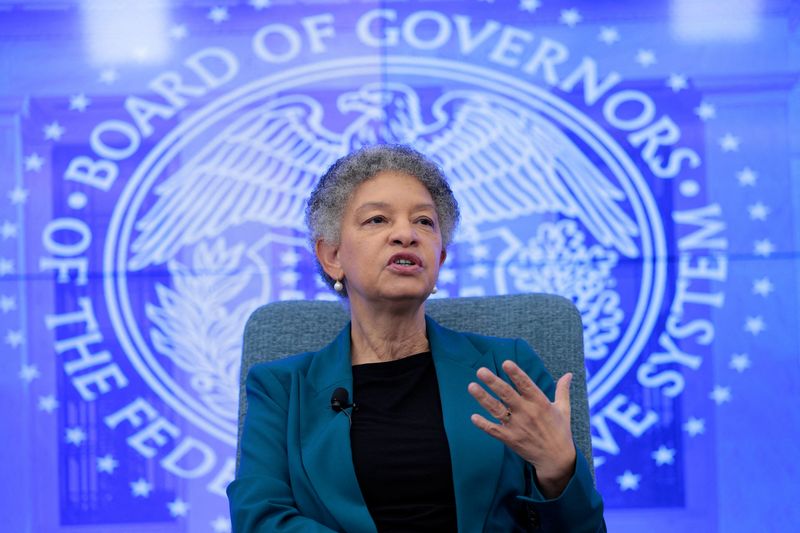
It seems America’s central bankers, those quiet architects of economic stability, are still wrestling with their primary nemesis. Turns out, some among them reckon the heavy lifting might not be done yet. Boston Federal Reserve President Susan Collins, never one to mince words when it comes to the national ledger, recently cut through the cautious optimism with a rather stark assessment.
“We can’t just assume victory,” Collins declared during a recent policy address—her tone signaling a pragmatic, if uncomfortable, reality. “Further rate increases are certainly a possibility—and could be necessary—if we truly intend to achieve and maintain price stability in the medium term. We simply cannot waver now, not with the data pointing where it does.” Her words were, shall we say, a splash of cold water for markets that had increasingly priced in cuts, not more pain.
Because, well, the economic landscape isn’t behaving itself. Strong labor reports, stubborn consumer spending, — and energy price gyrations have all played their part. The latest Consumer Price Index report from the Bureau of Labor Statistics shows headline inflation hitting 3.5% annually in March—a disquieting bump from prior months, still quite a way off the Fed’s comfortable 2% target. That’s a statistic that makes policymakers, — and anyone balancing a household budget, gulp.
But the story doesn’t end—or even begin—at America’s borders. Higher U.S. interest rates act like a global vacuum, sucking capital from emerging markets and tightening financial conditions everywhere else. Consider countries like Pakistan. They’re already on a razor’s edge, battling historic inflation, immense debt, and the political volatility that always shadows economic distress. When the Fed signals tighter money, it makes debt servicing harder, depreciates currencies, and exacerbates capital flight from these more fragile economies.
This isn’t theoretical; it’s a tangible hit. For places like Islamabad, every fractional rise in the Fed Funds rate means more money spent on repaying loans denominated in U.S. dollars. It’s a cruel game, this global monetary domino effect. And often, it’s the ordinary citizens in Lahore or Karachi who pay the heaviest price for Washington’s battles against its own economic demons.
However, the internal dialogue within the Fed isn’t monolithic. Not everyone is ready to swing the hammer again quite so readily. An unnamed senior official at another regional Federal Reserve bank, speaking off-the-record due to the sensitive nature of deliberations, offered a more cautious view: “We’re undeniably seeing resilience. But we’re also starting to see cracks in certain sectors. Overtightening here, with such a blunt instrument, risks a deeper slowdown—a global one, in fact—that could prove harder to recover from.” It’s a classic tug-of-war, isn’t it? Growth versus price stability.
Collins, on her part, maintains that patience, while a virtue, cannot override vigilance. The scars of past inflationary eras—the 1970s come to mind—are still etched into the institutional memory. Letting inflation take root, even at moderately elevated levels, she argues, carries its own, perhaps graver, long-term costs. The Fed’s tightrope walk continues, with the global economy watching nervously, breath held. You’ve gotta wonder, how many more bumps can the system take?
What This Means
This renewed hawkish rhetoric from Federal Reserve officials like Susan Collins isn’t merely an academic exercise; it carries significant real-world implications, domestically and internationally. Politically, it means continued pressure on the Biden administration, whose economic messaging struggles against persistent cost-of-living concerns. Voters don’t care about quarterly GDP reports when their weekly grocery bill keeps climbing—or when borrowing to buy a home feels impossible. The optics of potential new rate hikes, slowing growth, could complicate campaign narratives heading into the next election cycle, even as the Fed technically operates independently.
Economically, the message is clear: the Fed is serious about its 2% target, even if it means some short-term pain for employment and economic growth. For American businesses, especially smaller ones that rely on accessible credit, this translates into continued tight financing conditions and potentially reduced investment. Internationally, the ripple effect will hit emerging markets disproportionately. Countries from Southeast Asia to parts of the Muslim world—many already grappling with heavy dollar-denominated debt—will face increased capital flight and severe currency depreciation, making imports more expensive and fueling their own inflation. Pakistan’s government, for example, will find its existing fiscal and balance-of-payments woes exacerbated, forcing even more painful austerity measures or reliance on external bailouts. It’s a tough situation, really. And it highlights just how interconnected—and sometimes vulnerable—global finance has become. Forget those headlines about football economics for a minute; this stuff directly hits everyone’s wallet.