

Shadow of Retribution: Gaza Strike Fuels Cycle as Another Al-Hayya Emerges from Rubble
POLICY WIRE — Gaza Strip, Palestine — For families living in Gaza, the air isn’t just for breathing; it’s a constant, palpable current of impending calamity. When a house crumbles, when...

POLICY WIRE — Gaza Strip, Palestine — For families living in Gaza, the air isn’t just for breathing; it’s a constant, palpable current of impending calamity. When a house crumbles, when an explosion rocks the district—it isn’t just an incident. It’s an anticipated punctuation mark in a protracted siege, another chapter etched into a generational saga of loss.
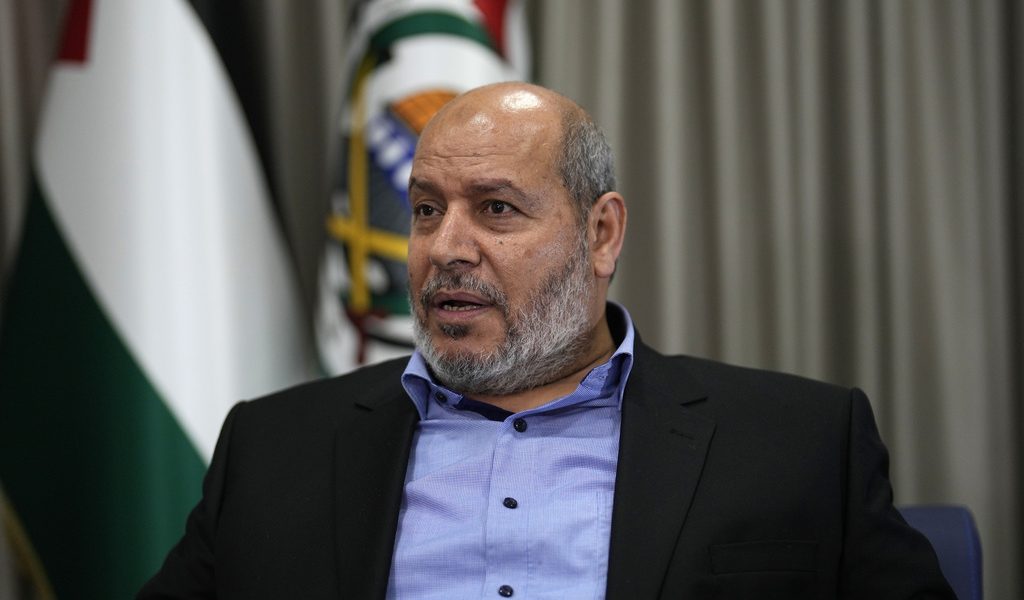
This week, that bleak routine visited the al-Hayya family in eastern Gaza City. An Israeli airstrike tore through a residential building, taking the life of 23-year-old Salam Abu Mughassib and injuring a relative you’ve probably heard of, if not directly: Omar al-Hayya, son of Khalil al-Hayya, a senior Hamas political bureau member and a frequent face on international news channels. Not his father, not even the direct target, but another thread woven into the fabric of this bitter conflict. That’s how it usually goes here.
Mughassib, according to local sources, was an aide. Omar, by many accounts, had merely been present. But for Israeli military planners, these distinctions often blur in the shadow of broader objectives. The Israeli Defense Forces (IDF) issued a familiar-sounding statement afterward, saying the strike targeted an operational asset belonging to Hamas’s military wing—without directly confirming who or what that asset was this particular time.
“We don’t target civilians,” Rear Admiral Daniel Hagari, an IDF spokesperson, asserted in a press brief from Tel Aviv, his tone clipped. “But when terrorists deliberately operate from within civilian areas, using their own families as human shields, these regrettable outcomes become unavoidable. Our forces act precisely to protect Israeli citizens from Hamas’s relentless aggression. The responsibility for these civilian casualties rests squarely with the terrorist organization.”
And Hamas, as you’d expect, isn’t buying it. Their leaders were quick to condemn the strike as a “cowardly act of aggression” targeting innocent Palestinians. “This barbaric assault on a civilian home—taking a life, wounding others—it’s nothing more than state terrorism,” countered Osama Hamdan, another senior Hamas official, speaking from Beirut. “It’s an attempt to break the will of our people, to silence the voice of legitimate resistance. But they don’t get it, do they? It only strengthens our resolve. They’re making martyrs, not peace.”
This endless back-and-forth forms the grim heartbeat of Gaza. The strip, a sliver of land with one of the highest population densities on Earth, has been under a blockade for years. Its two million residents are crammed into an area just 25 miles long — and 7.5 miles wide. Over a decade and a half of Israeli and Egyptian restrictions has choked the economy. Unemployment rates hover above 45 percent, and for young people, it’s often worse—pushing upwards of 60 percent. Nearly 80% of Gaza’s population depends on humanitarian assistance, according to a recent report by the UN Office for the Coordination of Humanitarian Affairs (OCHA).
Because every such strike, intended or not, further strains the already fragile threads holding the society together. The specific identity of those involved—even extended family members of high-profile figures—tends to galvanize sentiment, solidifying an already deeply ingrained sense of collective grievance. For most Palestinians, Omar al-Hayya isn’t just a combatant; he’s the son of a man who symbolizes resistance to occupation. That resonance is deep.
What This Means
This incident, far from being isolated, is part of a larger, unyielding pattern that effectively locks the region into a state of perpetual tension. Politically, it complicates any whispers of de-escalation, gifting hardliners on both sides ready-made rhetoric. For Israeli leaders, it’s about projecting strength — and exacting a price for perceived threats. For Hamas, it’s proof that negotiation with Israel is futile, solidifying its standing as the primary defender of Palestinian rights, particularly when the Palestinian Authority is viewed as largely ineffective or compromised.
Economically, it guarantees the continuation of the blockade’s devastating effects. The constant threat of hostilities makes significant reconstruction or investment a non-starter. And, on a broader scale, the ripples from incidents like these consistently lap at the shores of the wider Muslim world. From Islamabad to Jakarta, public outrage is a given, often forcing governments to issue condemnations, which in turn fuels internal pressure on their own leaderships to adopt a harder line against Israel and its allies. Just imagine the conversations happening right now in places like Karachi or Lahore; this isn’t some distant skirmish—it’s a rallying cry. It doesn’t necessarily translate to immediate diplomatic shifts, but it chips away at any long-term normalization efforts.
But beyond the geopolitics, the constant tit-for-tat ensures that any semblance of a lasting peace remains a distant mirage. It reinforces a vicious cycle where each strike, each death, however unintended, lays the groundwork for the next one. It’s a tragic predictability. They say violence begets violence. Here, it simply regenerates itself, an agonizingly reliable rhythm in a land craving silence.