


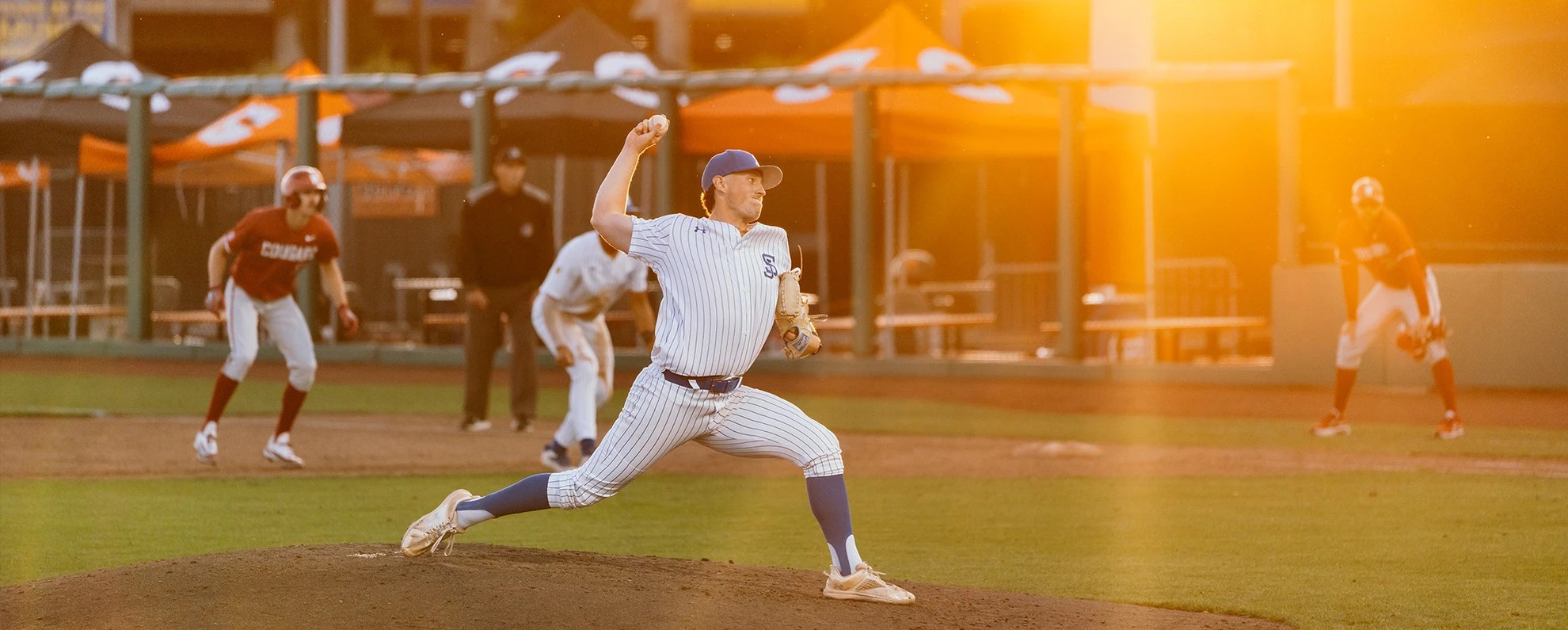
San Jose State Baseball’s Last Stand: A Microcosm of College Sports’ Brutal Realities
POLICY WIRE — San Jose, CA — There’s a certain grim poetry to watching aspirations collide with actuarial tables. While headlines roar with NIL deals and Power Five opulence, a quieter drama unfolds...

POLICY WIRE — San Jose, CA — There’s a certain grim poetry to watching aspirations collide with actuarial tables. While headlines roar with NIL deals and Power Five opulence, a quieter drama unfolds daily, tucked into the far corners of America’s sprawling college sports enterprise. And in the unassuming diamond where San Jose State’s baseball team hustles for relevance, that collision feels particularly acute.
It’s late May 2026, and the Spartans find themselves on the precipice—again. For much of this season, they’ve lived in a kind of purgatorial middle, too tenacious to ignore but rarely dominant enough to matter on a grand scale. The Mountain West Conference, a league known more for its sprawling geographies than its baseball dynasties, isn’t an easy place to make a mark. Coach Brad Sanfilippo, a man whose pragmatism is often his most potent weapon, has consistently navigated his squad through choppy waters. He’s seen his fair share of near misses.
Because let’s be frank, this isn’t the glamour division of college sports. No, it’s the working class, where every victory is earned through grit, not five-star recruits. These players, largely invisible to ESPN’s behemoth cameras, still clock thousands of hours. They’re still putting their bodies on the line, chasing a dream that for most—and this is the hard truth—will end the moment their last college pitch is thrown or their final swing connects. NCAA data from 2023 indicated that only 1.2% of male college baseball players ultimately secure professional contracts, a stark reminder of the long odds they face.
This weekend against Fresno State? It’s not about championship glory. It’s about survival. A shot at the six-team conference tournament, nothing more. A single game separating a quiet end to the season from a shot—however remote—at unexpected fireworks. They’re a game back from the final spot. Sweeping the Bulldogs and praying San Diego State helps them out by knocking off UNLV is the Spartans’ only viable, if circuitous, route. It’s hardly the stuff of legend, but for these athletes, it’s everything.
“We don’t talk about ‘should-haves’ or ‘could-haves’ in this dugout,” Sanfilippo reportedly told a local sportswriter earlier this month. “We talk about ‘what now.’ And what now is: go out — and earn it. Every single pitch. Nothing else matters.” And you can believe he meant it, too. His players, particularly guys like Alex Fernandes and Zach Chamizo, have done just that, keeping the offense afloat with surprising pop. They’ve shouldered the load, proving their coach’s trust wasn’t misplaced. Chamizo, specifically, has been a revelation, delivering in clutch moments, a testament to raw, uncomplicated talent.
But the roster has its Achilles’ heel—like many programs operating on tighter budgets, pitching depth. It’s a perennial challenge, the kind of issue that haunts coaches — and saps momentum late in tight games. One can almost hear the sighs across the Mountain West from athletic directors, balancing budgets while trying to fund competitive programs in sports that don’t generate millions. It’s a perennial, often unacknowledged struggle in college athletics. This financial reality, I’m told, frames much of their strategic planning. A well-placed source within the Mountain West Conference office, who asked not to be named due to the sensitivity of athletic department budgets, observed, “It’s a zero-sum game for most of these smaller programs. Every dollar we put into non-revenue sports is a dollar not going to something else. Performance absolutely has to justify the investment. It isn’t just about winning; it’s about validating the whole enterprise.” This stark calculus—a microcosm of broader national resource allocation debates—feels particularly resonant on this squad’s weary shoulders.
Consider the delicate dance of international diplomacy, perhaps even how a nation like Pakistan navigates its regional power struggles. Much like Pakistan must consistently contend with formidable neighbors and economic constraints, San Jose State operates in a conference filled with better-resourced rivals. Each strategic maneuver, each careful allocation of limited assets, carries disproportionate weight. A single misstep can unravel weeks of effort. Their season hasn’t been a charge to the summit, but a series of skirmishes to stay in the fight. Like watching a struggling state manage its economic future, the Spartans have consistently found themselves needing to do more with less.
They’ve proven themselves capable enough to hang tough, dangerous enough to worry opponents, and experienced enough that they don’t fold when the going gets rough. But a clean sweep? That’s asking a lot. That requires an almost perfect confluence of individual performances and collective resolve, plus a little external help. It isn’t easy. That’s just how it’s sometimes in this brutal, unsentimental ecosystem.
What This Means
This final weekend for San Jose State baseball isn’t just about a team squeaking into a tournament; it’s a quiet but profound lesson in the economics and psychology of mid-tier collegiate athletics. For athletic departments like San Jose State’s, consistent—though not necessarily dominant—performance in sports like baseball serves a dual purpose: it legitimizes program investment and provides a crucial retention mechanism for student-athletes who represent the university. The political implication? Maintaining relevancy helps in recruiting, certainly, but it also bolsters arguments for continued funding from university administrations often swayed more by bottom lines than box scores. Losing ground means losing leverage.
Economically, making the conference tournament provides a tiny bump in visibility, maybe even a sliver of revenue from shared league pools—minimal, yes, but for these lean programs, every drop helps. And don’t dismiss the local civic impact. A winning, fighting team, even in a niche sport, generates a small eddy of community pride, subtly boosting university engagement. From the perspective of institutional resilience, the struggle at San Jose mirrors the broader economic realities for any entity striving to punch above its weight in a competitive field. It’s a testament to the idea that, sometimes, simply staying in the game is a victory in itself. Because the minute you stop competing, you become utterly irrelevant, a non-factor in the brutal calculus of college sports where the margins between aspiration and financial viability are razor thin. That’s why this small-time series feels so large. And it’s why everyone’s watching, even if they don’t know it.