


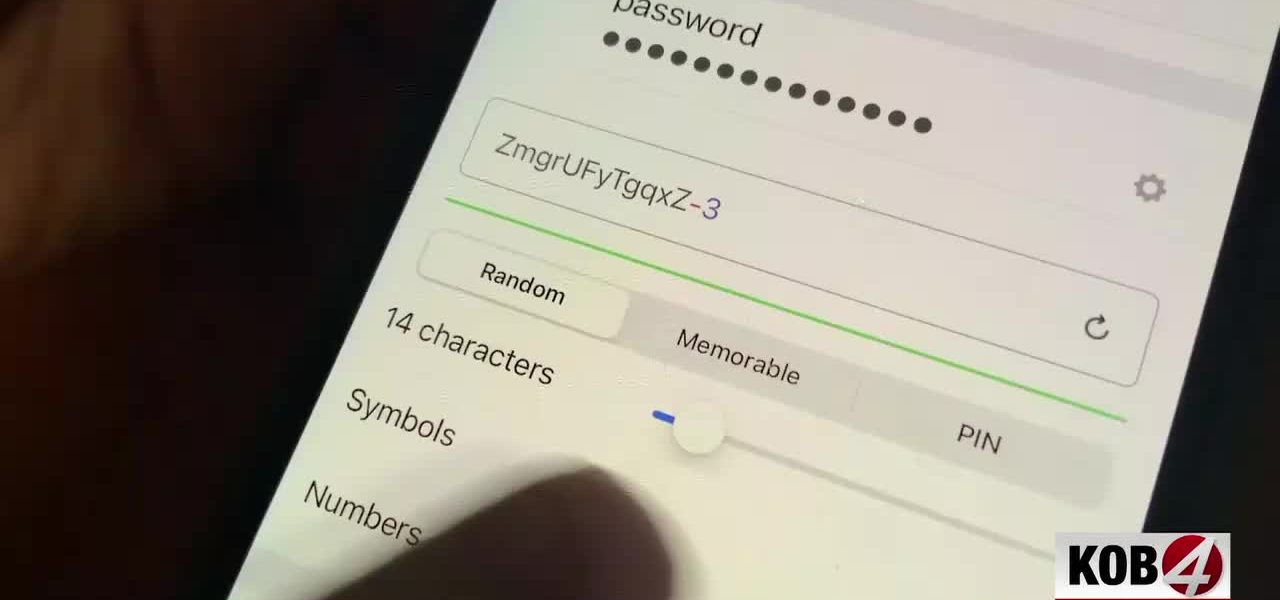
Digital Keys, Empire’s Gates: Why Your Password Is More Than Just a String
POLICY WIRE — Washington D.C., USA — Forget the digital ‘forgot password’ dance. That familiar, infuriating click — it isn’t just about your memory, or even your bank account. No,...

POLICY WIRE — Washington D.C., USA — Forget the digital ‘forgot password’ dance. That familiar, infuriating click — it isn’t just about your memory, or even your bank account. No, the global skirmish over digital identity has morphed into a geopolitical flashpoint, quietly reshaping everything from national security postures to the very architecture of economic influence. Your flimsy password? It’s not just yours. It’s a weakness, a chink in the collective armor we’ve painstakingly—or perhaps, carelessly—built.
For decades, we’ve operated under this tacit, infuriating agreement: strong passwords are the personal responsibility of individuals. You mess it up, you get hacked. But this antiquated notion crumbles when you consider the sheer scale of the problem. Nation-state actors, criminal cartels, and even opportunistic amateurs aren’t bothering with brute-forcing individual accounts anymore. That’s toddler stuff. They’re buying breached credential lists on the dark web for pennies, then credential-stuffing their way into countless other systems because, let’s face it, most of us use variations of the same darn thing. It’s the digital equivalent of trying a spare key on every lock in the neighborhood. And it often works.
The numbers don’t lie. A 2023 report from IBM revealed that the average cost of a data breach globally stood at a staggering $4.45 million. That’s not small change; it’s enough to bankrupt a medium-sized enterprise, destabilize a sector, or, worse, hand sensitive national data to an adversary. And because governments and businesses are slow, perhaps inherently, to adapt to such fluid threats, the individual often becomes the easiest vector for attack.
Enter the tech titans, brandishing their gleaming new solutions: Passkeys, biometric logins, password managers. Apple and Google, among others, are pushing a world where your face or finger replaces convoluted strings of characters. It sounds like paradise. No more forgotten passwords. A single tap, a glance, and you’re in. And they’re betting big on this. “We’re ushering in an era of seamless, secure digital access,” stated Tim Cook, CEO of Apple, in a rare interview on the topic. “This isn’t just about convenience; it’s about rebuilding trust in the digital ecosystem, one user experience at a time.” He doesn’t say whose ecosystem that’s, exactly.
But convenience has a dark side. Giving more control over your primary authentication method to a handful of massive corporations—each with their own data collection agendas and legal obligations to various state actors—isn’t without peril. Who truly owns that key? And what happens when a government, ours or someone else’s, comes knocking, demanding access or a backdoor?
Cybersecurity veteran — and former director of the National Security Agency, Gen. Keith Alexander (Ret.), put it plainly last month: “Every government globally struggles with digital identity, especially where foundational infrastructure isn’t uniform. When a company controls the authentication method for millions, billions, that control inherently carries national security implications. It’s a quiet war for the command of digital frontiers, waged with code — and convenience.” He’s not wrong, you know.
Consider the broader implications. In regions like Pakistan and across the Muslim world, where digital literacy and robust infrastructure often lag behind the West, the shift to Passkeys could be a double-edged sword. On one hand, it could democratize access to secure online services, bypassing the headache of complex passwords. But on the other, it could centralize control over digital identity into the hands of foreign tech giants, making entire populations vulnerable to data exploitation, surveillance, or even exclusion based on arbitrary—or politically motivated—decisions made thousands of miles away. It’s a dependence game, pure and simple. And you don’t want to lose that.
📄 POLICY WIRE WHITEPAPER PUBLISHED: PAKISTAN'S NATIONAL SECURITY POLICY PRIORITIES
👉 READ BY CLICKING HEREFor now, until Passkeys become truly ubiquitous, many users are stuck in an uncomfortable limbo, juggling hundreds of unique logins. Some resort to password managers, paying a few dollars a month for the illusion of digital serenity. But there’s also the tried-and-true method: crafting complex, yet memorable, patterns from personal details – film titles, song lyrics, intertwined with site-specific markers. (Like adding the first — and last letters of ‘Facebook’ to a long string derived from ‘Raiders of the Lost Ark’). It’s tedious. But it’s yours. Mostly.
What This Means
This escalating digital identity crisis isn’t merely an annoyance; it’s a foundational issue impacting national sovereignty and global economic stability. Policymakers face an unenviable dilemma: embrace the ease of tech giants’ solutions, potentially ceding significant control over citizens’ digital lives, or demand open standards and decentralized authentication, which might hamper innovation and consumer convenience. The economic implications are staggering; insecure digital pipelines drain billions from economies annually, while state-sponsored espionage facilitated by compromised credentials remains a constant threat to industrial secrets and strategic advantage.
The push for seamless digital identities also highlights a profound shift in power dynamics, further entrenching the dominance of companies like Apple and Google as de facto gatekeepers of the internet. Governments, struggling to regulate these behemoths, find themselves playing catch-up in a realm where technology advances faster than legislation can be drafted. But it’s also a fight for individual autonomy. And because it’s playing out in plain sight, albeit shrouded in technical jargon, its resolution will shape the future of digital interaction, privacy, and ultimately, who truly holds the keys to the kingdom. Don’t think for a second your humble password doesn’t fit into that equation. It’s ground zero for a much bigger struggle, one that touches every aspect of our interconnected world, from secure financial transactions in Karachi to election integrity debates in New Mexico.
Want more on the hidden battlegrounds of modern tech? Consider how even something as mundane as content consumption can reveal underlying geopolitical tussles: Netflix’s Cage Fight Gambit Redefines Broadcast Wars.