

Tijeras Bridge Debacle: When Bureaucracy Meets Brute Force of Nature
POLICY WIRE — TIJERAS, N.M. — It took an act of God—and, perhaps, a fair bit of bureaucratic hand-wringing—but the beleaguered residents of Tijeras, New Mexico, are finally getting a pathway back to...

POLICY WIRE — TIJERAS, N.M. — It took an act of God—and, perhaps, a fair bit of bureaucratic hand-wringing—but the beleaguered residents of Tijeras, New Mexico, are finally getting a pathway back to normalcy. Or at least, their kids are. The Bernalillo County Commission, after a drawn-out deliberation that frankly felt like eternity to local families, has formally sanctioned the Tijeras Creek Bridge Emergency Replacement Project. This wasn’t some grand vision for new urban planning; it’s just trying to mend what nature—and an undeniably intense downpour—tore apart.
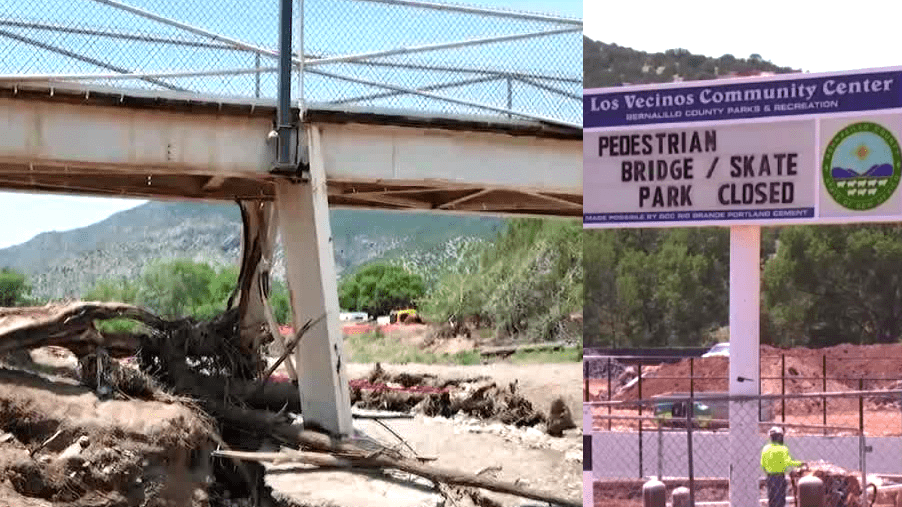
For over a year, the spectral gap where the pedestrian bridge once stood has been a gaping metaphor for inertia, a constant, ugly reminder of infrastructure caught flat-footed by Mother Nature. We’re talking about a bridge that once safely shepherded children to school, day in, day out, until July 2025. That’s when flash floods ripped through the Tijeras Canyon area, inundating it with a staggering nine feet of water in a mere fifteen minutes, as confirmed by county emergency services records. Think about that: a liquid wall, nearly the height of a basketball hoop, appearing in the blink of an eye. The bridge? Gone. Poof.
It’s hard to make heads or tails of the timeline sometimes. Because even after the physical structure vanished, the implications—for parents, for local businesses, for everyone caught in the daily scramble—only magnified. Schoolkids, suddenly cut off from their direct routes, found themselves on longer, riskier detours, a daily logistical headache parents hadn’t signed up for. And now, almost two school years have passed without that link. Doesn’t that strike you as, well, incredibly slow for an ’emergency’?
Commissioner Eva Sanchez, speaking after the vote, didn’t mince words, though she chose her officialese carefully. “Look, nobody wants to see this kind of delay. But it’s not as simple as snapping your fingers — and a new bridge appears. We’re talking about securing emergency funds, coordinating state and local agencies, ensuring engineering viability, and managing public expectation. It’s a complex equation, but ultimately, it’s about providing that bedrock assurance of safety for our youngest citizens.” A reasonable sentiment, certainly, but one that still feels a beat behind the actual lived experience on the ground.
But for Maria Rodriguez, whose two elementary-aged children use the route daily—or rather, used to—the political machinations ring hollow against a backdrop of daily worry. “Complex equation?” she scoffed during a phone interview. “Our children walk in ditches, they cross busy streets. Every day is an ‘equation’ of danger we shouldn’t have to solve. We elected these people to prevent this kind of agony, not prolong it. They’re quick enough to pave roads when an election is around the corner, aren’t they?” Her frustration, you’ve got to admit, feels pretty authentic.
The approved $1.2 million project finally gets underway next month. They’re telling everyone to hold their breath until February 2027 for its completion. Yes, 2027. It makes you wonder how an “emergency” project manages to stretch across almost four calendar years from incident to completion. But then again, this isn’t Hollywood. This is local government. Its rhythm often feels more like a dirge than a fast-paced thriller.
📄 POLICY WIRE WHITEPAPER PUBLISHED: PAKISTAN'S NATIONAL SECURITY POLICY PRIORITIES
👉 READ BY CLICKING HEREThis localized drama, the sudden destruction of a single, albeit important, pedestrian bridge, carries a weight that reaches beyond its concrete pylons. On a global scale, we see nations grappling with increasingly extreme weather events. Consider the catastrophic floods in Pakistan over recent years—millions displaced, infrastructure completely decimated, entire communities erased. While the Tijeras creek pales in comparison, the underlying vulnerability to unforeseen deluges, and the glacial pace of governmental response, presents a stark, inconvenient truth for all levels of governance. We’re supposedly more technologically advanced than ever, but often, we still react as if we’re blindsided.
What This Means
The rubber-stamping of the Tijeras Creek Bridge replacement, long overdue as it feels, illustrates a few stark realities about local governance and climate resilience. Politically, the commissioners faced mounting pressure, not just from vocal parents but from the very palpable inconvenience and danger inflicted upon constituents. Delays of this magnitude can, and often do, translate directly into voter dissatisfaction, creating vulnerabilities in future election cycles. Don’t think for a second politicians aren’t keenly aware of the electoral fallout from a crumbling culvert or a missing bridge. It’s about optics, sure, but it’s also about basic services, isn’t it?
Economically, the absence of the bridge created unforeseen costs for families—increased fuel consumption for longer drives, potential childcare issues for parents who relied on walking school routes, and even missed school days due to logistical challenges. The $1.2 million price tag, while substantial, doesn’t capture the cumulative, hidden economic drain the delay imposed. This incident serves as a pretty potent (if mundane) example of how a failure in basic infrastructure investment can have ripple effects that quietly erode household budgets and community well-being. It’s a classic case study in penny-wise, pound-foolish, you could say. Or, perhaps more charitably, an ongoing lesson in the relentless power of weather to redraw local realities.