


Beyond the Badge: New Mexico Sentence Highlights Strain on Policing and Justice System
POLICY WIRE — ALBUQUERQUE, N.M. — It wasn’t the high-speed chase or the officer’s close call that truly hammered home the brutal cost of crime this week, but rather the quiet procedural...

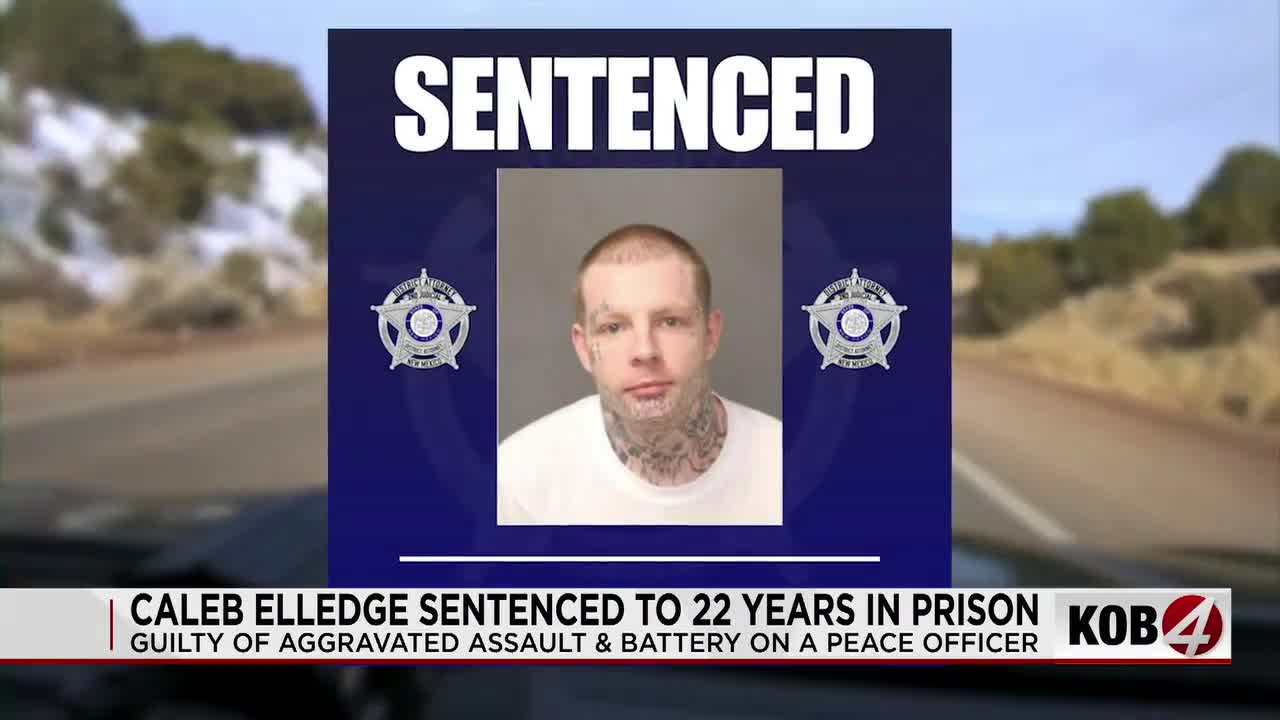
POLICY WIRE — ALBUQUERQUE, N.M. — It wasn’t the high-speed chase or the officer’s close call that truly hammered home the brutal cost of crime this week, but rather the quiet procedural drumbeat of a New Mexico courtroom. Sure, Caleb Elledge, 35, got the maximum—a 22-year state sentence tacked onto a prior 9-year federal one—for ramming a police cruiser and shooting an officer. But really, the real story here isn’t just one man’s punishment; it’s the relentless grind against the frayed edges of public safety, a constant negotiation between accountability and societal fatigue.
His Tuesday sentencing might offer a momentary sigh of relief for some, an illusion of finality. But the sheer audacity of the 2022 incident—a routine questioning near Edgewood escalating into a violent escape attempt, with an officer taking a bullet to the neck—reveals a starker truth about the uphill battle facing law enforcement. The officer, mercifully, survived. You wonder what lingering scars—visible or otherwise—they carry. That’s the stuff no sentence, however long, can erase.
Elledge, a man whose rap sheet already boasted multiple parole violations before this mess even started, embodies a particular kind of systemic failure. His conviction in March for aggravated assault — and battery on a peace officer wasn’t a surprise. And neither, frankly, was the judge’s decision to throw the book at him. This wasn’t some isolated, spontaneous outburst. This was a man with a documented history of brushing up against the law, repeatedly. The system had, quite literally, had multiple cracks at him.
But the real policy dilemma lies deeper: How many times do we watch individuals spiral, only to intervene when violence erupts? State Attorney General Hector Morales, no stranger to the state’s criminal justice woes, didn’t pull any punches. “This sentence sends a clear message: assaulting our dedicated officers won’t be tolerated. We owe it to the brave men and women of our State Police to ensure those who threaten them face the full force of the law.” His words carry weight, but you can hear the strain in the collective voice of officials. They’re battling against a current that sometimes feels insurmountable.
Consider the data: Nationally, around 68% of individuals released from state prisons are rearrested within three years, according to a 2018 Bureau of Justice Statistics study. Elledge was part of that worrying statistic, proving the challenges in rehabilitation and re-entry are anything but trivial. These aren’t just numbers; they’re blueprints for repeated societal damage.
It’s not just in the Land of Enchantment where these narratives play out. Across the globe, from the crowded mega-cities of Pakistan to the rural reaches of South Asia, the thin blue line—or whatever color it happens to be—grapples with similar, often more severe, pressures. In Karachi, for instance, police forces operate in environments where resource scarcity, geopolitical tensions, and entrenched systemic issues compound the difficulties of maintaining order. A lack of judicial consistency or a perception of lenient punishment can breed disrespect for authority and enable a cycle of criminal behavior that mirrors, albeit on a different scale, the parole violation issues we saw with Elledge. It’s a harsh mirror reflecting universal concerns about the rule of law — and community trust.
New Mexico State Police Chief Robert Johnson voiced the raw frustration often felt by those on the front lines. “My officers don’t go to work expecting to be shot or rammed,” he stated, his voice likely tight with controlled emotion. “They go to protect. This verdict reaffirms our commitment to standing up for them, but it doesn’t bring back the moments of fear, or erase the ongoing threat too many face simply for doing their jobs.” It’s not just about a bullet dodged; it’s about the pervasive atmosphere of threat. And that’s draining, isn’t it?
This whole episode forces us to confront uncomfortable questions about effective deterrence. If multiple parole violations don’t lead to more stringent monitoring or early intervention, what message does that send? Because what we’re witnessing here is less about one bad apple and more about the rotting planks of an infrastructure under strain.
What This Means
This New Mexico sentencing isn’t an isolated event; it’s a tremor in a larger geopolitical landscape of law — and order. Politically, it empowers officials to bang the drum louder for tough-on-crime rhetoric, particularly in an election cycle where public safety often ranks high. Expect more calls for increased funding for law enforcement, harsher sentences, and possibly tighter parole conditions—policies that often resonate deeply with voters tired of feeling unsafe. Economically, repeated incidents of severe crime extract a hefty toll, diverting taxpayer money from education or infrastructure into judicial processing and incarceration, a never-ending cycle that starves other sectors. It also saps investor confidence, hindering growth — and development when a region struggles with perceived instability. In places like Pakistan, a country grappling with its own environmental and economic challenges, such domestic security issues can quickly metastasize into broader national and even international concerns, affecting foreign aid, investment, and diplomatic relations. Because, when the foundational contract between citizens and the state—the promise of safety—begins to fray, the consequences are rarely confined to local headlines.