

Knysna’s Echoes: French Football’s 2010 Collapse — A Political Barometer
POLICY WIRE — Paris, France — It wasn’t the geopolitical crisis of the hour, not the fluctuating price of oil, nor a contentious parliamentary vote that truly laid bare the fragile state of the...

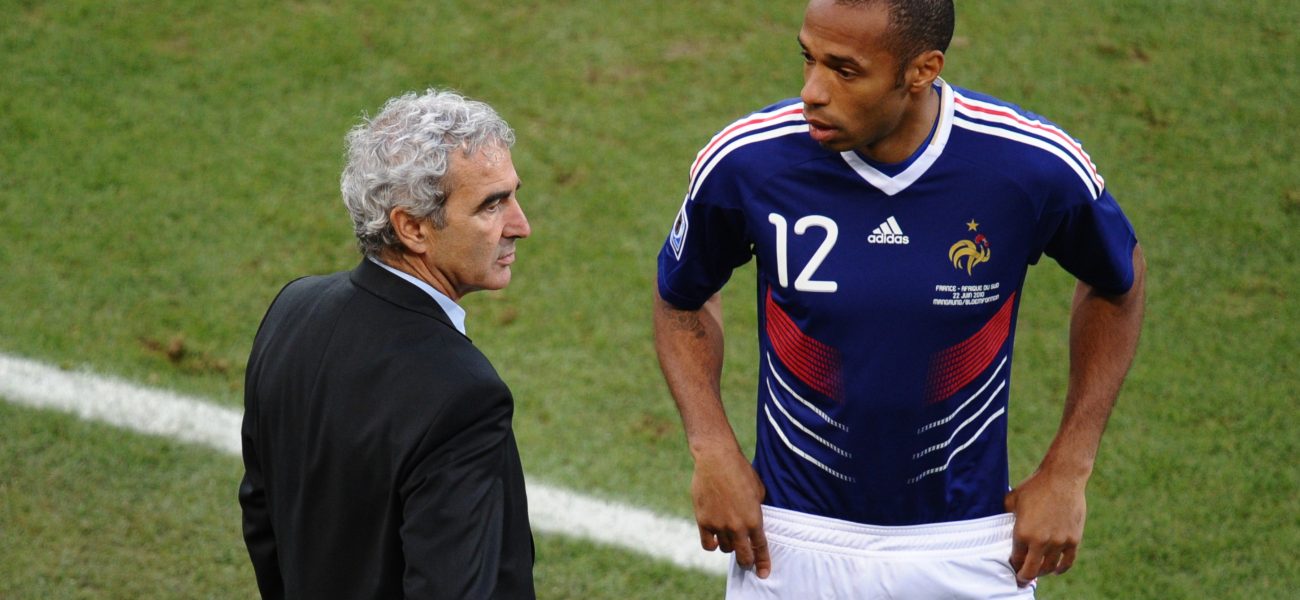
POLICY WIRE — Paris, France — It wasn’t the geopolitical crisis of the hour, not the fluctuating price of oil, nor a contentious parliamentary vote that truly laid bare the fragile state of the French psyche back in 2010. No, that particular distinction belonged to a football team—a band of highly paid athletes, on a pitch thousands of miles away in South Africa, engaged in a spectacularly public act of self-immolation. More than a decade on, Netflix’s new documentary, ‘The Bus: Les Bleus on Strike,’ isn’t just about sporting ignominy. It’s a fresh, ugly autopsy on national disillusionment, now starkly illuminated by the chilling, contempt-laden logbook of then-coach Raymond Domenech.
Because, really, this was never just about a botched corner kick or a missed penalty. It was about something far deeper, an almost Shakespearean tragedy playing out on a global stage. The French, for whom ‘Liberté, égalité, fraternité’ isn’t just a slogan but an almost religious creed, watched their national team descend into a petty, ego-driven farce. The documentary’s big draw, of course, is Domenech’s previously private musings. He spared no one. Players were, in his estimation, ‘idiots,’ ‘pieces of shit.’ One was even labeled ‘mildly autistic’ before being dismissed again as an ‘idiot.’ It’s the sort of unvarnished bile that curdles the stomach, certainly, but also offers a rare, unfiltered glimpse into the absolute breakdown of authority and respect that tore the squad apart.
It’s not often a coach’s private notes read like a disgruntled citizen’s rant against his elected officials. Domenech, famously inscrutable, was actually boiling. His relief at the players’ eventual training strike – an act of mutiny that sent shockwaves across the sporting world – was perverse, chilling. “It’s your best collective act of the entire World Cup! The suicide is complete! Hallelujah!” he scrawled. This wasn’t professional despair; this was personal, visceral hatred, laid bare for all to see. And it certainly makes you wonder about the state of affairs behind closed doors, doesn’t it?
The impact was instant. Swift. The team, expected to challenge for the trophy, crashed out in the group stage, scoring just a single goal. But the lasting damage stretched far beyond football. Politicians scrambled to distance themselves. Even President Nicolas Sarkozy got involved, summoning team captain Patrice Evra for a dressing-down. Former French Minister of Sports, Rama Yade, reflecting on the debacle recently, captured the prevailing sentiment. “Frankly, we were caught between genuine shock — and an overwhelming desire to sweep it all under the carpet. The political fallout – the questions about French youth, about identity – it was a true inferno,” she’s reported to have said, painting a grim picture of a government in damage control.
Across the Channel, former UK Football Association CEO Brian Barwick put it bluntly: “No country wants to see its flag sullied by its representatives on the global stage. What happened with France wasn’t just poor management; it was a profound failure of national representation. You can’t recover from that overnight.” It’s a point worth noting: these aren’t mere games; they’re extensions of national pride, symbols for the populace. And France’s symbol was fractured. This wasn’t some back-room scuffle; it became an international meme, a punchline.
📄 POLICY WIRE WHITEPAPER PUBLISHED: PAKISTAN'S NATIONAL SECURITY POLICY PRIORITIES
👉 READ BY CLICKING HEREBut the revelations highlight a specific kind of management — or mismanagement — that echoes far beyond the football pitch. This level of internal decay, of open contempt from the person at the helm, raises uncomfortable questions about leadership in any high-stakes environment. And for countries like Pakistan, deeply invested in national unity and perceptions of leadership strength, the French collapse serves as a poignant reminder of how swiftly internal discord can dismantle outward strength, especially in multicultural settings.
Public opinion certainly reacted with appropriate disgust. A poll conducted by IFOP in July 2010 found that 85% of French citizens believed the national team’s performance and behavior at the World Cup seriously damaged France’s international image. That’s a staggering figure, indicative of a widespread public wound, not just a sporting disappointment. They didn’t just lose games; they lost face. They lost a certain intangible faith.
What This Means
This Netflix retrospective isn’t just stirring up old dirt; it’s providing a valuable lens on leadership in crisis. The insights from Domenech’s diary paint a picture of total institutional failure, where communication collapsed, respect evaporated, and accountability became a foreign concept. Economically, such public meltdowns carry tangible costs: lost sponsorship, diminished public engagement with the sport, and a blow to the nation’s ‘soft power’ abroad. France, a nation that prides itself on its culture and influence, had that carefully curated image cracked by a band of feuding footballers and their caustic coach. It’s an episode that forces a re-evaluation of how public-facing institutions manage internal strife – especially when national pride, or an image of unity – hangs in the balance. We’re seeing similar questions arise in various sectors globally, from national airlines grappling with legacy issues to political parties struggling with internal divisions. The French football squad’s implosion wasn’t an anomaly; it was a warning.