


Ancient Echoes: How Neanderthal DNA Upends Our ‘Us vs. Them’ Narratives
POLICY WIRE — Vienna, Austria — The dust motes dance in the shaft of sunlight through the archive window, illuminating records centuries old. But for many, a different kind of ancient history—one...

POLICY WIRE — Vienna, Austria — The dust motes dance in the shaft of sunlight through the archive window, illuminating records centuries old. But for many, a different kind of ancient history—one etched not on parchment but in primeval bones—is suddenly demanding attention, forcing a hard look at our foundational ideas of ‘us’ and ‘them.’ A startling scientific breakthrough, bubbling quietly out of a lab, just tore down another wall in our collective perception of ancient human populations.
It’s not often that the minutiae of prehistoric molars makes waves beyond academic journals, but the identification of Central-Eastern Europe’s oldest Neanderthal genetic material, plucked from some very old teeth, is more than just another palaeontology footnote. This isn’t just about ancient people; it’s about what we, the modern heirs, choose to make of their legacy, whether we acknowledge the threads that bind us across vast gulfs of time and geography. And, let’s be blunt, it’s often about politics masquerading as history.
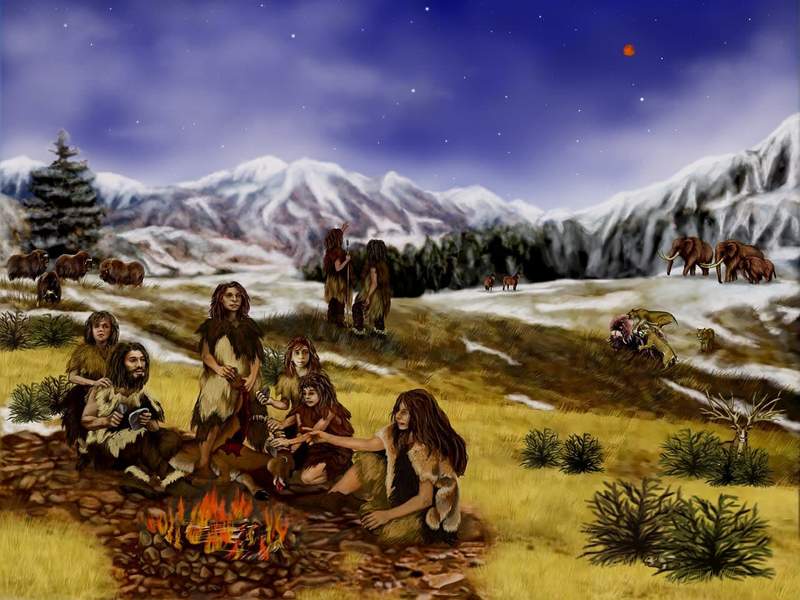
The scientists, working on a shoestring budget often reliant on grants rather than grand state initiatives, managed to extract and analyze DNA from Neanderthal remains stretching back some 120,000 years. That’s a staggering stretch, an unimaginable length of human — well, *hominin* — endeavor. The finding identifies a distinct Neanderthal lineage, pushing back the known timeline for their presence in this European corridor significantly. It suggests a robust, established population far earlier than previous estimates indicated, providing fresh nuances to our understanding of human dispersal and interaction across continents.
Because, for centuries, the narrative around early human groups has been, to put it mildly, contentious. And discoveries like these make it even more so, forcing scholars—and frankly, politicians—to revise accepted origin stories. It scrambles the simple tales of ‘us’ arriving — and ‘them’ receding. Our ancient ancestors, it seems, were far more interconnected, their genetic pathways a tangled mess rather than a neat highway. According to findings published in a recent Nature paper, these teeth offered genetic proof of a previously unknown maternal lineage existing more than 100 millennia ago.
Professor Aliyah Hassan, a prominent genetic anthropologist from the National Museum of Pakistan, notes, “Such discoveries are absolutely crucial for countries like ours, sitting at historic crossroads. The idea that these ancient populations weren’t isolated, that their movements and interactions profoundly shaped the human story, means we need to invest more in unearthing our own regional pasts. It’s not just about proving antiquity; it’s about understanding the deep, shared migrations that make us who we’re, globally.” She argues that policy makers, busy with today’s crises, frequently neglect the profound impact of ancestral studies.
This nuanced view isn’t merely academic. Consider the contemporary geopolitical landscape. Nations, especially in South Asia, frequently define themselves through ancient migrations and heritage—sometimes benignly, sometimes divisively. A more complex picture of European prehistory, indicating deep interconnectedness and diverse ancient groups, should certainly serve as a subtle challenge to ethno-nationalist narratives cropping up worldwide. The lines on our modern maps, you see, rarely reflect the free-flowing pathways of millennia past.
And then there’s the broader issue of shared heritage. If Neanderthals, once considered merely a brutish sidebar to modern humanity, prove to be such sophisticated, widespread groups, what does that say about our own self-proclaimed uniqueness? It implies a broader definition of humanity, a messier, more interwoven ancestry that includes groups we might not readily classify as ‘us’ in an age often obsessed with tribal purity.
📄 POLICY WIRE WHITEPAPER PUBLISHED: PAKISTAN'S NATIONAL SECURITY POLICY PRIORITIES
👉 READ BY CLICKING HERE“We’re finding echoes of our common origins not just in Europe, but across Eurasia, right into the Indian subcontinent,” states Dr. Marek Kowalski, director of archaeological initiatives at the European Cultural Heritage Fund, cautiously. “These deep ancestral ties should be celebrated, not ignored. The funding we receive—or don’t—directly impacts our ability to paint a truer picture of the human journey. It’s a policy decision, ultimately, whether we invest in understanding our origins or let national myths take hold unchecked.”
One only needs to observe how some factions reinterpret archaeological evidence to bolster grand, unified national narratives to see the real-world implications of these dusty revelations. When ancient findings, even in a distant land, subtly rewrite the story of who belongs where, it holds weight.
What This Means
The economic — and political fallout from such seemingly abstract discoveries isn’t immediate, but it’s insidious. Economically, these findings rarely spark direct market shifts. But they can redirect research funding, influence tourism focused on heritage sites, and even shape educational curricula for generations. For instance, the recognition of specific ancient populations can necessitate greater investment in heritage protection and archaeological expeditions in those regions, providing jobs and scholarly prestige.
Politically, the implications are more subtle, but profound. If genetic evidence increasingly paints a picture of constant, deep-time migration and admixture across all human groups—a picture far more complex than simple linear evolution or isolated populations—it challenges any contemporary political rhetoric founded on a static, ‘pure’ national identity. In regions like Pakistan and its neighbors, where identity politics often hinge on historical narratives of invasion, migration, and indigenous populations, European findings resonate. They serve as a global mirror. If Europe’s story is one of deeply intertwined ancient populations, it bolsters the argument for a similar, nuanced understanding of diverse South Asian histories—pushing back against exclusionary, single-thread narratives. It forces everyone, everywhere, to reconsider the very notion of a ‘first’ inhabitant or an ‘original’ lineage.
It’s not just academic curiosity. It’s foundational to how we tell our stories, justify our borders, and understand the endless, inconvenient connections that have shaped us all.