

Motherhood & Mimosas: Albuquerque BioPark Balances Beasts and Brunch for Holiday Boost
POLICY WIRE — Albuquerque, N.M. — It’s more than just a calendar date, isn’t it? For cities perpetually seeking an economic bump, Mother’s Day isn’t merely about flowers and hastily...

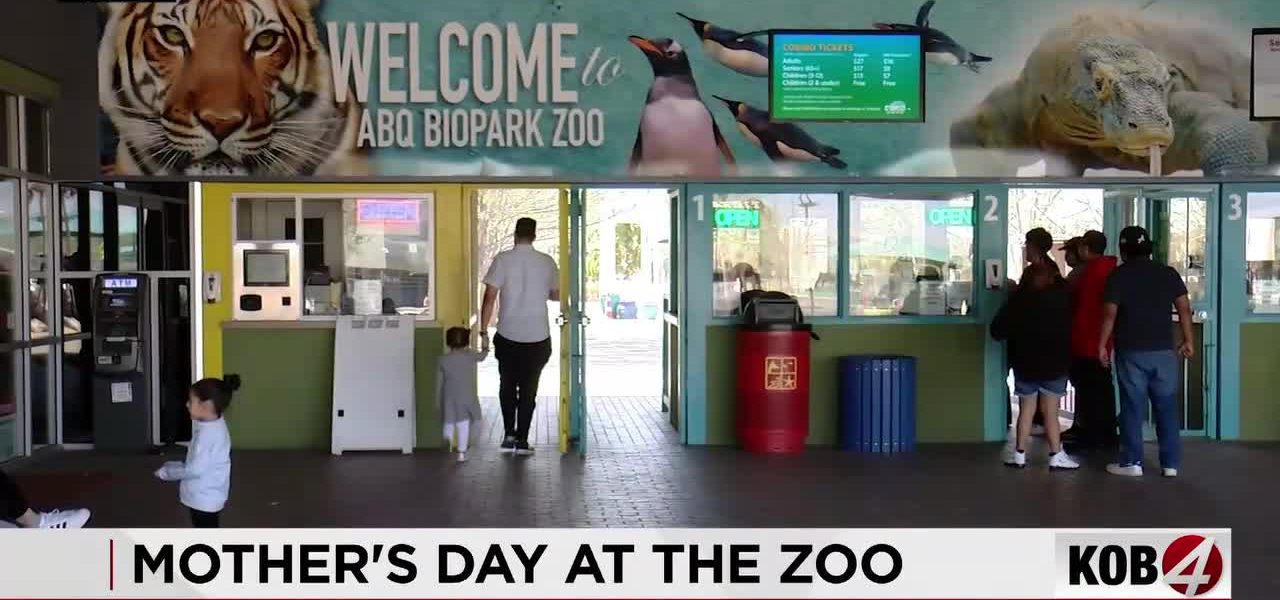
POLICY WIRE — Albuquerque, N.M. — It’s more than just a calendar date, isn’t it? For cities perpetually seeking an economic bump, Mother’s Day isn’t merely about flowers and hastily scribbled cards; it’s prime territory for leveraging communal sentiment into tangible revenue. The Albuquerque BioPark, nestled somewhat incongruously against a desert backdrop, appears to have mastered this delicate alchemy, rolling out a high-stakes, high-caffeine Mother’s Day bash this Sunday.
No sleepy strolls through animal exhibits this weekend. The BioPark is morphing into a calculated festival ground. They’re hawking seven distinct performance zones, each vying for parental attention with live music, carefully curated food vendors, and, of course, the requisite Bloody Mary bar alongside sparkling mimosas. One imagines a tableau of harassed fathers juggling sticky toddlers, half-sipping, half-spilling their mid-morning tipple while a local band noodles through a soft-rock cover. It’s capitalism with a petting zoo veneer, truly.
But hey, it works. Officials are banking on the sheer irresistibility of a new baby kangaroo. That’s their anchor, their draw – the adorable, pouch-dwelling joey whose existence is now, perhaps unwittingly, intertwined with local tourism metrics. Visitors are being herded towards the “Discovery Station” to bone up on marsupial parenting, presumably to better appreciate the BioPark’s own matriarchal mammal in residence. They’ll probably even catch a glimpse of the tiny hopping wonder, because who wouldn’t want that on their feed?
Sarah Jennings, the BioPark’s pragmatic Director, wasn’t mincing words about the weekend’s dual purpose. “We’re not just offering a day out; it’s an opportunity to connect, truly, with the natural world – and, yes, for parents to perhaps enjoy a mimosa,” she told Policy Wire. “It’s about community — and education, after all.” There’s that institutional wink; they know why you’re *really* there.
Because ultimately, these kinds of events are economic engines, especially for public facilities that rely on gate receipts and ancillary sales. Albuquerque, like many cities, grapples with consistent diversification of its economy beyond traditional sectors. Dr. Anjali Sharma, an economist at the University of New Mexico, laid it out for us with academic precision. “These events, they’re economic pumps, small but significant,” Sharma explained. “You see a measurable uplift in local hospitality and retail, especially for a city constantly navigating the challenges of diversifying its economy. And culturally, it fulfills a need. People need to gather, celebrate, spend.” You can’t argue with that.
The city’s bet on this Mother’s Day spectacular isn’t misplaced; national consumer spending for Mother’s Day has consistently trended upward, hitting a staggering $31.7 billion in 2022, according to the National Retail Federation. New Mexico, trying to snatch a piece of that pie, knows well that local attractions have to offer something beyond the usual ticket. It’s experiential economics, dressed up with face painting for the kiddies.
📄 POLICY WIRE WHITEPAPER PUBLISHED: PAKISTAN'S NATIONAL SECURITY POLICY PRIORITIES
👉 READ BY CLICKING HEREIt also reflects a broader, almost global trend. While Mother’s Day in its current commercialized form is largely a Western import, the essence of honoring matriarchal figures and gathering in celebration transcends borders. You see it in the sheer communal joy of events like Eid al-Fitr across the Muslim world—a focus on family, feasting, and community, albeit driven by faith rather than themed drinks. But the impulse to connect — and venerate, particularly around motherhood, is strikingly universal. In Karachi, in Kuala Lumpur, families will be gathering, perhaps with less hoopla over marsupial progeny and bottomless mimosas, but with the same underlying reverence. The BioPark’s event, then, becomes a localized manifestation of that deep human need.
And let’s be frank, with online ticket purchases—a frictionless transaction—the BioPark is simply adapting to modern consumer habits. They’re making it easy to spend, to gather, to make those memories, whatever your budget allows (or your credit card permits). They’ve studied the data, analyzed the foot traffic, — and packaged a product.
What This Means
This Albuquerque BioPark event, ostensibly a saccharine celebration of motherhood, actually functions as a shrewd lesson in urban economic strategy. It’s an example of public institutions adapting private sector marketing tactics to shore up budgets and contribute to local coffers. By blending entertainment, education, and outright retail therapy, cities like Albuquerque can maximize engagement and revenue. The push for new, cute baby animals isn’t just about species propagation; it’s about drawing eyeballs and opening wallets, plain and simple. the integration of adult-oriented amenities, such as cocktail bars, underscores a calculated effort to extend the demographic appeal beyond mere families with young children, targeting an affluent, leisure-seeking cohort willing to spend a bit extra for an ‘enhanced’ experience. But there’s a flip side: these carefully curated spectacles risk overshadowing the primary conservation and educational missions if the pursuit of profitability becomes too aggressive. It also subtly reinforces the increasing commercialization of public spaces and holidays, a trend with both economic benefits and potential societal critiques regarding the genuine spirit of such occasions. It’s a pragmatic dance, really, between good intentions and cold, hard cash, and the BioPark’s moves are undeniably polished.