


King James’s Prolonged Reign: The Commerce and Calamity of an NBA Dynasty’s Sunset
POLICY WIRE — Oklahoma City, USA — When the last, defiant gasp of a forty-one-year-old athlete’s ambition rattled the rim and clanged away, it wasn’t just a basketball game ending. No, this was the...

POLICY WIRE — Oklahoma City, USA — When the last, defiant gasp of a forty-one-year-old athlete’s ambition rattled the rim and clanged away, it wasn’t just a basketball game ending. No, this was the seismic shudder of an era, a corporate brand — etched deep into the global consciousness — perhaps pondering its next act. Shai Gilgeous-Alexander, the Thunder’s own heir apparent, calmly drained two free throws, sealing a clean sweep for Oklahoma City over the Los Angeles Lakers. But for all the celebrations on one bench, — and the quiet resignation on the other, the real story wasn’t about who won. It was about what was being left behind.
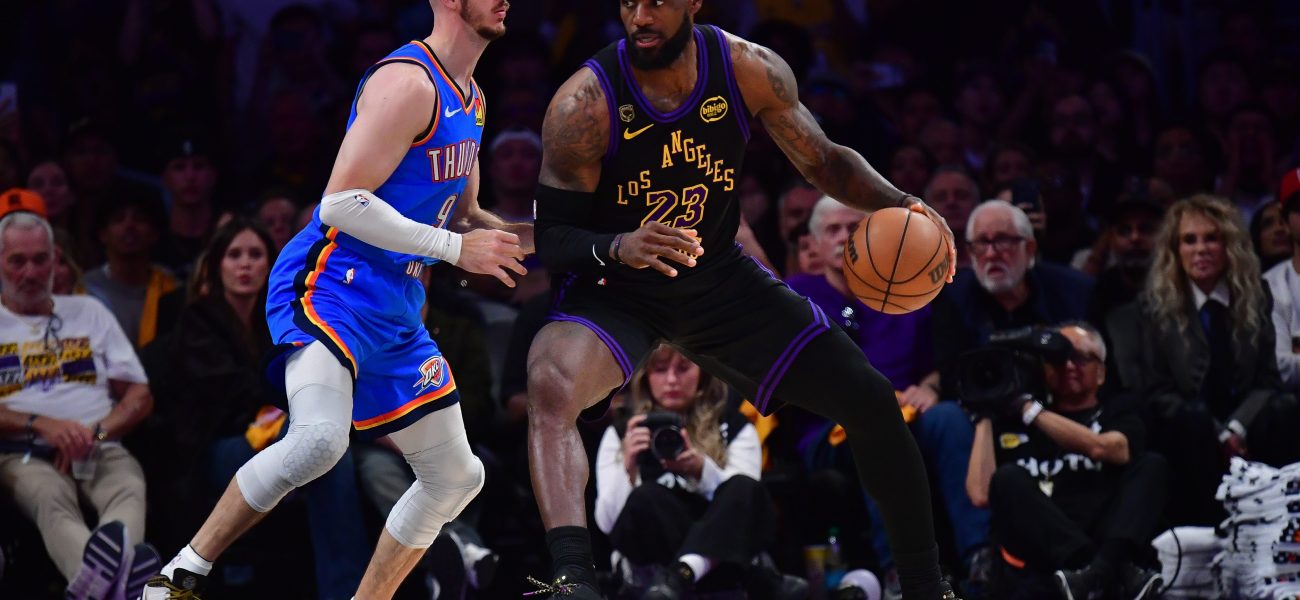
LeBron James, or ‘King James’ as his legions know him, had just concluded a playoff run that, for moments, flickered with the incandescent brilliance of his youth. Twenty-four points, twelve boards, three dimes in that final contest—respectable, sure, for most, but almost an afterthought when measured against the mythical standard he set. The OKC Thunder booted the Lakers home, effectively ending one of the league’s most scrutinized seasons for its elder statesman. And suddenly, the conversation wasn’t about the Thunder’s triumph, but James’s looming twilight. His departure from the court wasn’t just a statistical entry; it’s a profound cultural marker.
It begs a deeper question: how long can one individual’s celebrity continue to prop up entire franchises, not to mention a multi-billion dollar athletic footwear industry and burgeoning media empires? Beyond the Paint: LeBron’s Longevity Defies Metrics, Reshapes Athletic Economics. For years, James has been less a player and more a mobile, self-sustaining economic engine, valued at an estimated net worth surpassing $1.3 billion. He doesn’t just play; he influences markets.
And let’s not discount the global reverberations. His jerseys, his signature shoes—they sell as briskly in Karachi’s bustling bazaars as they do in Midtown Manhattan. Young fans in Lahore, watching pirated streams in dimly lit cafes, know his name. They argue his legacy, mimic his moves, just as passionately as those in Los Angeles. This isn’t merely about basketball anymore. It’s about the sheer reach of American soft power, disseminated through the spectacle of individual athletic genius. It’s a brand recognized, perhaps, more readily than many heads of state. The NBA, recognizing this untapped market, has aggressively pursued expansion into South Asia and the Muslim world for years, riding on the backs of such transnational icons.
Thunder coach Mark Daigneault, a man not prone to hyperbole, admitted his awe. “What he’s doing at this stage of his career is remarkable,” Daigneault observed before the series. “He is a guy that similar to what I said about the team. Collectively, if you make a mistake on him, he’s going to make you pay for it… It’s a privilege.” There’s an undertone of respect there, but also, a professional ruthlessness. He’s acknowledging the legend while orchestrating his team’s execution against him. But you get the feeling he also realizes the historical import of facing someone of James’s magnitude. It isn’t just winning; it’s staking your claim against a titan.
📄 POLICY WIRE WHITEPAPER PUBLISHED: PAKISTAN'S NATIONAL SECURITY POLICY PRIORITIES
👉 READ BY CLICKING HEREShai Gilgeous-Alexander, the young star who dispatched James’s Lakers, shared a similarly casual, almost reverential perspective. “It was fun. It’s amazing what he’s doing out there at his age. It’s very impressive,” Gilgeous-Alexander reportedly said, after what must’ve been one of the biggest moments of his burgeoning career. “He’s not very old in the grand scheme of life. But for the NBA, he’s pretty old. He doesn’t seem like it out there.” That bluntness cuts through the sheen: an honest appraisal of athletic mortality colliding with exceptional longevity.
What This Means
This Laker ousting isn’t just about the Thunder’s future prospects (though they look bright). It’s about a macro-economic shift in sports celebrity. James’s career arc has mirrored the globalization of basketball itself, from a domestic American league to a worldwide marketing juggernaut. His enduring marketability, even as his physical dominance wanes, poses a fascinating dilemma for sports franchises. Do you gamble on a waning legend for his commercial pull, or do you pivot aggressively to the next generation, risking a dip in global engagement? NBA viewership, for example, is up approximately 12% globally in the last five years, a testament to its expanding reach—but a significant portion of that still hinges on narratives built around stars like James. For policy wonks, it highlights the intersection of cultural soft power, multi-national brand management, and the often-brutal realities of ageism in industries where youth is worshipped. The ripple effect on player salaries, endorsement deals, and the overall narrative framing of the sport will be substantial. The market, always ruthless, doesn’t wait for sentiment. And in a globalized sports economy, no player, not even one worth over a billion, can defy gravity forever.