

Beyond the Paint: LeBron’s Longevity Defies Metrics, Reshapes Athletic Economics
POLICY WIRE — Los Angeles, United States — For an athlete whose entire adult life has unfolded under a spotlight of almost pathological intensity, it’s not the championships or the scoring titles...

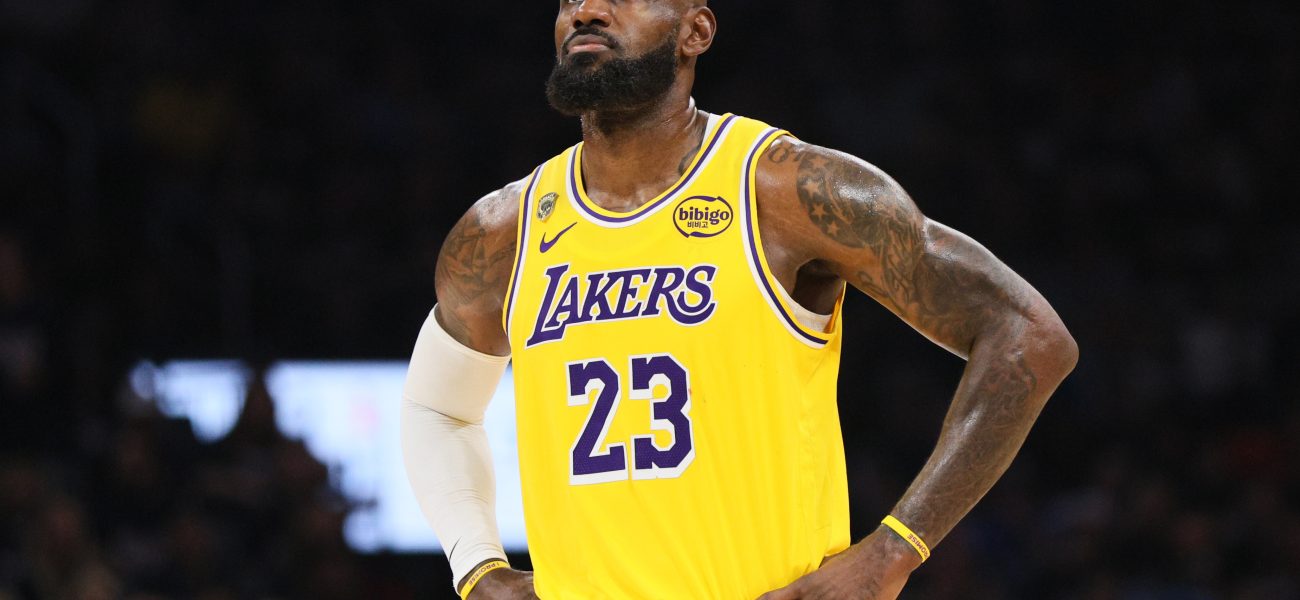
POLICY WIRE — Los Angeles, United States — For an athlete whose entire adult life has unfolded under a spotlight of almost pathological intensity, it’s not the championships or the scoring titles that truly stand out in LeBron James’s bewildering run with the Los Angeles Lakers. It’s the sheer statistical effrontery of it all. Believe it or not, the latest analysis suggests his eight seasons wearing the purple and gold — from age 34 to 41 — represent a Hall of Fame career in and of themselves.
It’s a peculiar twist, isn’t it? We often talk about ‘eras’ in sports. James isn’t just an era; he’s multiple, overlapping epochs, all contained within one impossibly durable frame. As the recent NBA postseason wound down for the Lakers after a Monday night loss to Oklahoma City, James himself confessed, with a typical King James-esque mystique, “I don’t know what the future holds for me.” But perhaps he doesn’t need to. The future, for him, might just be the continued rewriting of his own past.
Consider this: Basketball Reference, an almost sacred text for hoops historians, crunched the numbers on Hall of Fame probability. When fed just James’s Laker stats—eight All-Star nods, seven All-NBA appearances, that 2019-20 assist title, and one championship ring—the model churned out an 86.5% chance he’d make it into Springfield, Massachusetts, on that segment alone. An absolute shoe-in, if you will. That’s more All-NBA selections than entire careers like those of Jason Kidd, Carmelo Anthony, — and Clyde Drexler. And more playoff wins in L.A. than Hall of Famers Mitch Richmond, Bernard King, — and Yao Ming racked up in their entire runs. It’s frankly ridiculous.
But the true kicker, the kind of observation that makes even seasoned sports analysts sigh with resignation, is that this Laker chapter represents only the fourth distinct, Hall-worthy career arc in his unparalleled journey. First Cleveland, then Miami, a second Cleveland stint, — and now Los Angeles. It’s an almost arrogant accumulation of accolades, challenging every notion we’ve held about athletic decline, prime windows, or even what constitutes a single professional lifetime.
“The sustained individual dominance LeBron James has demonstrated isn’t just a sports story; it’s a profound economic and social commentary on an aging workforce and the immense value placed on generational talent, even beyond conventional retirement ages,” observed Dr. Ayesha Khan, a geopolitical strategist tracking global market trends, whose remarks often touch upon burgeoning markets in South Asia. “His performance, and the massive financial apparatus around him, exemplifies how individual excellence can dictate macroeconomic ripple effects, right down to regional media contracts and sponsorship portfolios affecting major corporations in Karachi or Kuala Lumpur.”
What This Means
📄 POLICY WIRE WHITEPAPER PUBLISHED: PAKISTAN'S NATIONAL SECURITY POLICY PRIORITIES
👉 READ BY CLICKING HERELeBron James isn’t just a player; he’s an economic bellwether. His sustained market value, well into his 40s, challenges traditional models of athletic compensation and brand longevity. For professional sports leagues, it proves that investing heavily in proven, transcendent talent—even seemingly older talent—can yield unprecedented returns, extending audience engagement and broadcasting revenues far longer than previously thought possible. Think about the global merchandising empire, for instance; a brand isn’t just for Christmas, it’s for 20+ years when you’re a phenomenon like this. It’s forcing sports franchises, like UCLA navigating stadium deals, to rethink every long-term contract and marketing strategy. Because how do you plan for someone who continually defies statistical gravity?
Beyond the dollars, it reflects a broader societal trend: we’re all living longer, and in many industries, professionals are working longer. James’s case serves as an extreme, high-profile example of what’s possible with elite fitness, cutting-edge sports science, and—let’s be honest—an almost extraterrestrial level of competitive drive. For policymakers, it could inform discussions about an aging labor force, productivity across generations, and the evolving nature of celebrity as a durable, marketable commodity.
It’s also about cultural omnipresence. The man is everywhere. In a world increasingly fragmented, where figures of universal reverence are rare, LeBron stands as a kind of modern mythological titan. From the courts of California to the dusty streets where young cricketers dream in Lahore, the quest for sustained dominance, the relentless pursuit of individual excellence, resonates. His saga, of repeatedly defying expectations, carries a universal appeal.
As his contract situation hangs in the balance, a tantalizing prospect emerges: will James sign elsewhere and, in a truly bizarre turn, manufacture a fifth distinct Hall of Fame career? He’s still putting up team-high numbers (23.2 points, 7.3 assists, and 6.7 rebounds this postseason at 41, for heaven’s sake). That’s something you simply don’t see, an athlete effectively building entirely new legacies when most of his peers have long since transitioned into commentating or quiet retirement. And because we’re talking about LeBron, every option feels somehow, weirdly, on the table. It leaves you wondering what ceiling even he hasn’t shattered yet.