


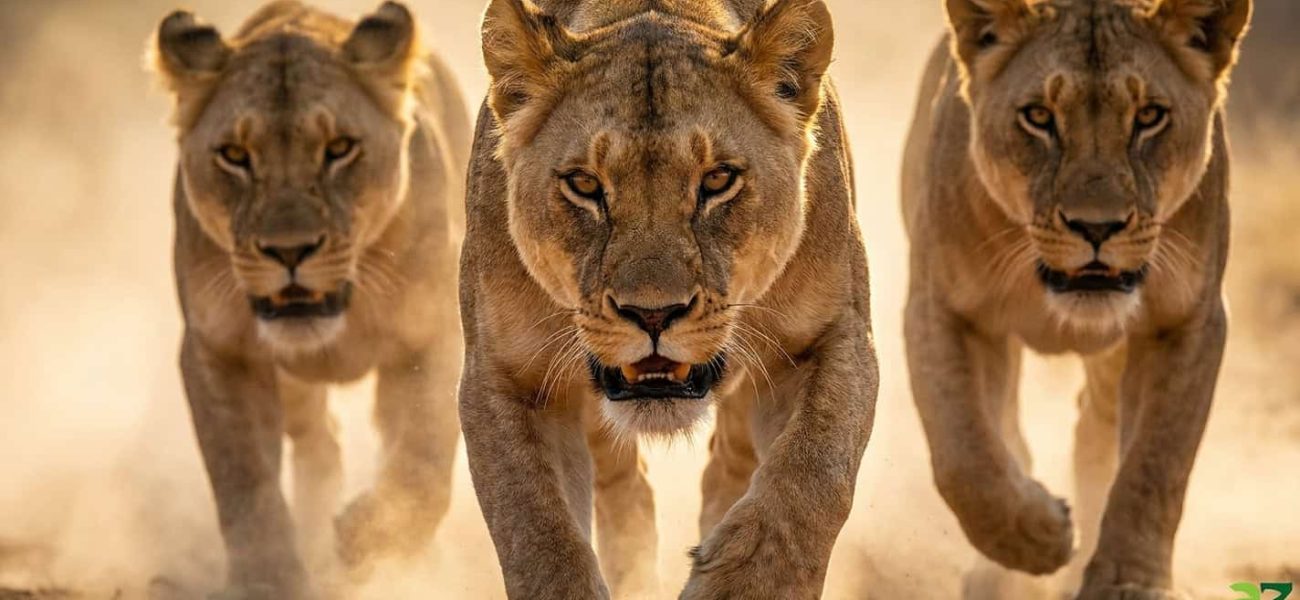
Masai Mara’s Savage Court: Nomad King’s Audacious Gambit Ends in Blood
POLICY WIRE — Nairobi, Kenya — It wasn’t the roar of victory, but the chilling quiet after a bloodbath. In the unforgiving theatre of the Masai Mara, where every sunrise promises both beauty...

POLICY WIRE — Nairobi, Kenya — It wasn’t the roar of victory, but the chilling quiet after a bloodbath. In the unforgiving theatre of the Masai Mara, where every sunrise promises both beauty and brutality, a drama recently unfolded, proving that some boundaries are non-negotiable. An outsider male, young and brimming with audacious ambition—or perhaps sheer desperation—dared to trespass into the domain of the famed Paradise Pride, challenging the established order. He paid the price.
It’s easy to romanticize the lion as king. But this wasn’t some grand duel between alpha males; this was the raw, unsentimental enforcement of territorial law by the pride’s formidable lionesses. They don’t mess around. The incident, caught on camera by startled tourists, quickly spread through wildlife circles—a grim spectacle of nature’s harsh sovereignty.
Dr. Evelyn Okello, Chief Warden for Conservation with the Kenya Wildlife Service, didn’t mince words. “It’s a stark reminder, isn’t it? These majestic creatures operate by rules far older than any human decree. When a rogue male pushes boundaries, nature delivers its own brutal justice. Our job is to manage the spillover, not dictate the wild. Sometimes, it’s about understanding the limits.” Her voice carried a weary resonance—a veteran’s resignation to the Mara’s primal calculus.
Because, make no mistake, while a male lion’s wandering might seem adventurous, it’s often born of necessity. Overpopulation in some areas, or—more critically—habitat fragmentation and shrinking prey bases, force these solitary males into dangerous new territories. They’re looking for a future; they just don’t always find it.
And this particular intruder’s fatal miscalculation has ripples, extending beyond mere animalistic skirmish. The Mara is not just a postcard; it’s a finely balanced, economically vital ecosystem. Disturbances, however natural, hint at deeper, human-induced pressures. Lion populations across Africa, for example, have plummeted by an estimated 43% over the last two decades, with only about 20,000 individuals remaining today, according to the IUCN Red List. This decline isn’t just about habitat loss; it’s about escalating conflicts—man versus beast, and often, beast versus beast, intensified by human impact.
Chief Ole Kipkorir, a venerable Maasai elder from a community near the Sekenani Gate, observed the incident with a traditionalist’s wisdom. “We’ve lived alongside these big cats for generations. We respect the Mara’s ways. But lately, with droughts, prey move, lions follow. Sometimes they get too close to our cattle. It’s not just their problem, it’s ours. We need more than fences; we need better understanding.” He’s right; the tension between traditional pastoralist life and wildlife conservation is a constant negotiation, not a static agreement.
But how do you ‘understand’ nature when it’s being squeezed by a growing human footprint and a rapidly changing climate? It’s a brutal question. The nomad lion’s demise, in its gory natural justice, forces us to confront this fragility.
This primal clash echoes—in a completely different vein, certainly—the intense struggles over dwindling resources that routinely spark violence in places like Pakistan’s Balochistan, where decades of resource extraction and climate change have exacerbated tensions over water and land rights. The scale is different, but the underlying narrative of finite resources fueling brutal contests, whether by tooth or by politics, remains eerily consistent. Here, in the Mara, it’s about survival in a biological sense. Elsewhere, as explored in The Grim Cycle: Bannu Blast Echoes Pakistan’s Unending Frontier War, it’s about the brutal cost of societal breakdown catalyzed by a similar environmental pressures, albeit played out with human tools of conflict.
What This Means
The swift, uncompromising elimination of the intruding lion, though a routine occurrence in the wild, highlights the perilous tightrope walked by modern conservation efforts. Economically, Kenya’s tourism sector, a cornerstone of its GDP, relies heavily on these iconic species and their seemingly undisturbed habitats. Incidents like these, particularly when documented, serve as potent reminders of both the beauty and danger of the ‘authenticity’ tourists pay handsomely to see. It’s a delicate balance: portray raw nature, but ensure tourist safety — and minimize negative human-wildlife encounters. Conservation organizations now grapple with funding complexities; donors want success stories, not narratives of brutal territorial disputes—unless those disputes can be framed as a reason for more support. the episode underlines the growing friction between expanding human settlements — and animal migratory patterns. We’re asking nature to abide by lines on a map, which it simply won’t do. For Policy Wire, it underscores a wider point: how fragile global ecosystems are, how resource scarcity drives conflict, and how our attempts to ‘manage’ nature often expose its deeper, indifferent power. We’re still figuring out that coexistence thing.