


Billion-Dollar Ballroom Bunker: White House Security Gets a Lavish Line Item, and Lawmakers Are Losing Their Minds
POLICY WIRE — WASHINGTON — It started, they said, as a vision for grandeur. A new White House East Wing ballroom—something elegant, something befitting presidential diplomacy. But somewhere between...

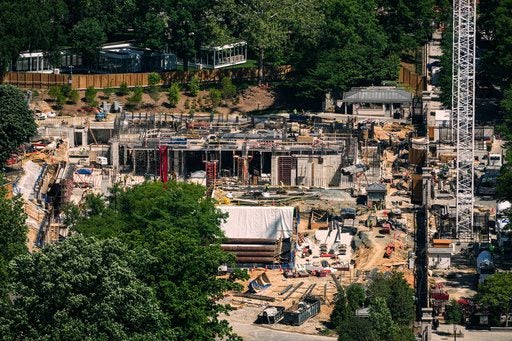
POLICY WIRE — WASHINGTON — It started, they said, as a vision for grandeur. A new White House East Wing ballroom—something elegant, something befitting presidential diplomacy. But somewhere between the initial grand pronouncements — and today’s grubby congressional scrum, that vision mutated. It’s now less about grand waltzes — and more about a billion-dollar bunker, courtesy of the American taxpayer.
Capitol Hill is reeling. Forget decorum; this isn’t that kind of week. Republican Senators have quietly slid up to $1 billion into a spending bill. A cool billion. Not for foreign aid, or new aircraft carriers, or even roads. No. This colossal sum is tagged for “security adjustments and upgrades” around President Trump’s pet East Wing project, the very one he swore would be funded solely by private donations. It’s a move that’s got even some of his party peers scratching their heads—and Democrats seeing red.
It feels a bit like a magic trick, doesn’t it? One moment, the President declares private funding for construction, insisting ‘not one penny of taxpayer money.’ The next, he’s got his party hustling for a billion dollars of public cash to fortify a project whose true purpose, beyond ‘ballroom,’ remains nebulously grand. They’re telling us it’s all about protection, post-assassination attempt. And sure, presidential security is a non-negotiable. But a billion? That’s not a bulletproof vest; that’s a whole new armory.
Senate Majority Leader John Thune, bless his pragmatic soul, attempts to sell it as a regrettable but necessary evil. “It’s what it costs to protect the President of the United States in a very dangerous time and a dangerous world,” he’d explained. “Keeping the leader of the free world safe is an expensive proposition. The Secret Service has a job to defend and protect the president, and we need to make sure they’ve the tools to do it.” A sentiment you can’t really argue with on its face. But the devil, as always, lives in the details, — and a billion dollars is a rather large detail.
Across the aisle, Democrats aren’t buying the sudden security crisis narrative, not for a second. Senate Democratic leader Chuck Schumer didn’t mince words. “Well, give me a break,” he fumed. “He’s put a billion dollars in the budget for it. This staggering waste of taxpayer dollars has nothing, nothing to do with security and everything to do with Trump’s ego.” He’s vowed to fight this tooth and nail, pushing to strip the funds from what’s already a contentious spending bill that seeks to reinstate funds for immigration enforcement agencies Democrats had previously blocked.
It’s an awkward position for the GOP. Sen. Susan Collins, a moderate Republican, expressed unease, demanding clarification from Secret Service Director Sean Curran on how this mountain of cash would actually be deployed. Sen. Rand Paul, never one to shy from a spending fight, echoed similar sentiments, reminding everyone the President initially promised private funds. “Was it spent wisely? Do they really need more at this time?” Paul queried, adding a pointed barb, “And a lot of people think this might be papering over for the, you know, the ballroom.” But then you’ve got staunch loyalists like Missouri Sen. Josh Hawley, who sees “no problem” with the allocation. It’s a mess.
📄 POLICY WIRE WHITEPAPER PUBLISHED: PAKISTAN'S NATIONAL SECURITY POLICY PRIORITIES
👉 READ BY CLICKING HEREMeanwhile, White House legal filings describe the East Wing project as something out of a Bond villain’s lair: “heavily fortified,” complete with bomb shelters, military installations, and a subterranean medical facility. President Trump himself recently riffed about bulletproof glass — and drone-repellent technology. He’s also trying to muddy the waters, saying the money isn’t all for the ballroom—it’s for “many of the projects” and to “do certain things militarily.” Very specific, very clear.
And when we talk about dangerous times and security, this domestic budgetary brawl plays out against a very different kind of reality abroad. Think about countries like Pakistan, perpetually navigating the geopolitical tightrope, where real threats manifest as market devastation in northwest frontier regions or targeted assassinations. The U.S. doles out hundreds of millions in economic and security assistance there annually, an average of $232 million each year between 2011 and 2021, according to official USAID reports. That’s a fraction of what’s being earmarked for this alleged presidential fortress. It’s enough to make a seasoned observer wonder about relative priorities, about what truly constitutes a ‘dangerous world’ when measured in taxpayer dollars.
What This Means
This billion-dollar brouhaha is far more than just a fight over a line item. Politically, it’s a self-inflicted wound for Republicans, feeding directly into Democratic narratives of presidential extravagance and disregard for fiscal prudence, especially heading into an election cycle. It’s a tough sell to working families—whose budgets are pinched—that their tax dollars are going into a bulletproof ballroom rather than, say, crumbling infrastructure or healthcare access. For the Secret Service, it throws a giant, unwanted spotlight on their budget and needs, potentially setting an unsettling precedent for how security funds are justified and allocated. It forces uncomfortable questions about transparency and accountability, particularly when an administration contradicts its own prior commitments. And domestically, it exacerbates the perception that Washington is deeply disconnected from the everyday concerns of its citizens. Internationally, it simply adds to the noise, perhaps projecting an image of inward-looking priorities at a time when global challenges demand more consistent, strategic engagement. It certainly won’t quiet those who view American policy through a lens of hypocrisy—prioritizing a luxurious domestic fortification while global stability often hinges on far more modest, but consistent, financial commitments.