


Munich’s Steel Spine: Bayern Draws Line Amidst Player Wage Wars and Changing Guard
POLICY WIRE — Munich, Germany — The football world, ever a gilded cage of staggering wealth and fleeting loyalties, just got a reality check — and it’s echoing from the plush...

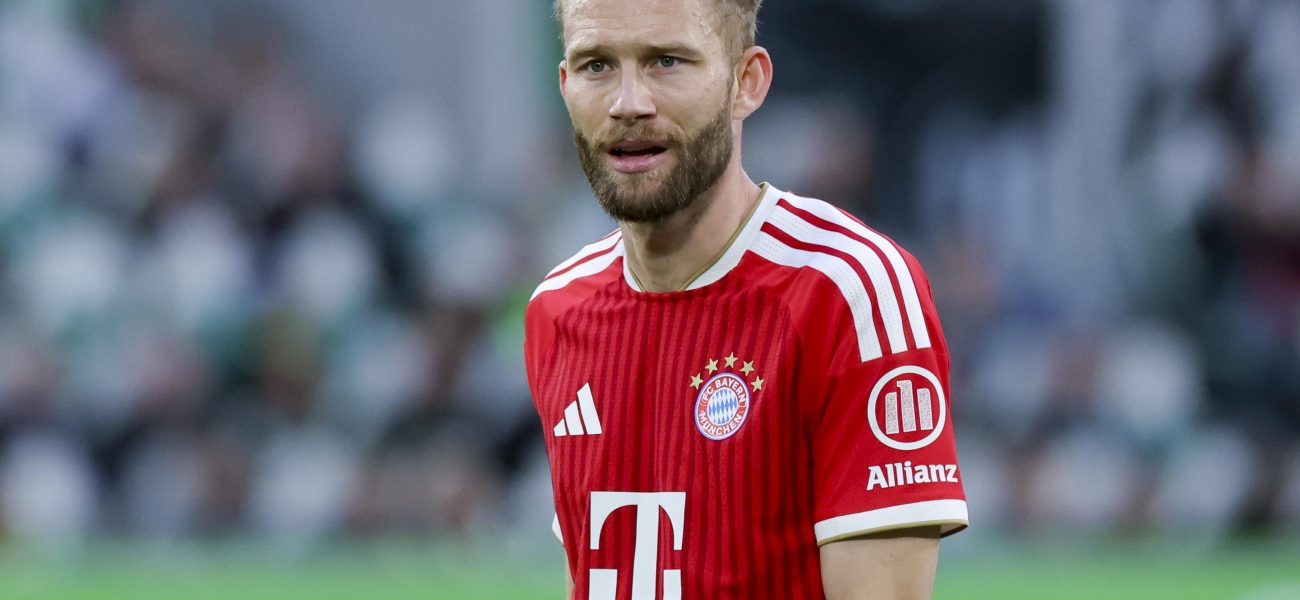
POLICY WIRE — Munich, Germany — The football world, ever a gilded cage of staggering wealth and fleeting loyalties, just got a reality check — and it’s echoing from the plush executive suites of FC Bayern Munich. For all the talk of astronomical transfer fees and players as economic assets, it appears even the behemoths of European sport are learning to say, ‘No, thanks.’ It isn’t about some minor youth academy skirmish; it’s about a seasoned Austrian international named Konrad Laimer, a player the club cherishes, yet one whose financial aspirations seem to have collided head-on with Bayern’s notorious fiscal discipline. A rather old-school notion in an era where billions flow like water through football’s financial arteries, don’t you think?
Laimer, a formidable presence on the field, wants a pay packet that reportedly doubles his current generous €8-9 million gross annual salary. Bayern, a club that doesn’t just win but meticulously manages its books — — and its image — isn’t budging. Their stance? Quite blunt. You’re good, Konrad, but you’re not that good. Uli Hoeneß, Bayern’s omnipresent patriarch — and supervisory board member, isn’t known for mincing words. He likes Konrad, he admitted, But this isn’t a charity. He’s not Maradona. Nobody walks into this club after a free transfer and dictates terms that belong to Champions League winners. We’re running a business, not a gilded playpen.
That pretty much sums it up, doesn’t it? A sentiment increasingly shared by fans, who often wonder about the perceived disconnect between player value and team contribution. They’re getting weary of star attitudes. You can practically hear the groans of agents across Europe, whose finely-tuned algorithms for ever-increasing leverage just got a glitch.
And what’s their trump card, you ask? Simple. Laimer joined on a free from RB Leipzig. If he eventually leaves on a free in 2027, well, it won’t be the end of the world. It’s an almost brutal logic, a long-game strategy that strips the romance out of the sport but keeps the balance sheets healthy. They’ve already sunk considerable funds into new contracts for stars like Musiala — and Kimmich. A line had to be drawn — — and they picked Laimer’s proposed €15 million+ figure to scrawl it in the sand.
The Silent Revolution — And Unheard Whimpers
But the shifting landscape isn’t just about financial hardball. Sometimes, it’s about breaking ancient glass ceilings. Take Marie Louise Eta. Her name might not instantly ring bells in every household, but for the football cognoscenti, it marks a significant, almost tectonic, shift. When Union Berlin, that scrappy, lovable underdog, bested Mainz 05 with a decisive 3-1 victory, it wasn’t just three points on the board. It was a win helmed by Eta — the first female coach to secure a victory in one of Europe’s top five leagues. Let that sink in. Decades, generations of male-dominated dugouts, finally cracked open. Her understated triumph suggests that real change doesn’t always arrive with trumpets and fanfare; sometimes, it’s just quiet competence delivering results.
This achievement, so groundbreaking for women in sports, happens against a backdrop of continued, rather perplexing, male-dominated speculation. Like the ludicrous rumors that Bayern was secretly wooing Tornike Kvaratskhelia, brother to PSG’s Kvicha. It wasn’t true, of course. Christian Falk, a journalist whose scoops often feel surgically precise, swiftly squashed that one. But the rumor mill churns constantly, fuelled by speculation — and perhaps the hopes of ambitious agents.
Speaking of global ambitions, the decisions made in Munich and across Europe’s top clubs have rippling effects far beyond the continent. For young footballers in places like Lahore or Karachi, the glitzy European leagues aren’t just entertainment; they’re the ultimate dreamscape. They see the lavish contracts, the adulation, the possibility of escaping hardship through sport. But they also absorb the lessons, whether intended or not, of financial prudence — or the lack thereof — shaping the sport’s highest echelons. It isn’t just about the money players command; it’s the financial literacy — or illiteracy — they often fail to grasp as careers abruptly end or lucrative contracts fall short of expectations.
📄 POLICY WIRE WHITEPAPER PUBLISHED: PAKISTAN'S NATIONAL SECURITY POLICY PRIORITIES
👉 READ BY CLICKING HEREWhat This Means
Bayern’s hard-line stance with Konrad Laimer is more than just internal squad management; it’s a bellwether for the entire ecosystem of elite European football. Economically, it signifies a potential shift towards fiscal conservatism after years of wage inflation, fueled in part by free transfers where clubs are effectively paying player acquisition costs in inflated salaries rather than direct transfer fees. Bundesliga’s revenues hit €4.9 billion in the 2022/23 season, marking a 9.6% increase — a statistic from the DFL’s annual report that underscores both the sport’s immense commercial power and the persistent pressure to maintain profitability against rising player costs.
Politically, this represents a reassertion of club power against the ever-increasing leverage wielded by player agents. It’s a subtle but firm pushback against what some perceive as runaway player entitlement, a return to the idea that a club’s identity and financial health might, occasionally, trump an individual’s personal bottom line. Dr. Anwar Shah, an economist specializing in global sports markets at the London School of Economics, told Policy Wire, Player agents, especially for those out of contract, have become master craftsmen of leverage. But even in a market awash with Gulf money, clubs like Bayern—traditional powerhouses—are setting limits. It’s a necessary return to fiscal sanity, even if it feels jarring to players used to infinite growth.
It’s a calculated gamble, of course. Bayern knows what it’s doing, even if it risks losing a solid player in the process.
And for figures like Marie Louise Eta? Her groundbreaking victory signals a slow, yet crucial, evolution in sports leadership, mirroring broader societal shifts towards inclusivity. This isn’t just a feel-good story; it’s a professional credential earned through merit, challenging age-old biases within a sport often resistant to external change. As Bayern navigates its salary skirmishes, these parallel narratives — the economic tug-of-war and the quiet revolution of talent recognition — collectively paint a picture of football at a crossroads: one where tradition and modern pressures continually clash, shaping a global spectacle.