


The Phoenix Mythos: Anthony Edwards and America’s Relentless Search for a Superhuman Savior
POLICY WIRE — Minneapolis, U.S. — America, it seems, can’t ever get enough of a good savior story. And right now, in the sprawling, sometimes cynical landscape of professional sports, one Anthony...

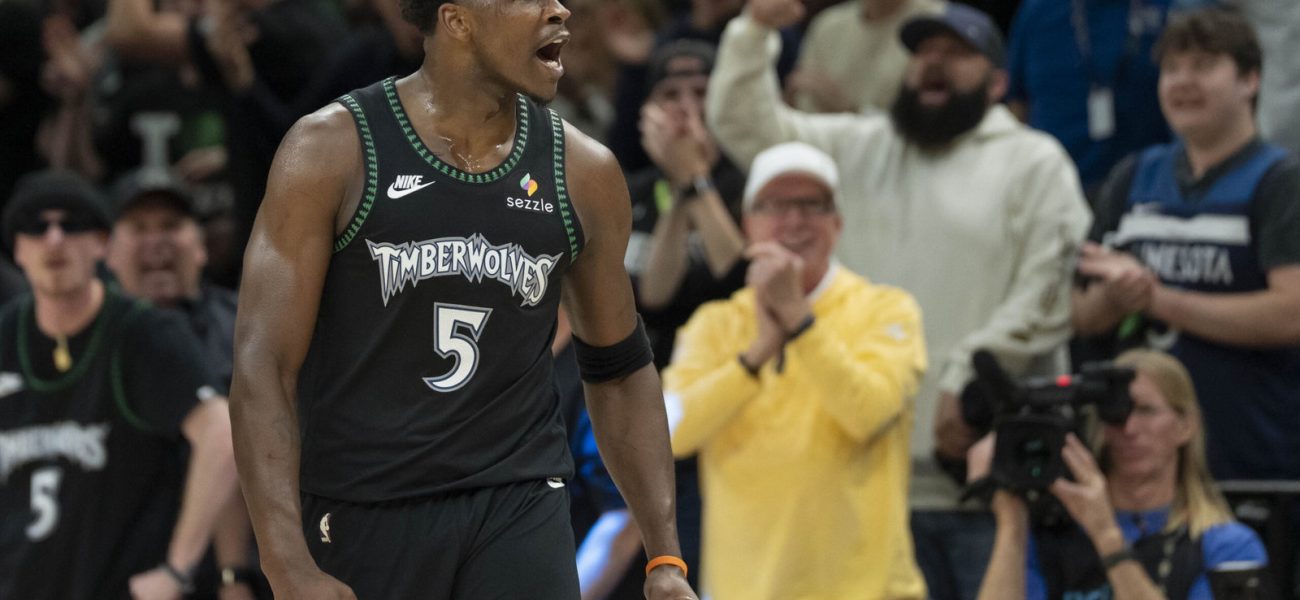
POLICY WIRE — Minneapolis, U.S. — America, it seems, can’t ever get enough of a good savior story. And right now, in the sprawling, sometimes cynical landscape of professional sports, one Anthony Edwards has stepped into the breach, capably, theatrically. He’s not just a basketball player; he’s become the default receptacle for an entire franchise’s — hell, perhaps a nation’s — yearning for the mythic.
It’s a peculiar thing, this collective obsession with grafting comic book archetypes onto mortal athletes. For Edwards, the Minnesota Timberwolves’ explosive young guard, it’s not just a passing fancy; it’s an all-consuming narrative. From Ant-Man to Wolverine, the analogies stack up faster than his points in the fourth quarter. It’s almost as if the sheer burden of mundane reality drives us to seek out the super-powered, the magically resilient. And Edwards, at barely 24, delivers.
Take his improbable recovery from what seemed a season-ending injury, a hyperextended left knee with a bone bruise that should’ve shelved him for weeks. But here he was, back for Game 1 against San Antonio, playing with a limited but unmistakable intensity. But you see, this isn’t just about his physical gifts; it’s about the stories we tell around them, the legends we meticulously craft. Just ask his teammate. “He(‘s) like Wolverine,” Julius Randle quipped last season, a comparison revived after Edwards’s quick return. “He gets hurt, he do something in the back. I don’t know what the hell he do, he come out — and he balls. That’s what he does.”
It’s a charming enough assessment, but it’s also an indication of the kind of larger-than-life narrative the public and media crave, particularly from their sports stars. Edwards isn’t just an athlete; he’s a canvas for our collective fantasies. His high-flying dunks evoke Superman, his on-court spatial awareness a spider-sense, his tenacity an echo of Batman’s unyielding will. But are we actually looking at an athlete, or a mirror reflecting our own societal hunger for uncomplicated heroes? Perhaps a little of both. He plays basketball, yes, but he also embodies an aspirational ideal. He gives fans — and, let’s be honest, sports journalists — something visceral, something to believe in that doesn’t involve messy political entanglements or financial instability.
And because he’s a true prodigy, the statistics only bolster the legend. Edwards already holds the franchise record for most playoff games played by a Timberwolves athlete with 50, eclipsing the previous mark of 48 set by someone long forgotten, or at least overshadowed, by May 6, 2026. This isn’t just performance; it’s dominance on a timeline that bends to his will. His recent 36-point outing in Game 4 of the Conference Semifinals, 16 of them in the critical final quarter, cemented his status. It also fueled the burgeoning superhero mythos, an endlessly renewable resource for a media landscape desperate for compelling content.
This idolization of athletes isn’t a phenomenon limited to the NBA or American shores. You can find its fervent expression in the packed stadiums of Lahore for a cricket match, or the deafening roars that greet national teams across South Asia. The longing for individuals who transcend the ordinary, who embody excellence against all odds, resonates profoundly. In many societies, particularly those grappling with economic headwinds or social divisions, these sporting heroes offer a rare, unified escape – a common cause that transcends quotidian struggles. They’re a symbol of what’s possible, not just for the individual, but for the collective consciousness.
📄 POLICY WIRE WHITEPAPER PUBLISHED: PAKISTAN'S NATIONAL SECURITY POLICY PRIORITIES
👉 READ BY CLICKING HEREStill, for all the talk of superpowers, Edwards often grounds himself in a distinctly human humility. “It’s not just about me, it’s the people around me,” he told reporters after the Game 4 win, pushing back against the singular hero narrative. “These people really want to see me succeed… That’s enough about me, let’s ask about my team.” It’s a sentiment designed to endear, to remind you that even a burgeoning Superman needs a supporting cast. And Minnesota, it seems, loves him for it. “I’m with Minnesota. I got Minnesota back at all times,” he’s famously said. And really, what more could a city ask for in its self-appointed guardian? A hero who also loves them back. Just maybe don’t expect him to fly.
What This Means
The ascendance of an athletic supernova like Anthony Edwards isn’t merely a sports story; it’s a telling commentary on the broader socio-economic landscape. For Minneapolis, a city that, like many regional hubs, wrestles with economic growth and identity in a competitive national market, Edwards becomes an economic engine, a brand ambassador. He’s a draw, pure and simple. His appeal translates into ticket sales, merchandise revenue, — and a ripple effect across local businesses. His star power — even in the early stages of its full orbit — significantly enhances the Timberwolves’ marketability and their value to potential investors. The team, previously a perennial underperformer, now carries a palpable cultural cachet, tied directly to Edwards’s magnetism. It’s the raw, unadulterated capitalism of celebrity, an undeniable factor in the modern sports-entertainment complex. Because, let’s be real, star players equal profitability, which is why organizations invest staggering sums in their development and retention.
Beyond the raw economics, Edwards represents a form of civic optimism. In an era often defined by fragmentation and discord, sports offers one of the last remaining avenues for collective celebration and civic pride. His ‘Wolverine’-like resilience and team-first ethos provide a narrative of grit and determination that resonates beyond the hardwood. It’s the very core of sports’ enduring appeal: the promise of a hero, untainted by the complex moral ambiguities of politics or policy. This communal rallying point is invaluable. It sells a version of hope, a marketable narrative of overcoming adversity that, while focused on basketball, reflects larger cultural desires for straightforward triumphs. In short, Edwards isn’t just winning games; he’s a walking, talking, economic — and psychological boost for his city.