


Entertainment Ends in Tragedy: Albuquerque Confronts Escalating Casual Violence
POLICY WIRE — Albuquerque, New Mexico — It wasn’t the clang of bowling pins or the blare of arcade games that echoed into the pre-dawn hours of April 19 outside Albuquerque’s Main Event....

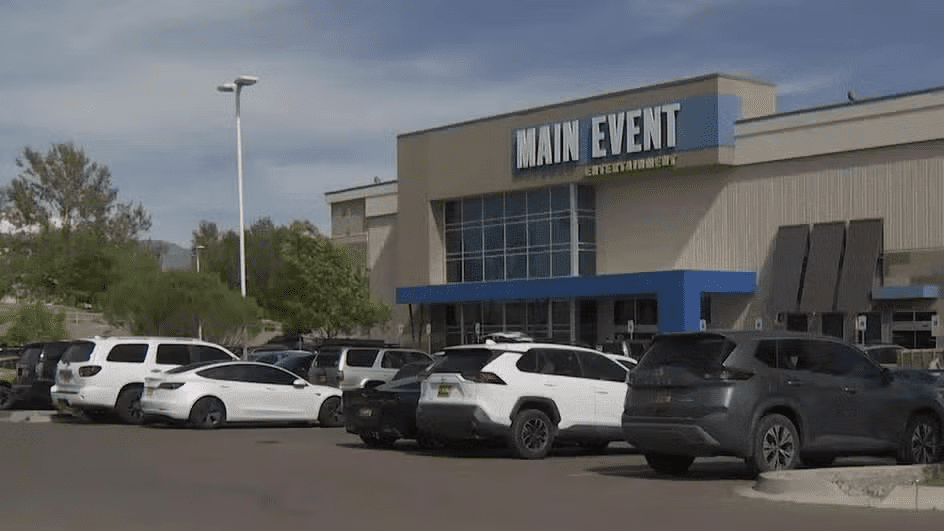
POLICY WIRE — Albuquerque, New Mexico — It wasn’t the clang of bowling pins or the blare of arcade games that echoed into the pre-dawn hours of April 19 outside Albuquerque’s Main Event. Instead, the night culminated in the sharp, definitive crack of a gunshot, puncturing the city’s already frayed sense of normalcy. While families often seek innocuous diversions in such venues, this particular evening devolved into a fatal confrontation, prompting a police dragnet that has now ensnared a second, significantly younger suspect.
The latest apprehension brings into focus 17-year-old Wyatt Drake, now facing an open count of murder, tampering with evidence, conspiracy, and unlawful possession of a handgun by a minor. He’s accused in the killing of 28-year-old Isaiah Jackson-Herrera, whose life ended abruptly after what seems to have been a trivial verbal spat. Drake’s arrest follows that of 21-year-old Kevin Vargas, who was picked up earlier in Hobbs. It’s a chilling tableau: a night of ostensibly innocent recreation dissolving into cold-blooded violence, fueled by an almost adolescent sense of territoriality and immediate escalation.
Main Event staff, it turns out, had already detected a troubling undercurrent, escorting the group containing Drake and Vargas after observing a firearm protruding from a backpack. But the preventative measure wasn’t enough, was it? Surveillance footage reportedly shows Jackson-Herrera, with family and friends, merely walking past the duo before turning back, perhaps responding to a verbal provocation. His girlfriend, a witness to the unfolding tragedy, subsequently relayed to detectives that Jackson-Herrera simply asked, “What did you say?” — a question that, in this city, regrettably often proves a harbinger of much worse. Then came the fight, the gun, — and the final, irretrievable act.
“We’re witnessing a disturbing trend,” declared Assistant Chief Patricia O’Malley of the Albuquerque Police Department, her voice etched with an almost palpable weariness during a recent press briefing. “It’s no longer just about gang turf or targeted hits; we’re seeing disputes that would once have ended in a fistfight now escalating to deadly force with alarming frequency. It’s a societal cancer, and it’s devouring our youth – both victims and perpetrators.” She paused, letting the grim reality settle. “We can’t arrest our way out of this entirely. There’s a deeper malaise.”
Vargas, when questioned by detectives, offered a version of events that paints Jackson-Herrera as having swung first, leading to a scuffle where both fell. He alleges that as Drake reached for his firearm, Jackson-Herrera also grabbed for the weapon. This account—convenient, perhaps, for the defense—underscores the murky, often contradictory narratives that plague investigations into street-level violence, where credibility frequently comes under intense scrutiny. Regardless of the precise choreography of the struggle, a single bullet found its mark, extinguishing a life.
At its core, this incident isn’t just a police blotter entry; it’s a brutal microcosm of a broader phenomenon. Albuquerque, like many urban centers, grapples with persistently elevated crime rates. According to the FBI’s Uniform Crime Reporting Program data for 2022, Albuquerque recorded a violent crime rate of 1,029.8 per 100,000 residents, significantly higher than the national average, a statistic that hardly inspires confidence. And it’s not just the numbers, is it? It’s the erosion of public spaces – places meant for joy and community – that now carry an unspoken, chilling potential for tragedy.
Still, the reverberations extend beyond city limits. For communities with strong international ties—say, Albuquerque’s growing Muslim population with familial and business connections to nations like Pakistan or the broader South Asian diaspora—such incidents cast a long shadow. They don’t just destabilize local perception; they subtly impact the city’s image as a safe destination for investment, tourism, and even immigration. What message does a shooting at a family entertainment center send to prospective newcomers or distant relatives considering relocation? It suggests a volatile underbelly, a lack of predictable security that can deter global engagement.
“Our city’s future isn’t just about economic development; it’s intrinsically linked to public safety,” asserted State Representative Fatima Zahra (D-Albuquerque), a vocal advocate for youth programs and community policing initiatives. “When violence becomes this casual, this seemingly random, it doesn’t just claim individual lives; it slowly strangles the vitality of a city. Businesses suffer, families second-guess their choices, and the threads that bind a diverse community together begin to unravel. We simply can’t afford to normalize this.” Her sentiments resonate deeply with those watching Albuquerque’s trajectory with increasing apprehension.
What This Means
The arrests in the Main Event shooting, while providing a measure of prosecutorial progress, underscore a profound societal fissure. Economically, repeated incidents of high-profile violence in public spaces can inflict serious damage. Businesses like Main Event, reliant on a perception of safety, could see reduced foot traffic and revenue, potentially leading to job losses or even closures. City leaders face increasing pressure to address crime, which often translates into higher policing budgets, diverting funds from other critical areas like education or infrastructure. Politically, the issue becomes a cudgel in local elections, with incumbents scrambling to demonstrate efficacy and challengers promising draconian crackdowns or innovative prevention strategies.
the youth of the accused — one a minor — forces a hard look at the systems ostensibly designed to support and guide them. What kind of environment breeds such a ready willingness to resort to deadly force over a perceived slight? Is it a failure of education, family structure, community outreach, or simply the pervasive availability of firearms? The answer, is a cocktail of all these elements. For Albuquerque, these arrests aren’t an end; they’re merely another chapter in an ongoing, uncomfortable narrative about urban decay, youth disaffection, and the relentless, tragic cost of casual violence.