

Echoes of Betrayal: A Wedding’s Aftermath Lands Michigan Groom Decades in Prison
POLICY WIRE — Detroit, Michigan — There’s a particular kind of quiet that settles over a courtroom, starkly different from the joyful cacophony of a wedding. That silence now defines the life...

POLICY WIRE — Detroit, Michigan — There’s a particular kind of quiet that settles over a courtroom, starkly different from the joyful cacophony of a wedding. That silence now defines the life of one Michigan groom. A night meant for champagne toasts and vows has spiraled into decades behind bars, a testament not to happily-ever-afters, but to a friendship shattered, quite literally, by a bullet. He didn’t just lose a best friend that night; he lost everything else too. His freedom. His future.
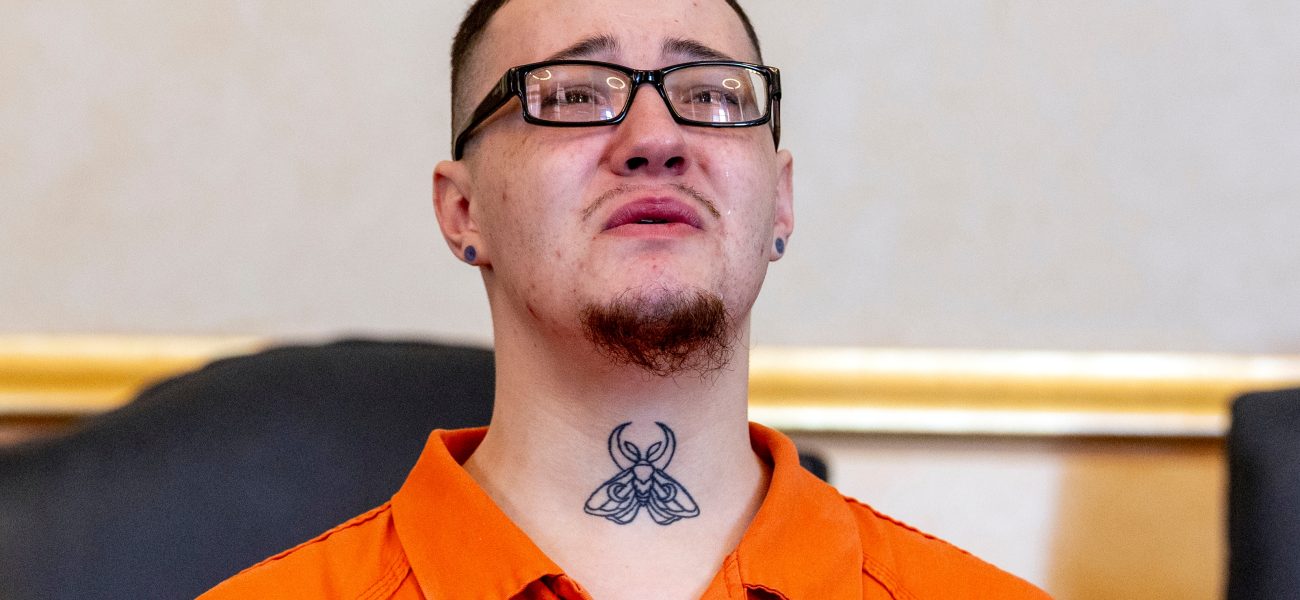
It began as it often does. Jubilation. Open bar. The kind of celebration everyone expects will live on in fond, if hazy, memory. Nobody plans for an emergency siren. Nobody plans for a life to extinguish. But that’s precisely what happened when newly-married Joseph Lee Spaan, now 30, shot and killed his longtime friend and wedding guest, Jacob Travis Tipton. A moment of drunken carelessness, authorities allege. An unspeakable act, friends — and family mourn. Spaan’s conviction for second-degree murder — and felony firearm charges paints a grim picture. He’s looking at 22 to 45 years. Quite a tab, really.
“This wasn’t just a tragedy, it was a profound violation of trust,” declared District Attorney Evelyn Reed, her voice sharp during her post-verdict statement. “When the bonds of friendship, especially those celebrated on a wedding day, devolve into lethal violence, our society demands — and we’ve delivered — accountability. It’s a stark reminder of alcohol’s sinister grip.” Her words resonated. Because they had to. A community wants answers, or at least, justice.
The defense painted a picture of regret, of a man drowning in sorrow — and booze, not malice. “Mr. Spaan will carry the crushing weight of his actions, and the loss of his friend, for every single day of his remaining life,” stated his defense attorney, Marcus Thorne, just after the sentencing. “This was a catastrophic accident born from an unimaginable lapse in judgment, not an intention to harm. But accidents, especially those with firearms, they change everything, don’t they?” He wasn’t wrong. They do.
Spaan, who pled guilty to a reduced charge after initially facing first-degree murder, avoided the most severe penalties, but his future vanished anyway. That’s a brutal reality. The incident — happening during a wedding reception at an Argentine Township home in September 2023 — ripped apart two families. But it’s not an isolated anomaly. The intersection of alcohol, firearms, — and celebration proves volatile more often than we’d like to admit. For instance, data from the Bureau of Justice Statistics indicates that approximately 40% of violent offenders were under the influence of alcohol during their offense. This isn’t just about one sad story; it’s a pattern, a predictable horror.
And these kinds of stories? They aren’t limited by borders, even if the legal systems differ. Just look at the emphasis placed on community — and celebratory responsibility across the globe. In many parts of the Muslim world, particularly in countries like Pakistan, cultural and religious tenets stress hospitality, decorum, and careful conduct during joyous occasions like weddings, called shaadis. Any breach, especially one leading to such severe harm, carries an immense societal — and spiritual cost. It’s a collective shame. Even if legal retribution might take different forms, the underlying anguish, the feeling of communal betrayal—that resonates across any longitude and latitude. The societal pressures, the expectations, they’re universally complex. We expect weddings to unify, not to fracture forever.
📄 POLICY WIRE WHITEPAPER PUBLISHED: PAKISTAN'S NATIONAL SECURITY POLICY PRIORITIES
👉 READ BY CLICKING HEREThe judge, a no-nonsense type, reportedly spoke about the permanence of Spaan’s actions. No retakes here. No do-overs. It’s done.
What This Means
This whole grim episode, while tragically personal, ripples into broader societal questions. Firstly, it brings into sharp relief the perennial debate around gun ownership, especially when combined with impaired judgment. Michigan, like many states, grapples with balancing Second Amendment rights against public safety. Cases like Spaan’s aren’t going to shift policy overnight, but they feed into the quiet, simmering resentment among citizens who see little respite from gun violence, even at a wedding.
Secondly, there’s an economic burden. The justice system—the police investigation, the court proceedings, Spaan’s eventual incarceration—it’s all funded by taxpayers. Every incident of preventable violence represents not just a human tragedy, but a drain on public resources that could, frankly, be directed elsewhere. Infrastructure, education, health care. And there’s the intangible cost too: the erosion of public trust. When an event meant to signify new beginnings becomes an obituary, it scars a community’s sense of safety. These stories make people cynical about shared experiences, about basic security. That cynicism isn’t just an emotion; it’s an impediment to civic life. Folks stop believing in institutions—or each other, sometimes. And when trust gets hit, when the legal system is stretched thin, it really just reinforces a growing anxiety that some things—basic things—are breaking down. Public trust in justice systems, already fragile, takes another blow.
So, yeah. A wedding. It usually signals new life. For Jacob Tipton, it was the end. For Joseph Spaan, it’s decades of steel doors — and hard time. It’s a cruel twist of fate, isn’t it? But, then again, maybe not fate at all. Maybe just choices. Bad ones. He’ll have plenty of time to ponder that.