



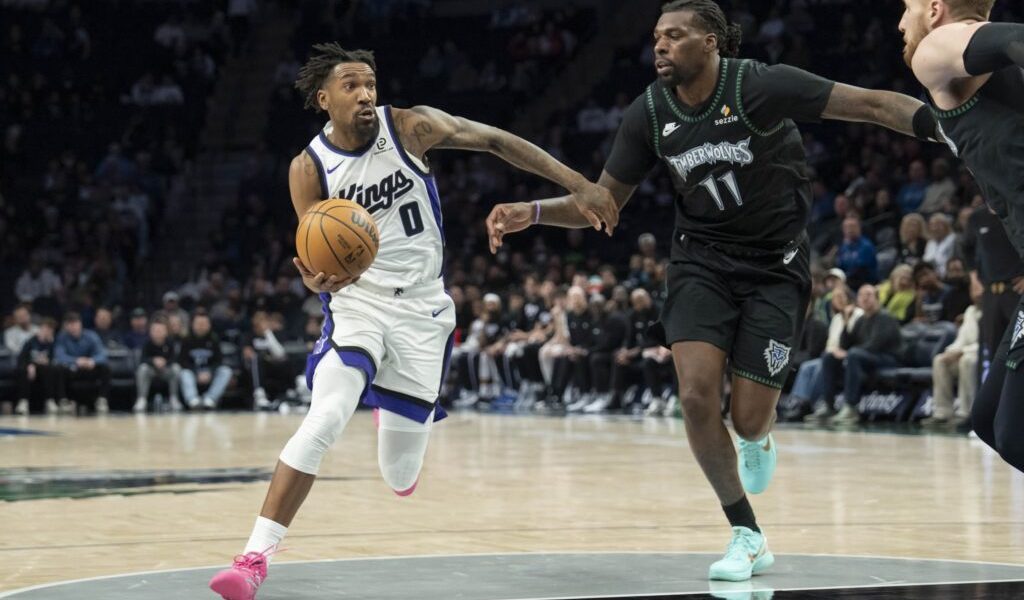
Crimson Grit: NBA Brawl Echoes Ancient Warrior Spirit as Timberwolves Claw Back
POLICY WIRE — Minneapolis, USA — Professional sports, at its jagged, often brutal edges, isn’t always about pristine balletic movement or textbook plays. Sometimes, it’s about a primal roar, an...

POLICY WIRE — Minneapolis, USA — Professional sports, at its jagged, often brutal edges, isn’t always about pristine balletic movement or textbook plays. Sometimes, it’s about a primal roar, an unexpected elbow, — and the defiant shrug that follows. Sometimes, it’s a testament to raw, unvarnished grit, the kind you rarely see outside of folklore. Such was the tableau presented in Game 4 of the NBA Western Conference Semifinals, a contest that—for a moment—became less about soaring dunks and more about unyielding resolve.
It wasn’t the seven-foot marvel Victor Wembanyama’s gravity-defying maneuvers that seized the headlines, nor even the Minnesota Timberwolves’ razor-thin 114-109 victory over the San Antonio Spurs that evened the series at 2-2. No, the truly captivating moment, the one that’s going to ripple through the locker rooms and, perhaps, beyond, arrived early in the second quarter. Wembanyama, in a scramble for rebound positioning, inadvertently—or not so inadvertently, depending on your preferred narrative—delivered a sharp elbow directly to the neck of Timberwolves big man Naz Reid. Reid crumpled. For a heartbeat, the arena held its breath.
And then he rose. He got up. A 26-year-old, not built from the same mythic cloth as a generational talent like Wembanyama, but forged in the furnaces of NBA G-League dreams and a perpetual chip on his shoulder. The impact, forceful enough to warrant a Flagrant 2 foul and send the towering Wembanyama to an early shower, seemed merely to stiffen Reid’s spine. He wasn’t just okay; he was galvanised. It’s almost as if the contact ignited something deep within him, some ancient competitive spark that most athletes only tap into at their absolute peak.
“Pain is weakness leaving the body, that’s it,” Reid later told a scrum of reporters, a weary, almost imperceptible smirk playing on his lips. His teammates, Anthony Edwards — and Ayo Dosunmu, sitting beside him, visibly cracked up. They’d heard this mantra before, this pithy dismissal of discomfort, this credo that Reid’s apparently lived by throughout this postseason. He’d even trotted it out when grilled about playing through a nagging right ankle injury, the kind that sidelines lesser competitors. It’s simple, sure, but it hits with the force of a concrete block.
But the story isn’t just about a bruise — and a comeback. It’s about how these micro-narratives can suddenly—bang!—change the macro-narrative of a series. Wembanyama, arguably the league’s brightest young star, ejected. The Timberwolves, riding high on a surge of self-belief, found a new gear. Reid, in particular, delivered a performance that defied his sixth-man status, tallying 15 points, nine rebounds, and four assists in 31 minutes off the bench. He’s been an undeniable anchor for Head Coach Chris Finch, posting averages of 14.0 points, 8.5 rebounds, and 2.5 assists across the four games, turning every single minute on the court into a statement.
His resilience isn’t just good television; it’s an exemplar of competitive spirit. Coach Finch, often a man of few overly sentimental words, remarked post-game, “Naz is just built different. He won’t be rattled, that’s for damn sure. You hit him, he hits back, with buckets and boards.” It’s a sentiment that resonates globally, an athletic narrative understood instinctively whether you’re courtside in Minnesota or watching highlights from a remote village halfway across the world, perhaps in a place like Lahore or Karachi. This isn’t just American basketball; it’s the universal language of battling through the blow. And because of moments like these, global engagement with the sport continues to climb; according to one recent Nielsen report, sports broadcasts collectively commanded over 70% of live TV viewership during prime time across several major markets this past year, demonstrating sports’ undeniable gravitational pull on global audiences.
📄 POLICY WIRE WHITEPAPER PUBLISHED: PAKISTAN'S NATIONAL SECURITY POLICY PRIORITIES
👉 READ BY CLICKING HEREWhat This Means
The implications of this particular scuffle, beyond simply evening a playoff series, are layered. Economically, a hard-fought, evenly matched series means more games, more ticket sales, more merchandising, and higher advertising revenues for the broadcasters. It’s a boom for the ecosystem. Politically, if you stretch the metaphor just a little, the incident reflects a classic underdog dynamic, a smaller force standing firm against a perceived titan. It’s a powerful narrative, the kind that fuels national spirits — and global admiration for resilience.
And consider the reach. The NBA, through its aggressive international outreach, particularly in South Asia and the Muslim world, often relies on compelling narratives. Naz Reid’s almost stoic acceptance of physical adversity—his refusal to cede an inch, his internal mantra of “pain is weakness leaving the body”—translates beautifully across cultures that often venerate strength, perseverance, and quiet determination. Think of the resilience celebrated in so many historical tales from regions like Pakistan, where individuals and communities regularly navigate formidable challenges. It’s a sporting echo of a broader human trait: to be knocked down, — and to stand back up, regardless. It’s a lesson that finds footing far beyond the hardwood. And as the league contemplates potential further disciplinary action against Wembanyama, the immediate impact on the series is stark: one titan temporarily sidelined, another quietly empowered.
The Timberwolves, suddenly imbued with an unshakeable belief that they can weather any storm—literal or figurative—now feel an entirely different kind of pressure. They know the world is watching, scrutinizing every possession, every rebound. The series, once perhaps seen as a relatively straightforward path for Wembanyama’s Spurs, is now a brutal, gritty chess match, redefined not by the finesse of its stars, but by the iron will of its unassuming warriors.
