


Shadows and Threats: Jerusalem Arrest Jolts Israel’s Already Frayed Political Scene
POLICY WIRE — Jerusalem — You could almost feel the collective sigh of resignation across the fractious Israeli political landscape this week. The news wasn’t just another item in a long list...

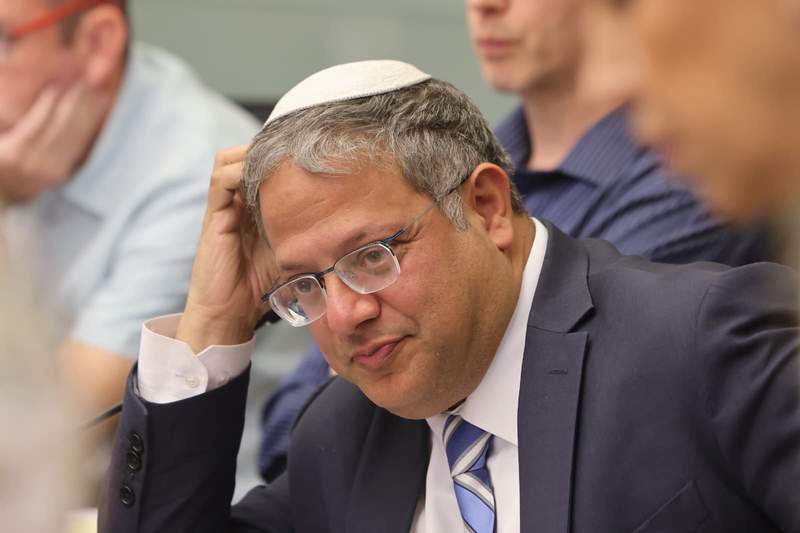
POLICY WIRE — Jerusalem — You could almost feel the collective sigh of resignation across the fractious Israeli political landscape this week. The news wasn’t just another item in a long list of regional skirmishes; it was a potent symbol of something far more unsettling. An ordinary citizen, a Jerusalem man, finds himself behind bars, allegedly for issuing a threat against Itamar Ben-Gvir—Israel’s National Security Minister. This isn’t just about security for one official. It’s about the frayed nerves of a nation, the escalating rhetoric, and the increasingly murky line between fiery discourse and outright intimidation.
It’s a bizarre sort of notoriety that often attaches itself to figures like Ben-Gvir. The Minister, known for his unyielding hardline stance and provocative visits to flashpoint holy sites, almost courted such a situation, or at least he operates within a sphere where such animosity brews readily. But an arrest for an alleged personal threat? That’s different. It suggests a simmering, individual-level rage—one that, once sparked, often proves far tougher to douse than any broad, political condemnation. He’s a walking lightning rod, the Minister. Always has been, probably always will be.
Authorities, as expected, have offered sparse details, citing an ongoing investigation. They confirmed the detention of a Jerusalem resident, identified only by initial reports, over explicit threats directed at Ben-Gvir. No further elaboration on the specific nature of the alleged threat has surfaced. But the very existence of such a charge underscores the precarious balance Israeli society tries (and often fails) to maintain. It’s a societal barometer, really, gauging the depth of animosity pervading public life. You see it everywhere, in the street, on social media—that palpable sense of an emotional powder keg.
And Ben-Gvir himself? He’s unapologetic. Never has been, never will be. When pressed about the incident by Policy Wire, his office relayed a characteristically blunt statement. “These cowardly threats won’t make me flinch from protecting the citizens of Israel,” Ben-Gvir said, his words likely reverberating with his core base. “My commitment to security — and sovereignty is absolute. Those who seek to intimidate will find themselves facing the full force of the law.” It’s the sort of robust declaration that bolsters his image among supporters but only inflames his detractors further.
But the reaction from across the political aisle painted a starkly different picture. “While we condemn any threat of violence against a public servant—because it’s wrong, period—we must also examine the rhetoric that fuels such hostility,” remarked opposition lawmaker Tamar Zandberg, when reached for comment. “Ministers have a responsibility to de-escalate, not constantly pour gasoline on already raging fires. This incident is a symptom, not just an isolated event.” Her point wasn’t lost on many observers, including those watching from distant shores.
Because the implications of these domestic tensions ripple outward, especially across the Muslim world. Pakistan, a staunch advocate for Palestinian rights and often a vocal critic of Israeli policies, watches developments in Jerusalem with a keen, concerned eye. The state of affairs at holy sites, particularly Al-Aqsa Mosque—or the Temple Mount, depending on your perspective—is a constant point of friction. Increased instability in Jerusalem, even over an alleged individual threat, contributes to the perception of broader religious and political repression, reinforcing narratives that fuel regional resentment. Just last year, the Pakistan Foreign Office issued multiple condemnations concerning events around Jerusalem, reflecting the deep engagement of South Asian Muslim nations with the conflict.
These sorts of incidents also invariably bring discussions around online radicalization and the challenges of policing digital speech to the forefront. According to a 2023 report from the Israeli Ministry of Public Security, instances of incitement on social media platforms linked to political figures and events in the region have increased by 15% year-on-year. It’s a daunting prospect for law enforcement. They’re trying to contain a hydra, cutting off one head only to see two more grow in its place.
📄 POLICY WIRE WHITEPAPER PUBLISHED: PAKISTAN'S NATIONAL SECURITY POLICY PRIORITIES
👉 READ BY CLICKING HEREIt’s no small wonder, then, that security around Israeli officials, particularly those as polarizing as Ben-Gvir, remains exceptionally tight. This latest arrest simply throws that stark reality into sharper focus. The apparatus of the state works tirelessly, attempting to preempt or neutralize threats—both real and perceived—that emanate from a deeply divided populace.
What This Means
This arrest, though seemingly a localized incident, packs a hefty political punch. For Ben-Gvir and his ultra-nationalist allies, it could easily be framed as proof positive of the dangers they face from ‘internal enemies’ or ‘incitement’—thereby justifying their increasingly hawkish policies. It provides convenient cover, a rallying cry, for further restrictive measures or heightened rhetoric.
Conversely, critics will seize upon it as another example of a volatile political environment exacerbated by the government’s provocative stance. It reflects a dangerous descent into personal attacks and potentially political violence, mirroring what we’ve seen elsewhere in hyper-polarized democracies. The economic implications, while not direct, are certainly secondary; persistent internal instability and international condemnation—especially from Muslim-majority states, including those in South Asia—can deter foreign investment and tourism. Who wants to put their money in a tinderbox, right?
But this saga isn’t just about an individual threat; it’s a symptom of a nation on edge. A country where the political discourse often veers into personal enmity, and where the boundaries of acceptable dissent are constantly tested. The incident simply highlights the ever-present security challenges that transcend borders, particularly in a region already brimming with geopolitical complexities—reminding everyone that a threat in Jerusalem echoes far beyond its ancient walls, sometimes all the way to Tehran’s halls of power or India’s defense ministries.