


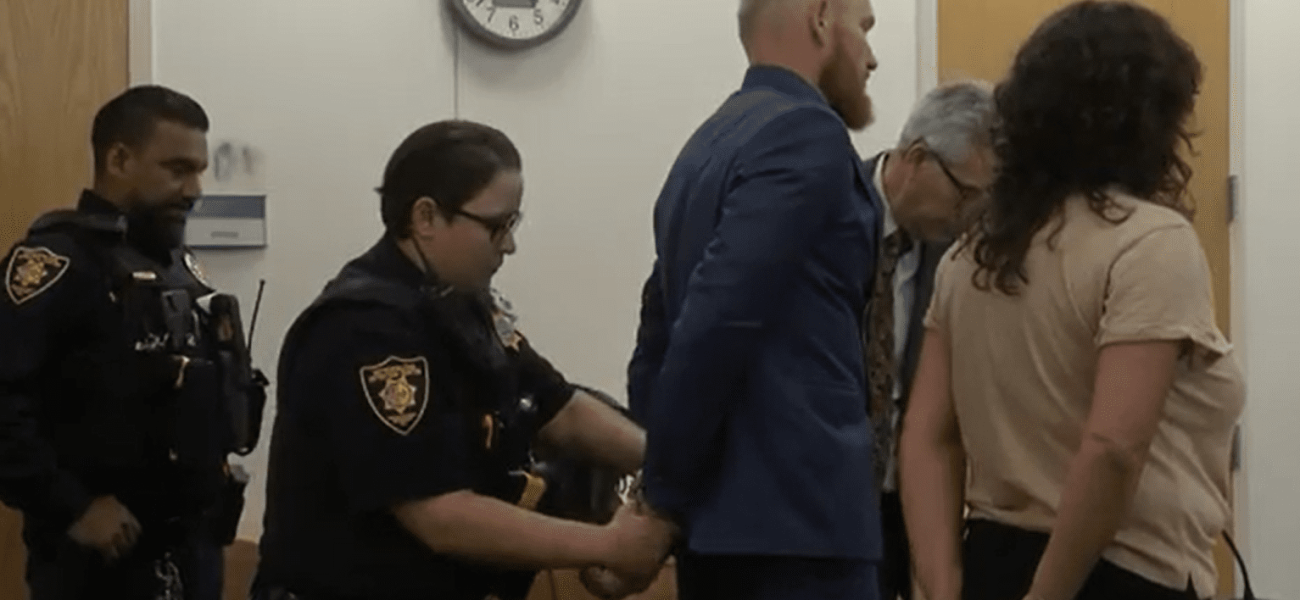
Beyond the Gavel: Albuquerque’s Hollow Justice, and the Scars That Lingered Long Before the Verdict
POLICY WIRE — ALBUQUERQUE, N.M. — The final word landed not with a bang, but with a weary sigh. A former middle school teacher, Patrick Corr, now stands branded by a jury’s decision, found guilty on...

POLICY WIRE — ALBUQUERQUE, N.M. — The final word landed not with a bang, but with a weary sigh. A former middle school teacher, Patrick Corr, now stands branded by a jury’s decision, found guilty on all counts of felony child abuse and sexual predation. But for many in this sun-baked city, the grim pronouncement offers little genuine solace. It’s just another brick in a long, dark wall of betrayal that stretches far beyond the confines of a single courtroom, exposing raw nerves in America’s educational system and the shadowy corners of digital adolescence.
It wasn’t a snap judgment, mind you. The jury, after taking its own sweet time – nearly a full day’s deliberations, after having to punch out Friday evening and come back Monday morning – cemented the charges. Corr had spent years at John Adams Middle School, from 2019 to early 2024, his role as an educator a perverse cover for something far more sinister. The accusations weren’t exactly a whisper; they screamed, echoing through court transcripts about booze and sexual abuse, the grotesque melding of adult responsibility and juvenile vulnerability. But hey, it’s not just a local problem, is it? We see this global creep.
Corr, in a classic move, had faced down the system from the witness stand last Friday, spinning a tale that essentially boiled down to: ‘Yeah, my messages might’ve been a little spicy for underage girls, but come on, I didn’t actually do anything wrong.’ An age-old dodge, really. The prosecution, bless ’em, didn’t buy it. They leaned hard into a blizzard of Snapchat messages from 2021, those fleeting digital whispers often leaving the loudest scars. The very ones read aloud during closing arguments, painting a stark, undeniable picture for the jury.
And what about the defense? Their strategy was a familiar tune: sowing discord, nitpicking at witness accounts, trying to highlight alleged discrepancies in timelines. Because if the victims couldn’t agree on the exact hour of their torment, well, then maybe it didn’t happen, right? The prosecution quickly shut that down, asserting—quite rightly—that these girls had zero motivation to fabricate such agonizing narratives.
The litany of charges laid against Corr paints a chilling picture: two counts of child abuse, one for criminal sexual penetration, and another for hawking or supplying alcohol to a minor. It’s a conviction, but not exactly a triumph. It’s a sad marker in a journey that, for the victims, is probably just beginning. And that judge? He didn’t even bother setting a sentencing date. Why? Because the show’s not over. Corr is back in the spotlight in September, staring down another trial, another horrific accusation: raping and impregnating a 15-year-old girl.
But this isn’t an isolated incident. Not by a long shot. These aren’t just local tragedies that disappear with a guilty verdict. They’re symptomatic of a wider malaise. “This verdict isn’t just about punishment; it’s about validating the courage of these young women,” noted Assistant District Attorney Sarah Mendez, her voice a practiced blend of conviction and empathy. “It’s about drawing a line in the sand for those who would exploit their position of trust, a critical step towards justice for children not just here, but everywhere.” You hear that? Everywhere.
The problem of online grooming and exploitation, for instance, isn’t confined to America’s sprawling Southwestern states. Globally, organizations grapple with protecting children from digital predators. The National Center for Missing and Exploited Children reported over 29 million instances of suspected child sexual exploitation material to authorities in 2022 alone, many originating from popular social media apps. Consider a nation like Pakistan, where traditional societal structures might seem to offer more oversight, yet rapid internet penetration and smartphone adoption introduce kids to the exact same global dangers of platforms like Snapchat. Kids there, like here, are online. They’re vulnerable. It’s a sobering reflection that the digital frontiers recognize no national borders, only opportunity for the predatory.
📄 POLICY WIRE WHITEPAPER PUBLISHED: PAKISTAN'S NATIONAL SECURITY POLICY PRIORITIES
👉 READ BY CLICKING HEREEducation, community leaders will tell you, should be a sanctuary, a safe harbor for developing minds. “What happened here? It’s a scar on our community, a deep one,” stated Eleanor Vance, a longtime education advocate who’s seen too many of these cases come through the New Mexico courts. “We’ve got to ask ourselves tough questions about safeguarding our kids, every single one of ’em, both within the school system and outside it. Because when trust erodes like this, it corrodes everything.”
What This Means
The Corr conviction, while an undeniable step toward accountability, offers no neat closure. For Albuquerque, and indeed for educational institutions across the nation, it’s a stark reminder of the persistent rot that can fester within seemingly trusted environments. This isn’t just a victory for a prosecutor; it’s a profound, sobering moment demanding rigorous re-evaluation of school hiring practices, digital oversight policies, and reporting mechanisms. Because the reality is, predators exist, and they thrive on complacency, whether it’s within the concrete walls of a classroom or the silent expanse of the internet.
Economically, such scandals chip away at public confidence in the education system. Parents, rightly, grow more wary, often demanding more resources for background checks, psychological screenings for staff, and student-to-teacher ratio limits that reduce potential vulnerabilities. This costs money. But more profoundly, it carries a societal cost: a generation of young people grappling with fractured trust, their innocence stolen by those they were taught to revere. It also puts intense pressure on a justice system already stretched thin, dealing with issues from fentanyl epidemics to routine urban violence that often finds its way to the headlines, just like Albuquerque’s perilous roads. The looming second trial only guarantees the trauma will continue to ripple outward, leaving an indelible mark on the community and, most devastatingly, on its youngest and most vulnerable members.
It’s not just a courtroom drama. It’s a systemic breakdown, a public health crisis masquerading as an isolated incident. And until we start treating it as such, these weary sighs will keep echoing in courthouses everywhere.