


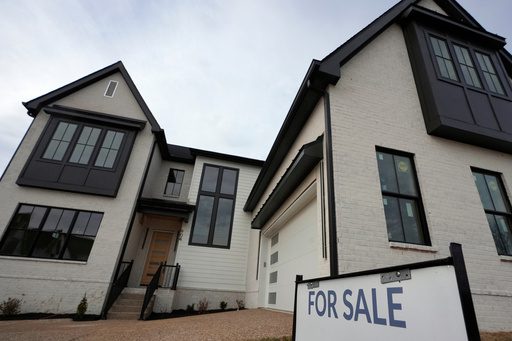
America’s ‘Dream Home’ Market: A Pricey Purgatory for Would-Be Buyers
POLICY WIRE — Washington D.C. — America’s home-buying season, usually a vibrant spring awakening, is humming a decidedly monotonous tune this year. Don’t let anyone tell you the...

POLICY WIRE — Washington D.C. — America’s home-buying season, usually a vibrant spring awakening, is humming a decidedly monotonous tune this year. Don’t let anyone tell you the market’s on fire. It’s more like a simmering pot with the lid stubbornly clamped shut, bubbling under a relentless, expensive heat. April data just proved it: home sales didn’t budge much, leaving countless eager buyers — and weary sellers — in a holding pattern they frankly didn’t ask for.
For weeks now, the financial gurus have been scanning their tea leaves, looking for a break, a surge, anything that screams ‘normal.’ But last month? Nada. Existing home sales, the ones people actually live in before they swap ’em out, ticked up a measly 0.2% from March. We’re talking 4.02 million units annually, according to the National Association of Realtors (NAR). It’s essentially a flat line compared to April last year. A decade ago, that kind of performance would’ve been considered a financial snoozefest; these days, it’s just Tuesday.
Economists, bless their hearts, were squinting at their models for a 4.12 million pace. They got less. And this sluggishness isn’t a new phenomenon, either. We’ve been bumping along the bottom of this 4-million-unit trough since late 2023. Historic norm? Closer to 5.2 million. The gulf is vast, folks.
But here’s the kicker, the head-scratcher that makes your bank account wince: prices are still marching upward. Nationally, the U.S. median sales price ratcheted up 0.9% in April from a year earlier, landing at a cool $417,700. NAR confirms that’s an all-time high for any April since their data starts way back in 1999. Think about that for a second. We’re breaking records for *price* even when folks aren’t exactly stampeding to buy. It’s perverse, really.
And because interest rates, those pesky devils, are playing a cruel game of peek-a-boo, many would-be homeowners are sidelined. Rates dipped a bit early in the year—when many of April’s sales would have gone under contract—but they’re still high enough to make financing an odyssey. “This spring homebuying season, so far all the way through April, we can say we’re not predicting any increase compared to one year ago,” observed Lawrence Yun, NAR’s chief economist, sounding less like an analyst and more like a weary prophet of stagnation.
It’s a strange kind of inflation, isn’t it? Prices defying gravity, sales stuck in the mud. For those in countries like Pakistan, where the dream of owning a piece of America sometimes flickers across remittances or investment plans, this price surge, even amid slow sales, is a stark reminder of an increasingly inaccessible market. Their hard-earned dollars, if they even make it here, buy less space, less hope.
📄 POLICY WIRE WHITEPAPER PUBLISHED: PAKISTAN'S NATIONAL SECURITY POLICY PRIORITIES
👉 READ BY CLICKING HEREThe problem, if you ask those scratching their heads over housing policy, isn’t demand, per se. It’s availability. There were 1.47 million unsold homes on the market at April’s end. Better than last year, sure, but still a far cry from the roughly 2 million homes typical before the whole COVID-19 shebang. “We don’t just need more homes, we need *affordable* homes in places where people want to live — and work,” said Ms. Sarah Chang, Assistant Secretary for Policy Development — and Research at the U.S. Department of Housing and Urban Development (HUD), during a recent Washington roundtable. “Until we aggressively address supply-side issues, this market will remain a game of musical chairs with far too few seats.”
But the real wrench in the works has been global. Mortgage rates, you’ll remember, jumped when Russia invaded Ukraine. They danced again when whispers of a broader Middle East conflict—say, with Iran—fueled anxieties about surging energy prices and inflation’s long shadow. Those global jitters, whether you live in Tulsa or Lahore, seep into every facet of the economy. They make that fixed-rate mortgage just a little bit less fixed-feeling.
What This Means
This sluggish, yet paradoxically expensive, housing market isn’t just about spreadsheets — and annual reports. It’s a real-world squeeze on American aspiration. Politically, it’s a time bomb. With a significant portion of the electorate unable to afford their first home or even upsize to meet growing family needs, voter frustration is palpable. Candidates are already trying to out-promise each other on affordability, though without a coherent, nationwide strategy for building more supply, it often sounds like so much hot air. Economically, this imbalance is deeply unhealthy. It limits labor mobility, tying people to locations they might otherwise leave for better jobs, simply because they can’t afford to buy elsewhere or can’t justify selling their existing low-rate mortgage. This stagnation hurts the broader economy, stifling the trickle-down benefits of a truly active housing market—from furniture sales to construction jobs. And it certainly affects the global perception of U.S. economic stability, potentially impacting foreign direct investment, much like international brands sometimes struggle with local market entry (consider the regulatory dance foreign companies face in places like India).
The longer homeownership remains a gilded cage—where existing owners are comfortable but new entrants are priced out—the more volatile the social fabric becomes. We’re looking at a generation potentially locked out, and that’s not just a statistic; it’s a political storm cloud on the horizon. Someone’s gonna have to break the lock on this gilded cage, — and soon.