

Bavaria’s Alpine Fortress: Culture, Contradiction, and Germany’s Unseen Economic Engine
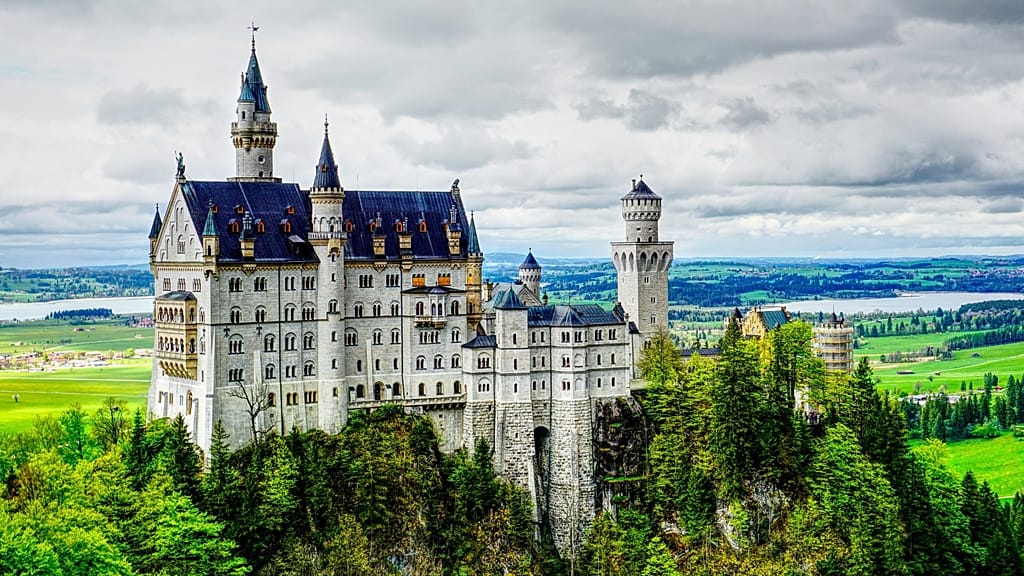
POLICY WIRE — Munich, Germany — You know the picture: emerald valleys, snow-capped peaks, perhaps a stout gentleman in lederhosen hoisting a substantial stein. That’s Bavaria for the postcard crowd....

POLICY WIRE — Munich, Germany — You know the picture: emerald valleys, snow-capped peaks, perhaps a stout gentleman in lederhosen hoisting a substantial stein. That’s Bavaria for the postcard crowd. But peel back the picturesque veneer, and you find something far more intricate: a region stubbornly, gloriously its own, often at quiet odds with Berlin’s modern impulses, yet simultaneously an economic powerhouse whose traditions are both commodity and bedrock.
It’s a peculiar dichotomy, Bavaria. While the world looks to Germany for precision engineering and rigorous policy—and often gets a healthy dose of technocratic austerity—Bavaria offers an altogether different proposition. They’ve perfected the art of branding ‘old-world charm’ while simultaneously nurturing cutting-edge industries. We’re not just talking about tourism, either. Siemens and Audi have deep roots here. This isn’t some backwater clinging to the past; it’s a regional behemoth that manages to make traditional identity feel aggressively modern, even indispensable.
“People sometimes mistake our commitment to tradition for a lack of ambition,” scoffed Bavarian Minister-President Markus Söder recently, leaning into his state’s distinct Christian Social Union (CSU) brand of conservatism. “But our economy isn’t just robust, it’s innovative. And it’s exactly this deeply rooted sense of belonging—to our landscape, to our culture—that fuels our people’s drive.” He’s got a point. Bavaria accounts for roughly 18% of Germany’s gross domestic product, punching well above its weight for a state with about 16% of the national population. That’s according to Germany’s Federal Statistical Office, if you’re counting. A subtle, yet powerful flex.
And it’s this careful balance of beer-hall bonhomie and boardroom savvy that allows Bavaria to exert its influence, often quietly, on national and European policy. While other German states might chase federal subsidies with outstretched hands, Bavaria projects an image of self-sufficiency, a region that knows what it wants and isn’t afraid to articulate it. Sometimes, its demands seem quaint—like protecting the purity law for beer (Reinheitsgebot), a centuries-old decree that dictates only water, malt, hops, and yeast can go into the brew. But beneath that folksy charm is serious economic protectionism wrapped in cultural heritage. It’s a market differentiator, after all. Who’s gonna argue with a thousand years of liquid history?
Because frankly, culture, when packaged right, is power. Think of it: when heads of state or global investors visit, they’re not just shown a factory floor; they’re immersed in an experience. A hike in the Alps, a taste of a Weißbier at an ancient monastery brewery—these are carefully curated narratives of stability, authenticity, and prosperity. It’s an unspoken assurance that this is a place where things work, — and traditions are honored. But this very commitment to its ‘pure’ cultural expressions raises fascinating questions when you consider how other ancient, vibrant cultures wrestle with identity in a globalized world.
In Pakistan, for example, the intricate designs of Sufi shrines or the ancient art of Truck Art aren’t merely tourist attractions; they’re expressions of a complex, evolving national identity, often contending with external influences and internal tensions. It’s a different struggle, one less about economic leverage — and more about definition. Could Islamabad learn a thing or two from Munich’s meticulous cultural branding? Maybe. Or perhaps Bavaria’s success lies in its relatively homogenous self-image—an easier sell than the magnificent, often tumultuous, plurality of South Asia.
📄 POLICY WIRE WHITEPAPER PUBLISHED: PAKISTAN'S NATIONAL SECURITY POLICY PRIORITIES
👉 READ BY CLICKING HEREDr. Eleanor Vance, an economic historian at Humboldt University Berlin, observed, “Bavaria often presents itself as the counter-narrative to Berlin’s liberal, urbanized modernity. But in reality, it’s one of Germany’s most modern regions, particularly in its capacity for innovation. It’s the ultimate example of economic strength disguised as pastoral idealism. They’ve successfully monetized a lifestyle without sacrificing its perceived authenticity. It’s quite the trick, if you think about it.” She’s not wrong. It’s a well-played hand.
It’s why, when political skirmishes erupt in Brussels, Munich’s voice, though not always the loudest, often carries weight. The economic backbone of Germany is heavily intertwined with Bavarian enterprise. Mess with Bavaria, you mess with the heart of Europe’s largest economy. And Germany’s current pivot in foreign policy and industrial strategy can’t afford to alienate its most productive states.
What This Means
Bavaria’s ongoing success isn’t just about tourism numbers; it’s a masterclass in regional diplomacy and economic statecraft. Its distinct cultural identity isn’t just for photo ops; it’s an integrated component of its economic strategy, fostering loyalty both internally and drawing investment externally. The political implication? Bavaria will continue to be a significant, often conservative, voice shaping Germany’s future, frequently pushing back against federal centralization or perceived overreach from Brussels. Economically, its blend of high-tech innovation and carefully preserved traditions—be it beer brewing or classical music—offers a blueprint for how regions can maintain identity while competing fiercely in global markets. This blend makes Bavaria a sort of economic powerhouse whose regional character actually amplifies its influence. Its relative independence of thought will persist, often acting as a stabilizing, if sometimes obstructive, force within the German federation, ensuring that its cultural ‘stargazing’ always comes with an eye on the bottom line.