


Saudi Cash Cow: War-Profits Soar for Aramco as Global Shipping Lanes Face Squeeze
POLICY WIRE — Dhahran, Saudi Arabia — It’s a messy business, this geopolitics. Especially when it involves something as messy—and profitable—as crude oil. While headlines scream about disrupted...

POLICY WIRE — Dhahran, Saudi Arabia — It’s a messy business, this geopolitics. Especially when it involves something as messy—and profitable—as crude oil. While headlines scream about disrupted shipping lanes and spiraling energy costs, some players, it seems, are doing quite well. Very well, in fact.
Saudi Aramco, the colossal state-owned energy juggernaut, just posted a whopping 25% leap in its first-quarter profits. We’re talking about an extra $32.5 billion raked in for the period ending March 31, according to company reports. Because when the world’s most critical maritime chokepoint starts looking less like a trade route and more like a naval chessboard, the savvy giants find another way—and hike the prices while they’re at it.
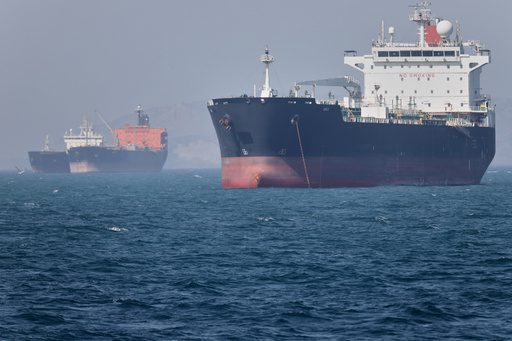
The Strait of Hormuz, for years a familiar name mostly to maritime insurers and naval strategists, has become a hot zone. That’s thanks to recent skirmishes, specifically the fallout after U.S. and Israeli forces struck Iranian targets on February 28, prompting Tehran to effectively take control of the waterway. Now, with a U.S. naval blockade gumming up the works, the passage for roughly 20% of the globe’s traded oil became… problematic. So, Aramco decided to route some of its exports through its East-West Pipeline. It’s a smart move—a geopolitical insurance policy, really—stretching from Saudi Arabia’s eastern oil fields right across the peninsula to the Red Sea.
“We’ve built redundancy for moments like these. It’s a sobering validation of our long-term strategy, ensuring energy gets where it needs to go, come what may,” Amin Nasser, Aramco’s President and CEO, told shareholders Sunday. He’s right, too. The pipeline is running at its absolute limit, pumping 7 million barrels of oil daily. But let’s not get carried away; that’s a fraction, mind you, of the 11.1 million barrels Aramco typically produced in, say, late 2025.
Brent crude, the international benchmark, spiked—naturally. It hit $103.91 per barrel Sunday, a neat 2.58% bump. Go back to before the whole thing blew up, around late February, — and you’re looking at a comparably tranquil $70-ish. That’s a significant mark-up, a fat premium paid for every tank-full, every shipping container, every power plant humming worldwide. And it’s paid by everyone.
This isn’t some abstract economic tremor. It sends shockwaves far beyond the Gulf. In places like Pakistan, already battling a punishing summer and delicate economic balances, every increase in the price of crude oil is a body blow. Their burgeoning energy needs mean less cash for social programs, more inflation, — and deeper fiscal holes. And these aren’t just numbers on a ledger.
Ambassador Ahmed Khan, formerly Pakistan’s envoy to OPEC, didn’t mince words speaking exclusively to Policy Wire: “For economies like ours, every dollar per barrel translates to immense pressure on household budgets and development goals. This isn’t just about geopolitics; it’s about stability at the very street level.” It’s a sentiment echoed across South Asia and many parts of the Muslim world—regions where affordable energy isn’t a luxury; it’s the lifeblood. Countries like India, for instance, are constantly looking for stable energy sources and competitive prices to fuel their immense economic aspirations.
What This Means
This episode, driven by heightened tensions around the Strait of Hormuz, has laid bare some stark realities. For starters, it demonstrates Saudi Arabia’s strategic foresight in developing alternative export routes. It’s a massive commercial win, but also a long-game play to maintain relevance and resilience in a volatile neighborhood. It doesn’t mean they’re immune to regional flare-ups—quite the opposite—but they’ve insulated themselves financially from the worst of the shipping disruptions. What it truly signifies is that geopolitical instability in one region translates to significant economic redistribution globally. Money shifts. Quickly. And usually upwards, into the coffers of those best positioned to navigate—or exploit—the chaos.
Politically, the crisis in Hormuz solidifies the understanding that reliable access to energy isn’t just an economic issue; it’s a national security imperative. Expect major energy importers to redouble their efforts to diversify supply chains, seek out alternative sources, and perhaps, grudgingly, accelerate green energy transitions—not necessarily for the planet, but for strategic self-preservation. Diplomatic efforts to calm the Gulf region now carry an even heavier financial burden if they fail. For developing nations, particularly those with a significant Muslim population reliant on these energy flows, the impact is immediate and dire: higher energy costs cascade into higher food prices, decreased industrial output, and amplified social unrest. The world’s biggest oil company isn’t just reporting profits; it’s holding a mirror up to a world paying for its own insecurity.