


India’s Scorched Earth: Capital Steps In as Climate Forges a New Safety Net
POLICY WIRE — Ahmedabad, India — The relentless sun, a merciless furnace, isn’t just baking the Indian subcontinent; it’s baking away livelihoods, carving an impossible choice for...

POLICY WIRE — Ahmedabad, India — The relentless sun, a merciless furnace, isn’t just baking the Indian subcontinent; it’s baking away livelihoods, carving an impossible choice for millions. Stick it out in 45-degree Celsius temperatures—risk heatstroke, organ damage, even death—or stay home and starve? This isn’t some dystopian novel; it’s the raw, unforgiving reality for informal sector workers from Ahmedabad to Karachi, a brutal calculation performed daily in peak summer. But now, in a twist of modern financial engineering, a new answer is emerging: insurance for inaction. It’s capitalism’s latest gambit against climate chaos, — and it’s unsettlingly pragmatic.
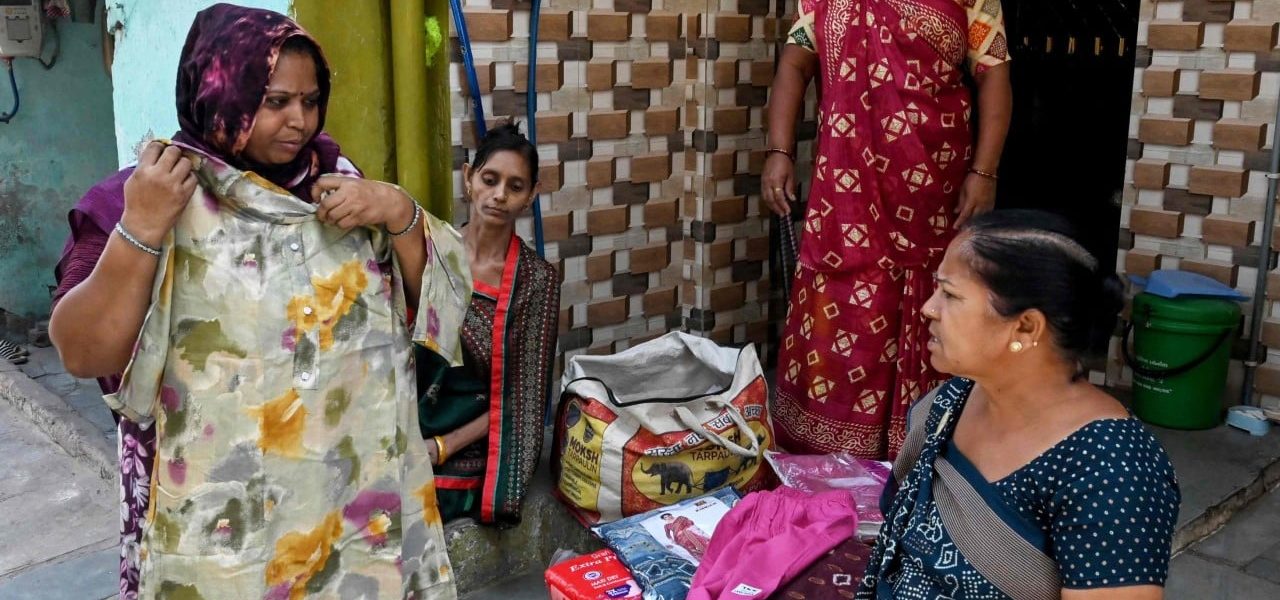
Take Lata Solanki, for instance, a 42-year-old street vendor from Ahmedabad. Her income evaporated if she didn’t hawk saris door-to-door. Her body might well have, too, on a particularly fiery afternoon. The traditional safety net, often a patchwork at best, just isn’t built for a climate crisis of this magnitude. And that’s where the actuaries stepped in, with a scheme that’s as innovative as it’s—let’s face it—a stark admission of governmental and infrastructural inadequacy. It’s called parametric insurance: essentially, if the mercury hits a predetermined threshold for a specified duration, funds flow. No loss assessment, no lengthy claims. Just cold, hard cash when it’s too hot to work.
It’s not just a few isolated cases, either. This innovative financial product, currently expanding its reach, speaks to a much larger, grim reality: climate change isn’t some distant future threat. It’s a current account deficit in human health — and economic productivity. According to a 2021 study published by the Centre for Science and Environment, heat stress alone led to India losing an astounding 101 billion hours of labor in that year. That’s not merely a statistic; that’s missed meals, delayed education, and a nation’s collective stride hobbled by a phenomenon that grows more severe with each passing year.
Ranjit Singh, Undersecretary at India’s Ministry of Labour and Employment, sees this scheme as a critical, albeit temporary, relief. “We’re facing an undeniable threat to our working population’s health — and livelihoods,” Singh stated recently. “This isn’t a long-term solution to climate change, mind you, but it’s a critical safety net. It buys our most vulnerable citizens a breath of cool air, literally. We can’t just stand by while our informal sector workers bake.” His words carry a weary pragmatism; nobody pretends this is ideal, but when the heat’s unbearable, idealism is often a luxury.
But how does such a program scale? And at what cost, both economic — and ethical? Dr. Anya Sharma, a Climate Adaptation Economist at the University of Delhi, isn’t shy about the uncomfortable truth this financial instrument lays bare. “The very existence of such a scheme — a ‘parametric’ financial product for mere survival — exposes the deep chasm in climate preparedness,” Sharma told Policy Wire. “It’s essentially privatizing adaptation, forcing individuals to pay for government’s — and global polluters’ inaction. But, in fairness, it’s something. And ‘something’ beats nothing when folks are dropping in the streets.” It’s a bitter pill, that’s for sure, knowing that financial mechanisms are being concocted to alleviate a suffering born of collective environmental neglect.
The lessons from India’s sun-drenched streets won’t stay confined within its borders, either. Neighboring nations like Pakistan—which has endured its own spate of devastating heatwaves, sometimes pushing temperatures past 50 degrees Celsius—are watching closely. Their vast, predominantly Muslim agrarian — and informal sectors are equally vulnerable. Think of the rice farmers in Sindh or construction workers in Lahore; their plight is mirroring Solanki’s. And because these models cut through bureaucracy, bypassing traditional aid channels, they present a compelling, if incomplete, solution for immediate disaster relief across a broad swathe of the Global South. It’s a chilling irony that the future of climate resilience might just be built on the precise calculations of probability and payout.
📄 POLICY WIRE WHITEPAPER PUBLISHED: PAKISTAN'S NATIONAL SECURITY POLICY PRIORITIES
👉 READ BY CLICKING HEREThese schemes don’t just protect individual workers; they provide a faint but noticeable buffer against the broader economic ripple effects of extreme heat. When labor is lost, GDP takes a hit. Agricultural output suffers. Supply chains stutter. Because India’s workforce is heavily dependent on outdoor labor, especially in its burgeoning informal sector, these temperatures don’t just hurt individuals, they pinch the national wallet. And for those betting on continued growth, protecting this workforce suddenly isn’t just about humanitarian concern; it’s about plain old economics.
What This Means
The emergence of parametric insurance for heat stress marks a critical turning point in how nations, particularly in South Asia, confront climate change’s immediate impacts. Politically, it allows governments to offer tangible, rapid relief without undertaking massive, often stalled, infrastructural overhauls. It’s a pragmatic stopgap, yes, but it risks fostering a sense that climate adaptation can be outsourced to financial markets, potentially reducing pressure for more systemic solutions—like improved urban planning, green infrastructure, or robust early warning systems. This isn’t fixing the root problem, it’s just paying people to step away from the fire. And that’s a dangerous precedent.
Economically, it underscores the staggering, escalating cost of climate inaction. We’re now seeing capital actively flowing to mitigate climate-induced labor loss. It’s a new asset class for financiers, an urgent necessity for the working poor. This could catalyze a whole new niche in the insurance industry, particularly for climate-vulnerable regions. However, it also highlights an uncomfortable truth: those with the least agency in causing climate change are often forced to shoulder its immediate costs, either through direct suffering or by contributing to premiums for schemes like this. The global economy, it seems, is adapting—but it’s doing so with a distinct, unsentimental eye on the balance sheet, counting lives lost as potential labor lost.