


Delhi’s Quiet Retreat: Modi Signals Domestic Focus Amidst Middle East Firestorm
POLICY WIRE — New Delhi, India — The muted hum of Delhi’s bustling air traffic control, usually a frantic orchestration of global connectors, has taken on an oddly contemplative rhythm these...

POLICY WIRE — New Delhi, India — The muted hum of Delhi’s bustling air traffic control, usually a frantic orchestration of global connectors, has taken on an oddly contemplative rhythm these days. Flight cancellations tick up; hotel bookings slump. This isn’t just the usual monsoon lull, nor is it merely seasonal vacation planning hitting a snag. It’s something far more profound—a subtle, almost imperceptible tremor—running through the veins of a nation that prides itself on its outward gaze.
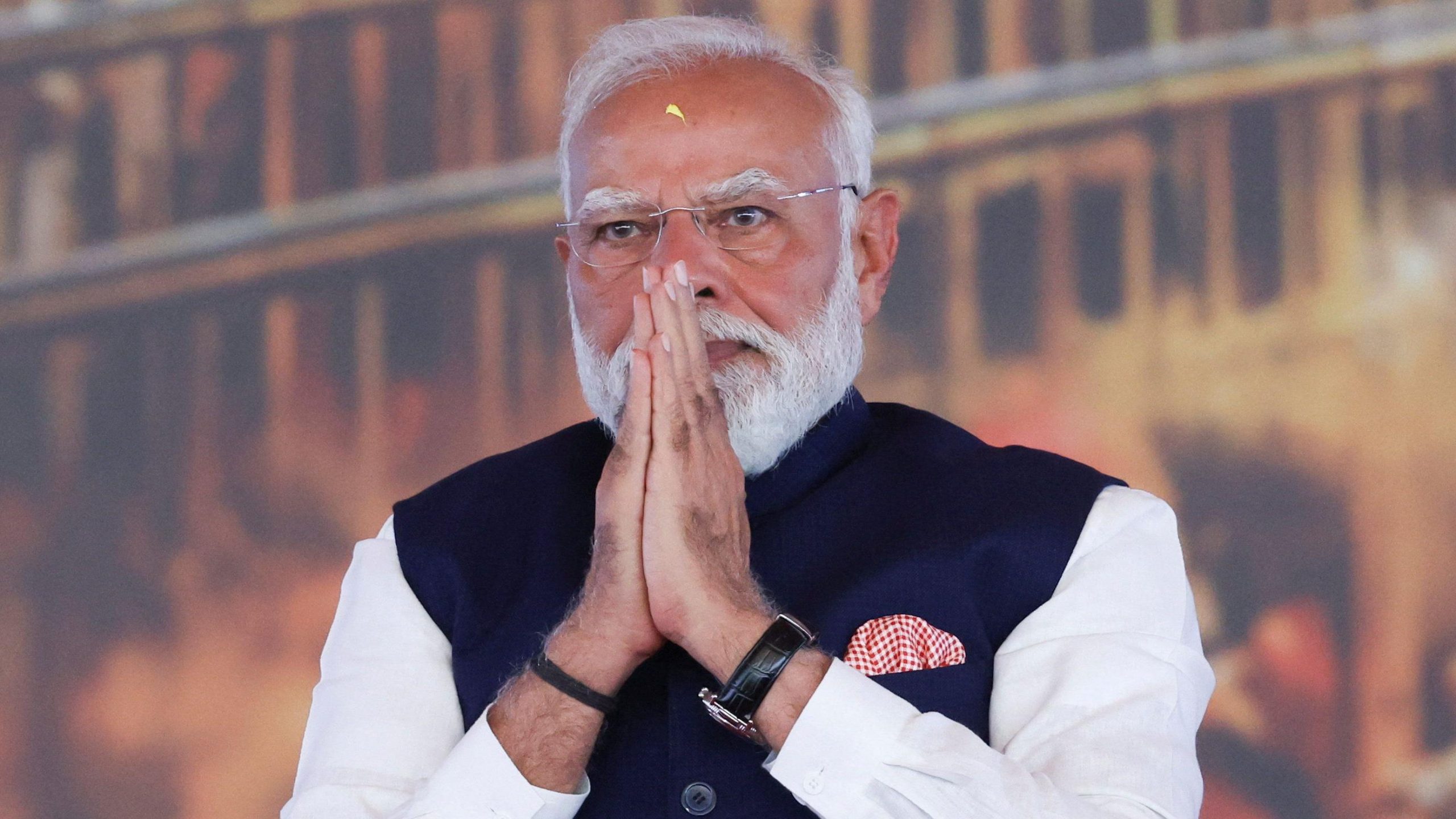
Behind the calm facade of policy statements, Prime Minister Narendra Modi has discreetly, yet unmistakably, nudged Indians back towards their home offices and away from distant horizons. His directive: work from home where possible, — and rethink that overseas holiday or business trip. But this isn’t merely about personal convenience; it’s a strategic retreat, an economic prophylaxis against the spreading instability emanating from a burgeoning conflict involving Iran.
Because the conflict isn’t just confined to the Arabian Peninsula or the Straits of Hormuz anymore; its tendrils stretch globally. And India, ever pragmatic, seems intent on battening down the hatches, hoping to insulate its domestic economy from the geopolitical shrapnel.
Dr. External Affairs Minister S. Jaishankar, known for his acerbic wit and clear-eyed assessments, articulated the sentiment with characteristic bluntness during a recent private briefing. “Global turbulence isn’t some abstract academic concept for us,” he reportedly remarked, “it’s a very real concern for our diaspora, our energy supply, and the stability of our entire economic planning. Sometimes, the wisest move isn’t intervention, it’s precaution.” His words, though unofficially shared, accurately reflect Delhi’s evolving posture.
It’s not just a concern for those with diplomatic passports, either. Industry leaders, too, are sensing the shift. Rakesh Singh, CEO of InfoServ Solutions, a major IT firm in Bengaluru, notes the practical implications. “We’d already scaled our WFH capabilities during the pandemic, so adapting isn’t a technological challenge for us,” Singh told Policy Wire. “It’s about safeguarding employee well-being, maintaining business continuity, and yes, aligning with the national mood. We’re a service economy; stability—perceived or real—is our bedrock.”
The geopolitical dominoes tumbling in the Middle East present a particularly prickly problem for South Asia. India, Pakistan, Bangladesh—all rely heavily on oil imports funneled through the same chokepoints threatened by an escalating Iran conflict. And then there are the millions of South Asian expatriate workers across the Gulf states; their remittances aren’t just personal savings, they’re the lifeblood for countless families back home. India alone relies on the Middle East for over 60% of its crude oil imports, according to data from the Ministry of Petroleum and Natural Gas. A prolonged disruption? Catastrophic.
But the ramifications are wider than just crude — and cash flow. A restive Middle East casts a long shadow over India’s long-standing ‘Act East’ — and ‘Connect West’ policies. Diplomatic maneuvering becomes a delicate ballet. And Pakistan, already navigating its own internal volatilities, finds itself squeezed, having to balance its strategic ties with regional players against its economic vulnerabilities.
This isn’t the first time India has faced external shocks forcing a domestic rethink. India’s approach to climate-induced disruptions, for example, often reveals a similar blend of adaptive strategy and cautious management. The difference now is the unpredictable nature of conflict versus a predictable, albeit growing, environmental threat.
So, the PM’s quiet directive. It’s less a panicked reaction — and more a calculated adjustment. One might even call it a strategic internalisation of risk, attempting to create a domestic firewall against events spinning out of Delhi’s direct control. We’re witnessing a subtle shift in the social contract, aren’t we? Where global chaos directly dictates the cadence of your workday, your vacation plans, even your national identity.
What This Means
This subtle but significant messaging from Prime Minister Modi has immediate — and long-term implications. Economically, the push for work-from-home reduces pressure on transport infrastructure, curtails some aspects of commercial consumption dependent on mobility, and, arguably, enhances resilience by decentralising workforces. Limiting foreign travel—especially during this global uncertainty—aims to curb potential foreign exchange outflows and, crucially, minimizes the risk to Indian citizens abroad, thereby reducing Delhi’s diplomatic headaches. This can also be seen as an effort to retain capital within the country, fostering a degree of insularity that can sometimes soften external shocks.
Politically, Modi is portraying a proactive, cautious leadership—a narrative that plays well with a populace often anxious about regional stability. It implies that the government is fully aware of the global situation and is taking measured steps to protect its citizens and economy without resorting to alarmism. But it’s also a shrewd domestic play; demonstrating control and stability is always an asset, especially when elections are not too distant on the horizon. His administration is leveraging digital capabilities, ironically forged during the pandemic, to navigate a new geopolitical challenge. The careful crafting of narratives through various communication channels will be just as significant as the policy itself. The long game, here, is securing India’s ascent as a regional power, protecting its economic engine, and managing an unpredictable world through pragmatic internal consolidation rather than overt external intervention. And that, dear reader, is often how these things get done. A quiet word here, a gentle push there.