


Kathmandu’s Sky-High Tightrope: Turkish Airlines Incident Unveils South Asia’s Aviation Anxieties
POLICY WIRE — Kathmandu, Nepal — The thin Himalayan air, usually a source of serene awe for incoming travelers to Kathmandu, recently served up a dose of harsh reality instead. It wasn’t a weather...

POLICY WIRE — Kathmandu, Nepal —
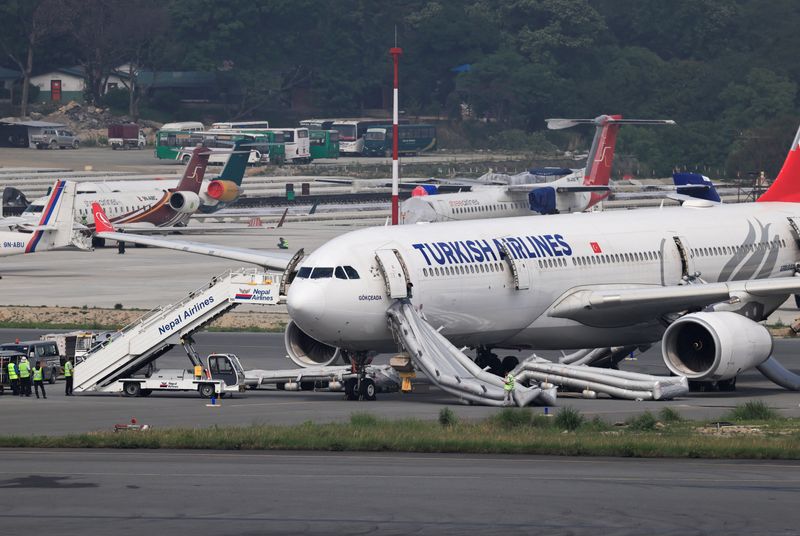
The thin Himalayan air, usually a source of serene awe for incoming travelers to Kathmandu, recently served up a dose of harsh reality instead. It wasn’t a weather event or seismic tremor that sent jitters through Tribhuvan International Airport; it was something far more mundane, and in its banality, more telling. The lingering scent of burning rubber, detected emanating from a Turkish Airlines Airbus A330’s landing gear just after it touched down, sparked an immediate, urgent evacuation. Everyone made it out, yes, but the incident offers more than just another near miss narrative—it’s a candid snapshot of the persistent, nagging anxieties that haunt aviation in rapidly developing regions. Sometimes the ground beneath your feet can feel a lot less solid than the sky above, especially when your infrastructure’s always playing catch-up.
This wasn’t a catastrophic explosion; there wasn’t a flaming wreck. What passengers witnessed was smoke, then the prompt, albeit undoubtedly terrifying, deployment of emergency slides. Turkish Airlines Flight TK726, hailing from Istanbul, had delivered its payload of tourists and businesspeople, only to present a new kind of drama on the tarmac. Emergency services, as they always must, scrambled. They contained the issue, averted outright disaster. But the image of travelers sliding down an evacuation chute against the backdrop of Kathmandu’s patchwork urban sprawl, it’s one that sticks. And it doesn’t scream ‘modern efficiency,’ does it?
“We’re absolutely committed to safety, you know that, but it’s an uphill battle against aging facilities and budgetary constraints,” remarked a candid official from Nepal’s Civil Aviation Authority, speaking off the record due to ongoing investigations. “Every incident reminds us what’s at stake here, doesn’t it? The sheer volume of traffic – it’s growing, always growing.” But who bears the ultimate burden when the growth outstrips the grey matter, the concrete, the rigorous upkeep? It’s rarely the decision-makers back in cushioned offices, isn’t it?
The situation in Kathmandu isn’t an anomaly in South Asia. Rapid economic expansion across the subcontinent has spurred an unprecedented surge in air travel. According to the International Civil Aviation Organization (ICAO), air traffic in the Asia-Pacific region, which includes Nepal, is projected to grow by approximately 4.8% annually over the next decade. That’s a lot of metal in the air, requiring a lot of reliable ground support, robust runways, and rigorous maintenance regimes. It’s a perpetual tightrope walk for nations struggling to keep pace, balance budgets, and attract tourists and investment. You simply can’t scrimp on safety without everyone knowing it.
This incident also reverberates beyond Nepal’s borders, subtly reminding carriers and regulators throughout the wider Muslim world and South Asia of shared vulnerabilities. Consider the regional rivalries and cooperative frameworks, how often a slip in one nation’s safety record can cast a shadow on neighbors. Think about Pakistan’s aviation sector, for instance, which has weathered its own storms of public perception and regulatory scrutiny. There’s a constant pressure, a demand for pristine records, even as domestic challenges compound. It’s a fragile reputation, that of regional air travel safety, — and even minor incidents can chip away at it. It’s about more than just a single flight; it’s about perceived systemic reliability. And that’s big money.
From Turkish Airlines’ perspective, the incident is, no doubt, a momentary headache, an operational glitch they’ll smooth over with practiced efficiency. “Passenger safety is our absolute priority, always,” stated a spokesperson for the airline in a carefully worded email. “We’re fully cooperating with local authorities — and conducting our internal review. It’s a standard procedure for us to take every precaution.” That’s what they say. But beneath the assurances, every carrier understands the potential damage to their brand when evacuation slides appear on news feeds. Brand image, it’s brittle. Because incidents like these, even when successfully managed, linger in the collective consciousness.
📄 POLICY WIRE WHITEPAPER PUBLISHED: PAKISTAN'S NATIONAL SECURITY POLICY PRIORITIES
👉 READ BY CLICKING HEREThe near-miss, ultimately, highlights the precarious balance of ambition — and execution in nations like Nepal. They’re eager for connectivity, reliant on tourism, hungry for investment. But that hunger must be met with uncompromising standards, consistently applied. They can’t afford slip-ups. Their mountains are grand, their hospitality renowned, but their skies must be impeccable. It’s an inconvenient truth for a developing nation; modernization isn’t cheap. It costs a fortune, actually, for everything, from runways to regulations. And frankly, the margins for error are thinner than ever.
What This Means
This evacuation isn’t just a story for aviation enthusiasts or frightened passengers; it’s a stark reminder of geopolitical realities and economic vulnerabilities. For Nepal, heavily reliant on tourism — and remittances, such events carry tangible risks. They can deter visitors, erode confidence in its gateway to the world, and complicate its aspirations for becoming a more significant regional hub. Foreign direct investment into crucial infrastructure projects might hit snags. Nobody wants their hard-earned dollars funneled into a system perceived as structurally unsound.
Economically, if such incidents escalate or if Nepalese aviation regulators are seen as lax, international insurance premiums could climb for carriers operating there. And then ticket prices would climb. That’d be a bummer for the backpacking set, — and for business. Diplomatically, while Turkey and Nepal maintain cordial relations, persistent safety concerns could subtly cool interest in direct flights or investment. No government wants its citizens—or its prestige carrier—seen as operating in a high-risk environment. It could even compel other regional partners, including nations like India, to reconsider their assistance packages or even tighten air travel advisories. After all, the grand narratives of failure often stem from these seemingly small points of friction.
Politically, the Nepalese government will now face renewed pressure, internally and externally, to demonstrate robust oversight. Its Civil Aviation Authority (CAAN) often finds itself under a microscope; incidents like this just crank up the magnification. It’s a constant, unenviable balancing act for smaller economies. They crave global integration, they court international airlines, but then they’re perpetually battling the ghost in the machine—the systemic underfunding, the difficulty in retaining skilled technicians, the constant fight against perception. A whiff of smoke, — and the whole delicate economic dance feels that much more tenuous.