

Germany’s Martial Metamorphosis: Berlin Seeks Arms Parity with Ukraine in Bold Industrial Pivot
POLICY WIRE — Berlin, Germany — For decades, Germany embraced its role as a quiet economic powerhouse, often trading heavy industry for a lighter touch on global military affairs. The country’s...

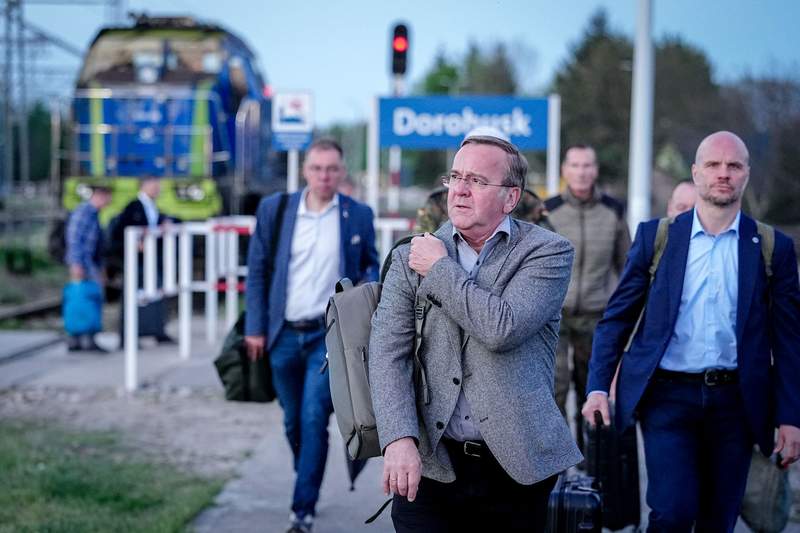
POLICY WIRE — Berlin, Germany — For decades, Germany embraced its role as a quiet economic powerhouse, often trading heavy industry for a lighter touch on global military affairs. The country’s defense-industrial base, once the engine of continent-shaping conflicts, gradually receded into a peacetime slumber. Now, it seems Berlin’s long nap is over, brutally awakened by the thud of artillery on Europe’s eastern flank. The latest pronouncement? German Defence Minister Boris Pistorius isn’t just talking about shipping tanks anymore; he wants Germany and Ukraine to build them together.
It’s an almost jarring suggestion, really, especially considering Germany’s historical reluctance to arm itself, let alone directly feed a prolonged ground war through deep industrial partnership. The sheer audacity of the proposition—moving from episodic arms deliveries to integrated development—marks a seismic shift in German strategic thinking. They’re not just offering spare parts; they’re talking about joint blueprints, shared assembly lines, and common logistics, embedding Kyiv within the Bundeswehr’s long-term procurement strategy.
Pistorius, often characterized as a no-nonsense pragmatist, didn’t mince words. Speaking on the matter, he reportedly mused, “This isn’t about mere arms shipments anymore. It’s about laying the groundwork for a truly European defense architecture. We’re talking integrated industry, shared innovation—a muscle memory for self-reliance we frankly let atrophy for decades.” And just like that, the land of philosophers and precision engineering now actively pitches itself as a partner in what amounts to an ongoing armaments race.
This isn’t a gesture born of sentiment, mind you. It’s a hard-nosed recognition that Europe’s collective security cupboard, stripped bare by decades of ‘peace dividends,’ can’t simply be restocked by existing production lines, particularly as the conflict grinds on. NATO figures, for instance, indicate Germany, historically a laggard, aims to reach its 2% GDP defense spending target by 2024—a pledge often scoffed at prior to 2022. That’s a staggering reinvestment, one that screams for new industrial solutions, not just off-the-shelf purchases.
Because, let’s be honest, Ukraine’s reliance on hand-me-downs isn’t sustainable. While grateful, Ukrainian officials have frequently voiced frustrations over slow delivery — and mismatched equipment. A senior Ukrainian defense aide, who asked not to be named due to the ongoing sensitive negotiations, wryly observed, “Frankly, they’ve been slow. But this proposal—if it becomes reality, and quickly—it could finally move us beyond the drip-feed, beyond the hand-me-downs. We need partners, not just donors.” It’s a bitter truth delivered with a dose of hopeful pragmatism.
But establishing these industrial sinews takes more than just political will. It requires overcoming significant logistical, regulatory, and technical hurdles, not to mention finding the necessary capital in an economy already grappling with energy shocks and inflation. This isn’t just about weaponizing; it’s about reorganizing the very industrial core of two nations under duress—one rebuilding, the other re-evaluating its post-war identity. And the clock, as they say, is ticking loudly.
📄 POLICY WIRE WHITEPAPER PUBLISHED: PAKISTAN'S NATIONAL SECURITY POLICY PRIORITIES
👉 READ BY CLICKING HEREGermany’s pivot doesn’t exist in a vacuum. It reverberates far beyond Europe’s borders. For nations across the Muslim world and South Asia, who often find themselves navigating complex geopolitical alignments and defense procurements, Berlin’s newfound martial conviction will be noted. Does it mean a stronger Europe less reliant on the U.S.? Possibly. Will it eventually free up global defense production capacity, or will it create new strains? It’s a high-stakes gamble on the industrial future of an entire continent, a recalibration that could shift everything from diplomatic alliances to trade partnerships.
Think about how seemingly distant conflicts can ripple outward— like Iran’s shadow war impacting China’s oil. This is Germany re-engineering its entire defense posture; its ramifications are global. We’re talking supply chains, technology transfers, the very perception of power — and resolve.
What This Means
This German proposition, if successfully executed, represents nothing less than a fundamental reshaping of European security architecture and, arguably, Germany’s global standing. Economically, it signifies a massive investment surge into Germany’s—and eventually, Ukraine’s—defense industrial base. This isn’t just a military commitment; it’s an economic stimulus packaged as security policy, creating jobs and fostering innovation within a critical sector. The political implication is clear: Germany is consciously abandoning its post-WWII hesitancy to become a leading, rather than a supporting, actor in European defense. It transforms Ukraine from a recipient of aid to a genuine strategic partner, sharing the burden and the benefit of production.
For NATO, it signals a strengthening of its European pillar, potentially making the alliance less dependent on American manufacturing capacity in the long run—a long-desired outcome for many European strategists. However, it also brings complexities regarding standardization, intellectual property, and industrial espionage in a wartime environment. It’s a high-risk, high-reward strategy that aims to permanently entrench Ukraine within Western security structures, cementing its departure from Russia’s orbit not just geographically, but industrially and politically. The ultimate aim? To make Western military assistance sustainable, scalable, and a long-term deterrent—one tank, one missile, one factory at a time.