


Beijing’s Hot Hand: Soaring Producer Prices Fan Global Anxieties
POLICY WIRE — Beijing, China — Beijing’s mandarins, those perpetually calm navigators of a churning global economy, might find their steely composure tested these days. The nation’s...

POLICY WIRE — Beijing, China — Beijing’s mandarins, those perpetually calm navigators of a churning global economy, might find their steely composure tested these days. The nation’s factory gates, usually the stoic purveyors of deflationary pressure worldwide, are now spewing out something quite different: serious inflation. Not quite the inferno of consumer prices, mind you, but an unmistakable roar from the producers themselves—the industrial engine behind much of what we all consume. And it’s not a whisper. It’s a shout, one that’s getting louder. It certainly changes the narrative a bit, doesn’t it?
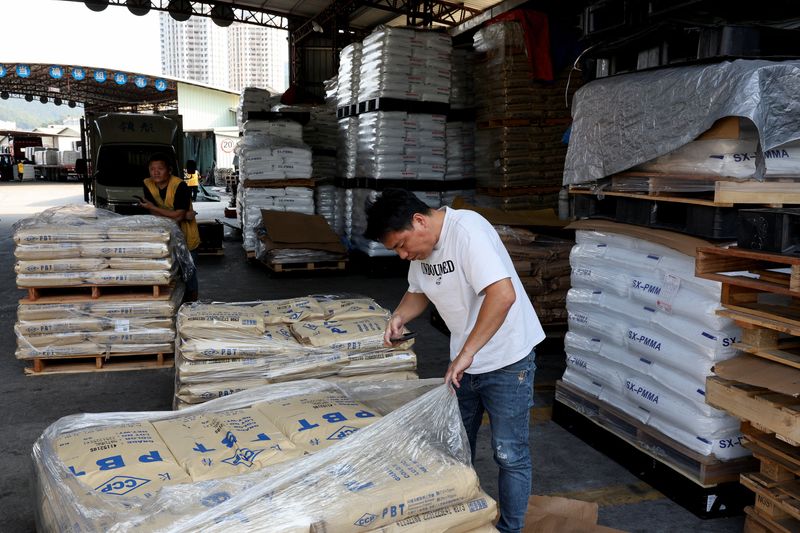
It’s a peculiar twist, this, considering just how often Western economists fret about China’s *lack* of demand, its sputtering internal consumption. Now, we’re looking at producer prices that, according to the National Bureau of Statistics (NBS), jumped an astounding 6.8% year-on-year in April. That’s a climb we haven’t seen in 45 months, pushing past analysts’ wildest guesses. It means input costs, the nuts — and bolts of global commerce, are soaring. Factories are paying more for everything, from the raw minerals dug from the earth to the energy that lights their massive complexes. And, you know, they’re not exactly in the charity business.
Because ultimately, those costs don’t just evaporate into the ether. They get passed on, slowly but surely, along the global supply chains that China so completely dominates. Imagine a butterfly flapping its wings in Wuhan; now envision the supply chain equivalent of a tsunami hitting distant shores, courtesy of an overheating factory in Guangzhou. It’s not hyperbolic. That’s just economics. Professor Li Wei of the Chinese Academy of Social Sciences offered a predictably sanguine assessment: “While we acknowledge the upward pressure on industrial commodities, China’s policy toolkit remains robust. We expect these figures to stabilize as demand dynamics normalize in the second half of the year.” Always optimistic, aren’t they?
But analysts abroad aren’t quite so easily placated. They’re scrutinizing every decimal point. “This isn’t merely an internal Chinese matter; it’s a global inflation accelerator,” warned Dr. Anya Sharma, a senior economist at the Asia-Pacific Institute in Singapore. “Developing nations, particularly those with significant trade deficits with China, will find themselves in a challenging bind. They’re importing not just goods, but also China’s burgeoning cost pressures. It’s a rather stark reminder of the interconnectedness of global trade, isn’t it?” She’s not wrong. It’s not good news if you’re importing critical components from Chinese suppliers only to find your own manufacturing margins shrinking.
And nowhere is this more acutely felt than in nations tied closely to Beijing’s massive infrastructure and trade initiatives—think the Belt and Road. Pakistan, for instance, a nation heavily invested in the high-stakes calculus of the China-Pakistan Economic Corridor (CPEC), imports a significant portion of its machinery and industrial components from China. A surge in China’s producer prices means Islamabad’s development projects could become costlier, their budgets strained, and their inflation targets even harder to meet. The downstream effects are considerable, impacting everything from energy prices to consumer goods, potentially fanning social unrest in an already sensitive region. It’s not just numbers on a spreadsheet; it’s a very real headache for folks on the ground.
📄 POLICY WIRE WHITEPAPER PUBLISHED: PAKISTAN'S NATIONAL SECURITY POLICY PRIORITIES
👉 READ BY CLICKING HEREChina’s rapid post-pandemic recovery has fuelled a voracious appetite for commodities, driving up global prices for everything from iron ore to copper and crude oil. These are the very materials that other Muslim-majority nations in Central Asia and the Middle East rely on for their own nascent industrial growth. So, yes, when China sneezes, the world—especially its closest trade partners—definitely catches a cold, and sometimes, it’s an expensive one. This current bout of inflationary fever is a stark reminder that what happens in Chinese factories reverberates everywhere.
What This Means
This isn’t just an isolated economic blip; it signals a fundamental shift in the global economic landscape. For years, China was the world’s deflationary engine, churning out affordable goods and keeping a lid on prices everywhere else. Now, it’s becoming a source of inflation. That changes everything. It’s forcing central banks worldwide to reconsider their own monetary policies, especially as they try to navigate their own post-COVID recoveries without tipping into uncontrolled inflation. For export-dependent economies like Germany or South Korea, higher input costs from China could squeeze profits and potentially dampen consumer demand for their final products. It complicates trade deals, shifts strategic alliances, and creates a real headache for policymakers already battling a host of other economic uncertainties. for emerging markets like Pakistan, Bangladesh, and Indonesia, which are heavily reliant on Chinese imports for manufacturing and infrastructure development, this producer price surge isn’t just an abstract concern—it’s a direct threat to economic stability, job creation, and overall development goals. They’re stuck between a rock and a hard place: either absorb the higher costs and face domestic inflation or slow down their development. Neither option is palatable, is it?