


Thai Political Charade: Thaksin’s ‘Homecoming’ Signals Deeper Deals in Bangkok’s Elite Power Plays
POLICY WIRE — Bangkok, Thailand — In the hushed early hours of an otherwise ordinary day, the most consequential political figure in modern Thai history finally stepped back into the public eye—not...

POLICY WIRE — Bangkok, Thailand — In the hushed early hours of an otherwise ordinary day, the most consequential political figure in modern Thai history finally stepped back into the public eye—not from a prison cell, mind you, but from a state hospital, directly to his gilded Bangkok residence. It’s a return that, for all its pretense of justice served, felt less like a penal release and more like a carefully orchestrated scene change in Thailand’s enduring political drama.
After a fleeting overnight stint in an actual correctional facility last August—following 15 years of self-imposed exile to duck corruption convictions he calls politically motivated—Thaksin Shinawatra, the two-time prime minister, received royal clemency reducing an eight-year sentence to one. And that one year? Mostly spent recuperating in a hospital VIP suite, away from the grittier realities of Thai incarceration. Now, he’s out on parole. Call it a prison release. Or call it what it’s: the culmination of an audacious, months-long ballet of backroom diplomacy, designed to reintegrate a formidable, if controversial, force back into the national calculus.
This isn’t just about Thaksin’s personal freedom; it’s about the very fabric of Thai power. His return is intrinsically linked to the recent general election and the Pheu Thai Party’s (a party linked to his family’s political machine) unexpected alliance with military-backed rivals. It’s a deal so transparent, yet so publicly unacknowledged, it’s almost artful in its audacity. You’ve got to appreciate the theatricality, at least.
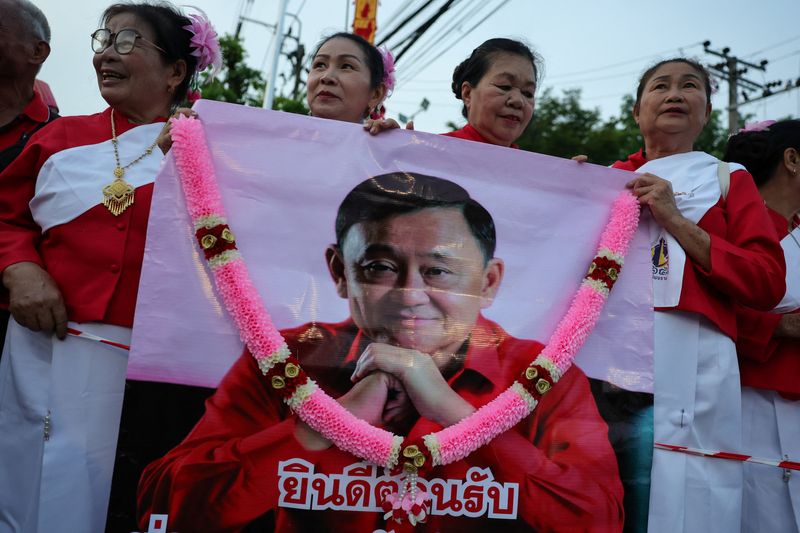
And let’s be frank: the immediate reaction has been a mixed bag of celebration, cynical resignation, — and outright fury. Many of Thaksin’s die-hard supporters, the ‘Red Shirts,’ see it as long-overdue justice, the prodigal son returned. But for others, particularly those who’ve endured years of military coups and judicial interventions, it’s proof positive that the rules—and ‘justice’—are ever so malleable when you’re an elite player.
A source close to Prime Minister Srettha Thavisin’s office, who spoke on background to Policy Wire, remarked, “This wasn’t about politics, ultimately. It was about health, about humanitarian considerations. Every citizen, regardless of their past, deserves dignity and access to appropriate medical care in their final years.” A carefully phrased deflection, if ever there was one. But a prominent opposition activist, requesting anonymity for fear of reprisal, painted a starkly different picture: “The quickness of his release, after a largely symbolic period of detention, reeks of a backroom deal. It’s a slap in the face to ordinary Thais who languish in true justice system inequities. There’s one law for them, another for the powerful.” Such sentiment is hardly surprising; it’s practically the national anthem of grievance.
This saga offers a sobering parallel to political dynamics observed across the arc of South Asian democracies, including Pakistan, where powerful dynastic families and their associated parties often navigate complex, informal pacts with entrenched institutions—like the military or judiciary—to maintain or regain influence. The interplay between popular mandate and institutional power often results in elaborate compromises, not dissimilar to what’s unfolded in Bangkok. Transparency often takes a back seat, leaving citizens to read between the lines of carefully staged events. According to Transparency International’s 2023 Corruption Perception Index, Thailand ranked 108th globally, a position reflecting ongoing challenges in governance accountability.
What This Means
Thaksin’s release isn’t an ending; it’s a profound reset. Politically, his re-emergence introduces an unpredictable variable. While he’s likely to wield influence from behind the scenes, his public profile could destabilize the delicate balance Pheu Thai has struck with its former adversaries. Could he mend fences with royalist elites? Possibly. Will he simply be a shadow advisor, or will he seek a more direct role, risking another political rupture? He’s always been a force to contend with—and sometimes, his charisma outweighed caution.
Economically, stability is always a good thing, theoretically. But perceived cronyism or political favoritism could dampen foreign investment sentiment. Thailand needs robust, predictable governance to attract serious money. His return could signal a period of cautious optimism, or an uneasy truce, depending on how skillfully the various factions manage their newfound equilibrium. For now, everyone’s holding their breath, waiting for the next act in Thailand’s enduring drama of power — and patronage.