

Drone Strikes & Downfall: Latvian Defence Chief Takes Fall Amid Regional Shake-Up
POLICY WIRE — Riga, Latvia — It wasn’t the oil tanks themselves that shook the foundations of Latvia’s defense establishment, not directly, anyway. It was the phantom menace they...

POLICY WIRE — Riga, Latvia — It wasn’t the oil tanks themselves that shook the foundations of Latvia’s defense establishment, not directly, anyway. It was the phantom menace they represented, the chilling realization of vulnerability laid bare by remote-controlled aerial instruments. When news filtered through — not of domestic facilities targeted, but of strategic Russian energy depots reportedly struck by Ukrainian drones far to the east—it sent shivers down a different sort of spine in Riga. A seismic shift in regional security, people now say, one that seemingly demanded a scapegoat. Or, as it turns out, a high-profile resignation.
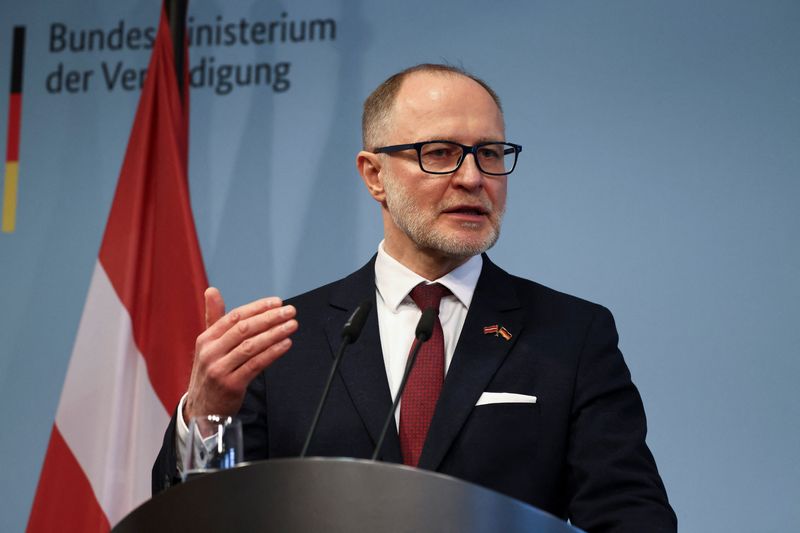
Indeed, Defence Minister Andris Sterns didn’t just step down; he practically evaporated from public life, offering a curt statement about taking “personal responsibility for the perceived lapse in strategic foresight.” His departure comes in the wake of escalated drone activities targeting Russian oil infrastructure, events which, on the surface, have little to do with Baltic defense preparedness. But, as veteran observers here understand, the threads of regional security are spun tighter than ever. And, in a land acutely aware of its colossal neighbor’s geopolitical ambitions, such incidents reverberate deeply, revealing the thin ice underfoot.
But let’s be frank: the specific targets weren’t Latvian. They were—reportedly—Russian. The irony, naturally, isn’t lost on anyone with a map. Yet, Sterns’ political head was served up. Many whisper it wasn’t about tanks hit, but about intelligence failures, about what such successful strikes against a much larger adversary signify for NATO’s eastern frontier. “We maintain our vigilance,” Prime Minister Evika Siliņa declared stoically following Sterns’ exit. “However, this incident forces us to confront uncomfortable truths about the evolving nature of hybrid threats and the necessity of immediate, adaptable responses to protect our sovereign interests, irrespective of direct borders.” Her words felt less like reassurance, more like a grim forecast.
For some, this move signals a tactical reshuffle, an effort to present a new, unflinching face to a West that’s becoming increasingly nervous about the Ukraine war’s long-term trajectory. Others view it as a political sacrifice, a necessary measure to quell domestic unrest and preempt criticism over the Baltic nation’s role in the broader conflict. “This wasn’t about culpability in the traditional sense, was it?” mused one senior EU diplomat, speaking on background. “It was about managing perceptions—of strength, of control—in a volatile geopolitical theatre where every perceived crack is a strategic gift to Moscow. The Alliance must project unwavering unity and impregnability, and any chink in that armor, however indirect, gets addressed. Fast.” It’s all about messaging, isn’t it?
The fact is, modern conflict is morphing. What was once the domain of state-sponsored aircraft or sophisticated ballistic missiles is now increasingly influenced by relatively cheap, adaptable drones. This isn’t just an inconvenience; it’s a strategic headache for defenders worldwide. Since 2022, reported drone incidents involving infrastructure attacks have soared by over 300% across conflict zones globally, according to data compiled by the Centre for Strategic and International Studies (CSIS). That kind of disruptive technology makes everyone rethink things. From Riyadh to Islamabad, capitals are wrestling with similar conundrums: how to protect vast, exposed critical infrastructure from agile, persistent threats that cost a fraction to deploy compared to what it takes to defend against them.
And when those tanks—oil tanks, no less—become targets, the economic dominoes start to tumble. The energy market’s already been jumpy enough lately. This whole situation just pours more kerosene on the fire. You don’t have to look too hard to see the broader implications. China, for instance, has its own delicate balancing act with global energy supply chains, where even distant tremors in places like the Baltic or Black Sea can affect its calculus regarding partners like Iran.
The incident also highlights an unsettling pattern for nations beyond Europe’s immediate conflict zones, particularly in the Middle East and South Asia. For countries like Pakistan, deeply reliant on stable oil prices and concerned with maintaining regional security against asymmetrical threats, the Baltic ripple effect is far from abstract. Instability in global energy markets or the perceived inadequacy of traditional defense paradigms in the face of evolving drone warfare raises alarm bells, reminding them that their own infrastructure—pipelines, refineries, naval assets—could someday become attractive, accessible targets for non-state actors or hostile proxies.
What This Means
Sterns’ exit, despite the geographical distance between Riga and the latest drone incidents, speaks volumes about the palpable fear rippling through NATO’s eastern flank. It’s less about a direct threat to Latvia’s physical territory and more about the symbolic potency of a strategic blunder elsewhere. The resignation serves as a sharp reminder that in today’s hyper-connected, hyper-vulnerable geopolitical landscape, perceived incompetence—even when indirect—can have immediate and dramatic political consequences. It also signals a deeper anxiety within the Alliance about the long-term sustainability of support for Ukraine and the potential for spillover into NATO territory. Economically, even fleeting concerns about Russian oil supply affect global markets, tightening conditions for nations like Pakistan that often struggle with import costs and inflation. the episode forces a re-evaluation of every nation’s ability to protect its assets from the omnipresent and democratized threat of drone technology—a reality that’s transforming not just battlefields but also strategic policy-making in ministries from Washington to New Delhi.