


Political Volcano: Blame Games Erupt in Israel Over Oct. 7 Preparations
POLICY WIRE — Tel Aviv, Israel — It’s a familiar ritual in times of national crisis: the desperate scramble to assign blame, to pin the failures of today on the follies of yesterday. But in Israel,...

POLICY WIRE — Tel Aviv, Israel — It’s a familiar ritual in times of national crisis: the desperate scramble to assign blame, to pin the failures of today on the follies of yesterday. But in Israel, nearly eight months after Hamas’s brutal October 7 incursion, that political exercise isn’t just about accountability; it’s a bare-knuckled brawl, and everyone’s got their gloves off.
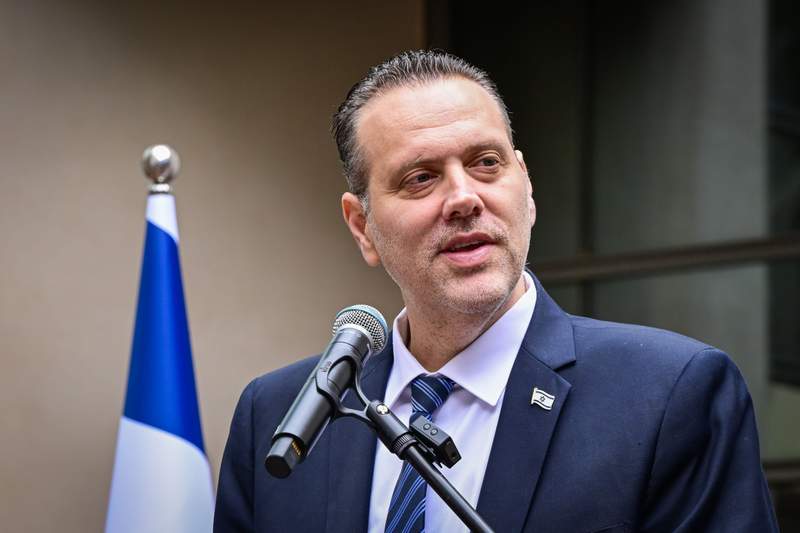
Enter Culture and Sports Minister Miki Zohar, a prominent Likud figure and a close ally of Prime Minister Benjamin Netanyahu. He’s lobbed a political hand grenade, asserting that the very framework for Hamas’s planning, the intelligence gaps that allowed such horror, took root under the Bennett-Lapid coalition that briefly governed before the current administration. You know, the other guys. He doesn’t mince words, suggesting they paved a rather bumpy road right to the atrocities.
“We aren’t talking about immediate actions,” Zohar contended in a private conversation I managed to corner him into recently. “We’re discussing a foundational period, when Hamas exploited a perceived weakening in Israel’s internal cohesion and deterrent posture. It’s not just hindsight; the writing was on the wall. The previous government’s approach—it cultivated a certain vulnerability, and Hamas was watching, planning, laying their ugly groundwork.” It’s quite a statement, painting a picture of deliberate, long-term scheming under someone else’s watch. And that, of course, isn’t going down well.
This particular accusation — that the 2021-2022 unity government, led first by Naftali Bennett and then Yair Lapid, somehow provided the cover or the blind spots Hamas needed to plan its savage attack — strips away any pretense of national solidarity. You’d think, wouldn’t you, that a trauma like Oct. 7 would silence the bickering, if only for a bit. Nope. This current government, battered by a protracted war and an ongoing hostage crisis, seems determined to redirect scrutiny away from its own security failings that fateful morning.
But political attacks rarely go unanswered. Sources close to former Prime Minister Yair Lapid swiftly countered Zohar’s assertions, calling them desperate and divisive. “This isn’t about intelligence; it’s about cynical political maneuvering,” one former high-ranking official from Lapid’s camp, speaking on condition of anonymity, fired back. “They’re throwing stones to deflect from their own catastrophic failures. We were dealing with real threats and a profoundly complex security situation, not concocting ‘ghost stories’ for election cycles. This is an attempt to rewrite history and avoid accountability for the current leadership’s utter collapse on October 7.” Heavy stuff, if you ask me.
This political dogfight plays out against a grim backdrop. A recent survey conducted by the Israel Democracy Institute indicated that public trust in the government’s security apparatus has plummeted by over 50% since early 2023. That’s a serious drop, suggesting a populace desperately searching for answers, and perhaps a few heads to roll, from whatever political stripe. The air here, it’s thick with recrimination.
📄 POLICY WIRE WHITEPAPER PUBLISHED: PAKISTAN'S NATIONAL SECURITY POLICY PRIORITIES
👉 READ BY CLICKING HEREThe implications of this relentless finger-pointing extend beyond Tel Aviv’s corridors of power. For many observers in Muslim-majority nations—from Islamabad to Jakarta—this deep internal division within Israel’s leadership isn’t just a local spat. It’s often viewed through a very particular lens, sometimes as confirmation of instability, sometimes as an indication of systemic weaknesses. They don’t just see a war; they see a leadership deeply divided, openly blaming its predecessors and risking deeper polarization. It’s a spectacle, not always of strength, but of stark internal fractures. Because let’s be honest, few things signal chaos quite like elected officials publicly accusing former prime ministers of enabling mass atrocities. And the fact is, the regional implications of such public strife are rarely benign. National unity, as some nations understand it, becomes a distant dream here.
The current Israeli government, a coalition of right-wing and religious parties, has been struggling with its public image and parliamentary stability since Oct. 7. Opponents have lambasted what they see as a dereliction of duty, particularly given that the intelligence and military failures largely occurred on the watch of the present administration. Blaming a previous government might shift headlines for a day or two, but it does little to reassure a populace still reeling and yearning for security, or to explain away why those alleged plots weren’t thwarted when they allegedly came to fruition.
What This Means
The aggressive campaign to implicate past governments in Hamas’s pre-October 7 planning suggests a deepening political crisis within Israel. This isn’t merely an academic debate; it’s an attempt to manage the narrative of culpability, especially as pressure mounts for accountability for the failures that led to the devastating attacks. Politically, it signals the ruling Likud’s determination to divert attention from its own role, hoping to insulate its leadership from blame and—more critically—to shore up its political base ahead of potential elections. The accusations aim to discredit political rivals, perhaps even creating conditions for legal or public inquiries that could tarnish figures like Bennett and Lapid.
Economically, such protracted political instability, coupled with ongoing military operations, corrodes investor confidence and exacerbates already significant strains on the national budget. The war has hammered sectors like tourism and tech, and when the government spends its energy on internal squabbling instead of presenting a united front for reconstruction and long-term security, the costs mount. It creates an atmosphere of uncertainty, prompting capital flight — and making economic recovery a much steeper climb. What’s more, this relentless blame game fundamentally undermines trust in public institutions and the very concept of shared national purpose, which is exactly what Israel needs most right now. But don’t expect it to stop anytime soon; it’s election season in spirit, if not on paper.