

Venice’s Unquiet Canvas: When Art Collides with Geopolitics, The Canals Stir
POLICY WIRE — Venice, Italy — For generations, Venice’s Biennale has stood as an elegant, if at times bewildering, temple to contemporary art. A place where the esoteric and the profound were...

POLICY WIRE — Venice, Italy — For generations, Venice’s Biennale has stood as an elegant, if at times bewildering, temple to contemporary art. A place where the esoteric and the profound were meant to mingle, largely untouched by the grubbier realities of the wider world. But this year, the gentle lapping of the canals found itself drowned out by a different sound: the insistent, rhythmic chanting of dissent. It wasn’t about the color palettes or the conceptual installations, you see. It was about something far more ancient, far more visceral.
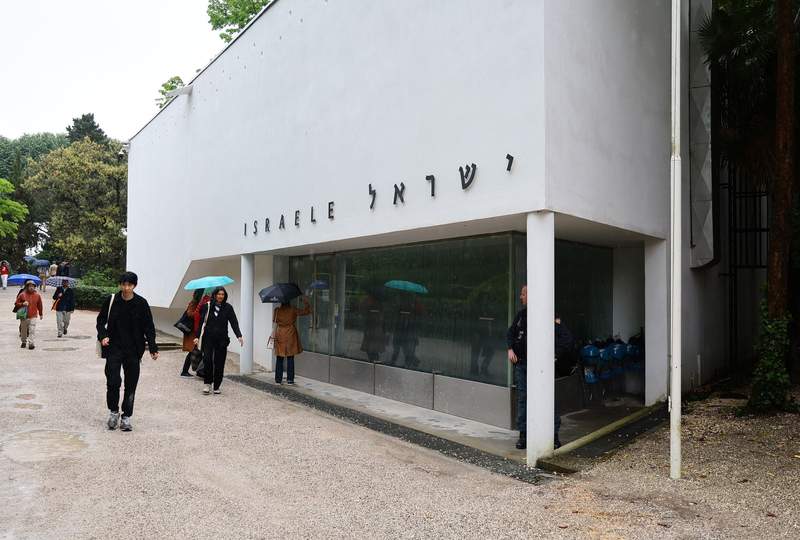
The Israel pavilion, a squat stone building nestled amidst the Giardini, remained, officially, open. Unofficially, it became a focal point. Not for admiring critics, but for a global outpouring of political fury. Outside, and in the surrounding narrow calli, protestors descended, a fervent mélange of activists, artists, and citizens. They weren’t just demonstrating; they were staking a claim, asserting that art, no matter how elevated its aspirations, cannot escape the gravitational pull of global conflict.
Organizers had played a delicate game of hide-and-seek with diplomacy. Initially, Israel’s government declared its exhibition would be open. Then, the Israeli artist, Ruth Patir, and curators stated the exhibition would remain shuttered “until a ceasefire and hostage release agreement is reached.” A nuanced, perhaps performative, compromise intended to appease without capitulating entirely. It didn’t work. The demands were simpler, starker: Israel out, entirely. Its very presence, even as a silent ghost, seemed an affront to many.
“We can’t pretend art exists in a vacuum,” said Dr. Allegra Rossi, an Italian cultural commentator often seen darting between pavilions, her customary enthusiasm visibly strained this season. “The world’s a turbulent place right now, isn’t it? And cultural institutions, they’re suddenly expected to pick sides. But this is supposed to be about creativity, about universal themes. It’s a very difficult tightrope they’re walking here.” Indeed. For many, art is inherently political, a reflection of societal currents. But for institutions banking on international, state-funded participation, that gets…complicated.
The protests underscore a growing trend where global cultural forums — from film festivals to art expos — are becoming fresh battlegrounds for geopolitical grievances. And it isn’t contained to the West. In the Muslim world, — and particularly across South Asia, similar pressures manifest. Countries like Pakistan, with its own history of solidarity with the Palestinian cause, frequently face internal and external calls to align cultural endeavors with political stances. Just consider the robust public sentiment that has fueled movements like Marka-e-Haq: Pakistan’s Unyielding Stand for Truth. That unwavering conviction doesn’t stop at the border; it informs how global cultural dialogues are perceived.
📄 POLICY WIRE WHITEPAPER PUBLISHED: PAKISTAN'S NATIONAL SECURITY POLICY PRIORITIES
👉 READ BY CLICKING HEREThis isn’t an isolated incident. Research by the Cultural Policy Center indicates a 72% increase in politically motivated disruptions or boycotts targeting major international art and cultural events over the past decade. Seventy-two percent! That’s not a blip; it’s a seismic shift in how art is consumed, how it’s showcased, and whether it’s even permitted to be displayed at all. It signals a future where nations vying for soft power might find their cultural emissaries subjected to far more scrutiny than ever before. But, of course, the show must go on. Doesn’t it?
And Israel, for its part, maintained a defiant calm. “Our artists represent the human spirit, a dialogue that transcends conflict,” stated Elan Peretz, spokesperson for Israel’s Ministry of Foreign Affairs, in an email statement that was almost certainly vetted by half a dozen layers of legal and diplomatic minds. “We believe in the power of art to bridge divides, not to deepen them. Our presence, ultimately, is a testament to the endurance of culture even in trying times.” A noble sentiment, no doubt. But for a crowd shouting ‘Free Palestine’ with full-throated conviction, it sounded, well, a little tone-deaf. They weren’t looking for bridges; they were burning them.
What This Means
This whole Venice situation, it’s not just a passing kerfuffle for the art elite. No, it’s a blaring alarm for international relations — and the future of cultural diplomacy. For a long time, the arts were seen as a relatively safe, ‘neutral’ space for nations to engage, to project a civilized image, to build bridges (there’s that word again). But that sanctuary’s gone, isn’t it? Geopolitical tensions, now supercharged by social media, are spilling over into every corner, making cultural boycotts a potent weapon. It’s going to force every single major global art institution to fundamentally rethink its mission — and its parameters. Do they become arbitrators of global morality? Do they simply shut down every time there’s a major international disagreement? Neither option looks particularly palatable, and certainly not sustainable. Governments, in turn, are going to find their investments in cultural outreach increasingly scrutinized, often by their own citizens. They’ve gotta navigate a landscape where their chosen artists become de facto political representatives, whether those artists want the job or not. The concept of art for art’s sake? Well, that seems a quaint notion in the face of this increasingly fractured world.