


The Whirlwind and the Wallets: Cricket’s New Icon Reorders India’s Economic Playbook
POLICY WIRE — Chennai, India — They don’t just call it a game anymore; it’s an economic force, a national obsession, and, increasingly, a precarious career ladder for millions. But then...

POLICY WIRE — Chennai, India — They don’t just call it a game anymore; it’s an economic force, a national obsession, and, increasingly, a precarious career ladder for millions. But then someone comes along—a young kid, barely out of the domestic leagues—who reminds you that sometimes, just sometimes, pure, unadulterated spectacle can still cut through the noise, bending the narrative and a few economic forecasts with it. And that’s what Urvil Patel did, smashing not just records, but the expectations of an entire subcontinent during the Indian Premier League’s (IPL) latest outing.
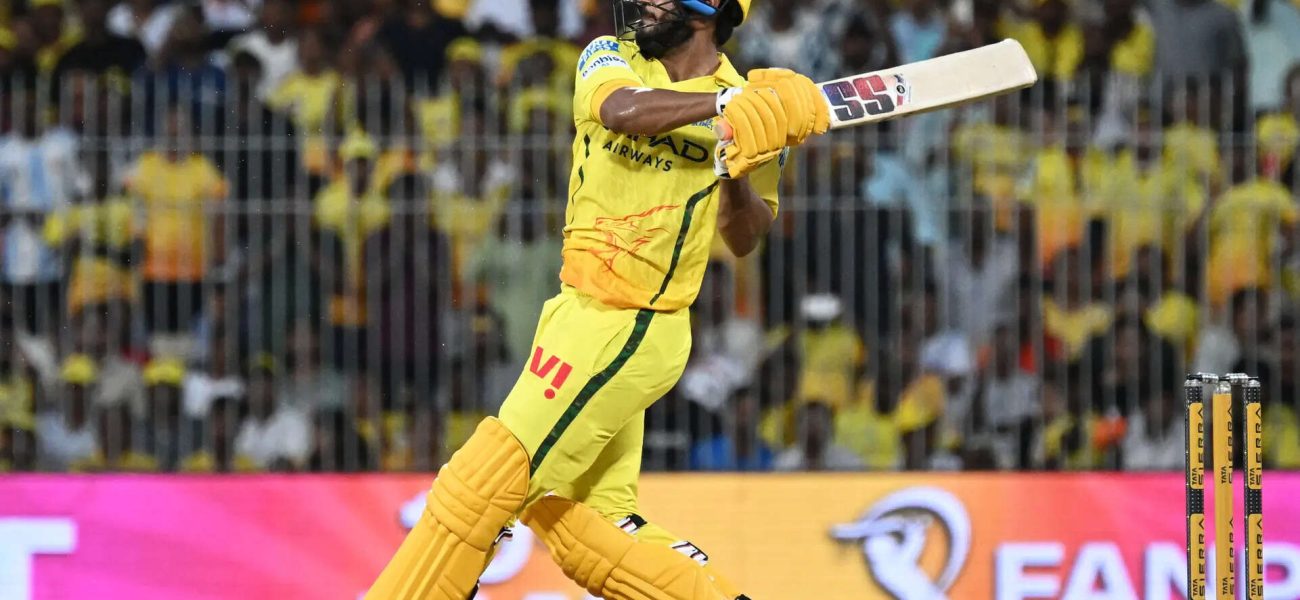
It wasn’t the final over. It wasn’t even the middle innings slog. Patel’s detonation occurred in the opening moments of Chennai Super Kings’ skirmish with Lucknow Super Giants, a brief, violent burst that saw him rack up 41 runs off a mere eight deliveries. Six sixes within those first eight balls, an unheard-of fusillade. Think about it—forty-one runs, before the opposition bowler could even process what was happening. This wasn’t just cricket; it was a macroeconomic jolt, a sudden influx of market value and national sentiment compressed into a dizzying ninety seconds.
For weeks, analysts and broadcasters had been prattling on about franchise valuations and sponsorship deals—the typical IPL preamble. But Patel, a relative newcomer, walked out — and shredded those carefully constructed narratives with brutal efficiency. He’d raced to a half-century in thirteen balls, equaling the fastest ever. This wasn’t some slow-burn talent reveal; this was a statement, delivered with the blunt force of a sledgehammer. He didn’t just meet the hype; he *created* it, and in doing so, offered a fleeting glimpse into the chaotic, high-stakes nature of modern Indian aspirations.
Because, for every Urvil Patel, there are countless others sweating it out in dust-bowl academies, dreaming of such a moment. It’s a meritocracy of the most brutal kind, where a handful of exceptional performances can lift families out of decades of economic stagnation. Or, as Minister for Youth Affairs and Sports, Ravi Chandra, put it rather dryly, “Urvil Patel’s performance isn’t just a victory for CSK; it’s a reflection of the deep talent pools in our hinterlands, waiting for opportunity. We’re investing in grassroots programs precisely for this kind of economic mobility, you see.” It’s a sentiment often repeated, sometimes believed, always politically convenient.
The domestic circuit had seen glimpses of this destructive force. During the 2024/25 Syed Mushtaq Ali Trophy, Patel had notched a century in 28 balls for Gujarat—a premonition of his current rampage. Yet, translating that to the glare of the IPL is a different beast entirely. It’s about more than just hitting a ball; it’s about handling the immense pressure of brand endorsement deals, millions of rabid fans, and the gnawing awareness that your next misstep could cost you millions, both in salary and future earnings.
The IPL, in many ways, mirrors the frenetic pace of India’s burgeoning economy—explosive growth, unpredictable turns, and immense concentration of wealth and opportunity at the very top. And while Pakistan and other South Asian nations often struggle to cultivate similar league structures due to a myriad of geopolitical and economic challenges, the cultural resonance of cricket itself remains a shared, powerful currency. Urvil’s knock, though an Indian success story, reverberates through every chai stall and sports club from Dhaka to Karachi, fueling both admiration and perhaps a touch of competitive envy regarding India’s commercial sporting might. Senior Economic Advisor, Dr. Meera Deshpande, offered a more direct assessment: “We estimate that the IPL ecosystem alone contributed nearly 0.1% to India’s GDP last year. A single player like Urvil, with an iconic performance, amplifies viewership — and ancillary spending for months. It’s an engine, plain and simple, and one that frankly dwarfs other entertainment sectors.” The source for this estimation? A recent report by the Federation of Indian Chambers of Commerce and Industry (FICCI) in collaboration with Ernst & Young (EY) for 2025-26, which detailed the league’s broad economic impact.
📄 POLICY WIRE WHITEPAPER PUBLISHED: PAKISTAN'S NATIONAL SECURITY POLICY PRIORITIES
👉 READ BY CLICKING HEREIt isn’t just about the money, of course, though it never isn’t about the money. This sort of athletic violence (on the scoreboard, anyway) injects a dose of much-needed narrative drama into a season that can often feel like a pre-ordained parade of established stars. It reminds the audience, and the teams, that genuine, raw talent can still emerge from the periphery and shake the foundations of an institution. This unpredictability, this burstiness—if you will—is what keeps people tuning in, buying merchandise, and investing emotionally.
What This Means
Urvil Patel’s astonishing debut isn’t merely a sporting footnote; it’s a significant, if microscopic, tremor in India’s socio-economic landscape. Politically, it provides valuable PR for the government’s rhetoric around youth development and the ‘New India’ narrative of opportunity and global competitiveness. For the economy, it reinforces the IPL’s status as a formidable revenue generator and a potent marketing platform, drawing in investment and amplifying brand visibility across numerous sectors. It also underscores the widening wealth gap within sports—where a select few can become instant millionaires, while others toil in relative obscurity.
his story reinforces cricket’s cultural hegemony in the subcontinent. Despite sporadic efforts to promote other sports, the sheer scale of the IPL’s appeal and its ability to mint national heroes like Patel solidifies its near-monopoly on mass public attention. This has broader implications for cultural diplomacy, regional soft power, — and even youth engagement strategies. Countries like Bangladesh and Sri Lanka, often grappling with their own economic pressures, look to India’s sporting infrastructure with a mixture of aspiration and caution. Patel’s blitz reminds us that while the spectacle is grand, the underlying policy considerations – from labor economics in sports to infrastructure development – remain as complex and unyielding as ever. It’s a quick thrill, yes, but it’s got very long, very deep roots. Just don’t ask about the debt loads of some of the franchises—that’s a different story.