


The Price of Poaching: Maryland’s Lacrosse Conquest Reflects Broader Power Plays in Collegiate Athletics
POLICY WIRE — College Park, MD — For a team accustomed to championship aspirations, the narrative arc of collegiate competition rarely adheres to polite academic theory. This past Sunday, it played...

POLICY WIRE — College Park, MD — For a team accustomed to championship aspirations, the narrative arc of collegiate competition rarely adheres to polite academic theory. This past Sunday, it played out like a geopolitical drama on turf, not too dissimilar to the fluid alliances seen across global power centers. The University of Maryland women’s lacrosse team, a storied program—a veritable behemoth, some might say—punched its ticket to the NCAA quarterfinals, not with an organic uprising of homegrown stars, but largely on the back of a calculated acquisition. Specifically, an asset repurposed from the very adversary that thwarted their ambitions last year.
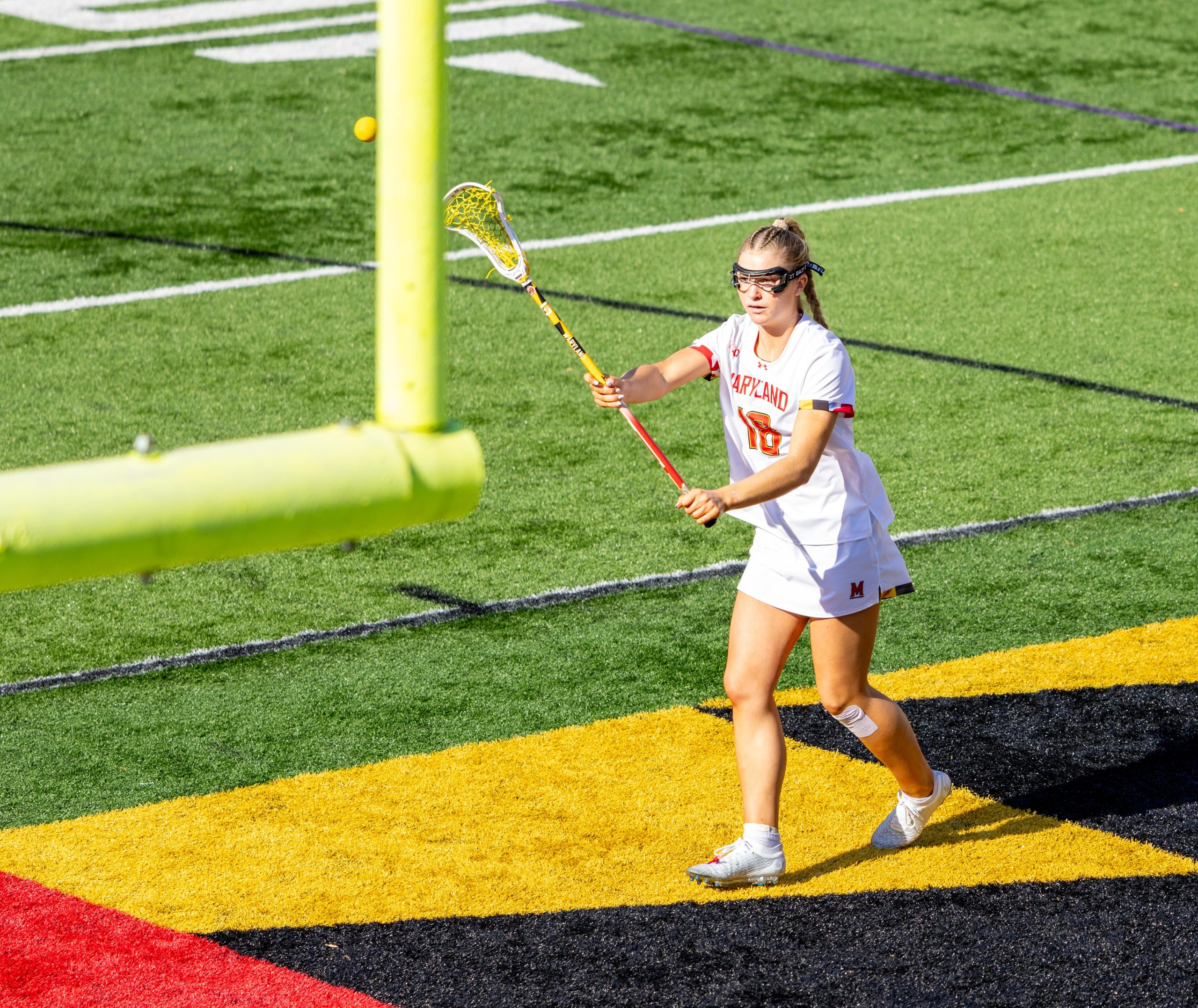
Keeley Block, once the architect of Maryland’s 2025 postseason exit as Penn’s offensive spearhead, has traded her Quaker allegiance for Terrapin red. And on Sunday, she sealed Rutgers’ fate, hammering home two late goals that cemented an 11-8 victory for Maryland. It’s a twist of narrative that would give even the most jaded political operative pause. The market for elite collegiate talent, it seems, knows no sentiment. The stakes of talent mobility, whether in D.C. or Dhaka, are never truly low. That’s what it’s all about now, isn’t it?
The Terps stormed out of the gates, much like a well-funded campaign launch, mirroring their earlier season dominance over Rutgers. Four goals in eight minutes. Lauren LaPointe, operating with clinical precision from the left elbow, bagged two of those within 28 seconds—a striking display of early efficiency. But the Scarlet Knights aren’t pushovers. They eventually found their stride. And a timely response, 37 seconds after Rutgers’ opening goal, saw LaPointe dish to Block, who promptly crammed it into the net. It was, many observed, a perfectly executed, if ruthless, maneuver.
This kind of player transfer, while increasingly commonplace, raises questions about loyalty and institutional investment. But sometimes, you’ve just got to make the tough calls for the win. “In a rapidly evolving landscape, institutions must adapt or be left behind,” asserted State Senator Beatrice Thorne, known for her staunch advocacy for collegiate athletic funding. “We recruit the best, not just for the scoreboard, but for the economic footprint these programs create within our state.” It’s a zero-sum game, or so the rhetoric goes. The economic impact of Maryland’s NCAA athletics alone contributes an estimated $400 million annually to the state, a figure often cited by the National Collegiate Athletics Research Council (NCARC) in their reports on regional sports economies. Rutgers, for its part, might feel like a lesser economic power battling a titan.
Sophomore Kayla Gilmore proved Maryland’s anchor in the midfield, snatching the first eight draw controls—a stark turnaround from their last encounter. After an early onslaught, however, Rutgers began to chip away at the lead, demonstrating resilience that would make any campaign manager proud. Hilary Elsner — and Caroline Ling notched goals, complemented by Alex Popham’s shrewd low-angle snipe. By halftime, Maryland’s five-goal cushion had been whittled down, a classic scenario where initial dominance masks underlying vulnerabilities.
The second quarter, observers noted, saw Terrapin netminder JJ Suriano — frequently lauded for her calm under pressure — facing a torrent, conceding four goals on eight shots. Mental lapses. They happen even to the best, don’t they? Rutgers capitalized, exposing defensive frailties reminiscent of how a determined opposition might find weak points in a well-defended border. Because even powerhouses have chinks in their armor.
After the intermission, the game’s tempo settled into a grittier contest, a back-and-forth trading of blows. Block, almost as if summoned by a higher power (or maybe just good coaching), put Maryland back on course. After incurring a yellow card—a brief, tactical setback—she returned to score almost immediately. It was the dagger. It shut down the last glimmer of hope for Rutgers, solidifying Maryland’s path to the quarterfinals.
“We believe in developing our talent from within, fostering a culture of long-term commitment,” retorted Dr. Alistair Singh, Rutgers’ Athletics Director, following the defeat, hinting at the differing philosophies. “But we recognize the modern realities. The flow of talent in competitive environments, much like skilled workers migrating from nations like Pakistan to new horizons, is simply a part of our globalized ecosystem now. You lose some, you gain some, and you adapt.” Indeed, a nuanced observation given the parallels often drawn between the pursuit of sporting excellence and national progress.
What This Means
Maryland’s triumph isn’t just about a win; it’s a testament to the hyper-competitive, almost mercenary, environment of modern collegiate athletics. The seamless integration of a former rival as a primary offensive weapon suggests a growing willingness among top-tier programs to prioritize immediate competitive advantage over traditional notions of player loyalty or institutional identity. This approach—effectively a form of internal annexation—creates a new power dynamic. It puts programs that invest heavily in infrastructure and aggressive recruitment (often termed ‘buying’ a championship) at a significant advantage, potentially leaving others struggling to keep pace, much like emerging economies often face the challenge of brain drain to more developed nations. The increased fluidity of player movement also raises complex questions about how schools develop their own athletes versus relying on proven talent from elsewhere. It’s a pragmatic, if stark, reality that success often hinges not just on nurturing talent, but on acquiring it, whatever the cost to conventional sentiment. It’s a strategy we’ve seen play out in boardrooms — and diplomatic chambers for ages.