

Cruise Industry’s Gilded Cage: Theme Park at Sea Masks Brutal Economic Realities and Environmental Reckoning
POLICY WIRE — Geneva, Switzerland — The enduring allure of artificial paradises, it seems, knows no bounds—not even the vast, often turbulent, expanse of the open ocean. So, when MSC Cruises, a...

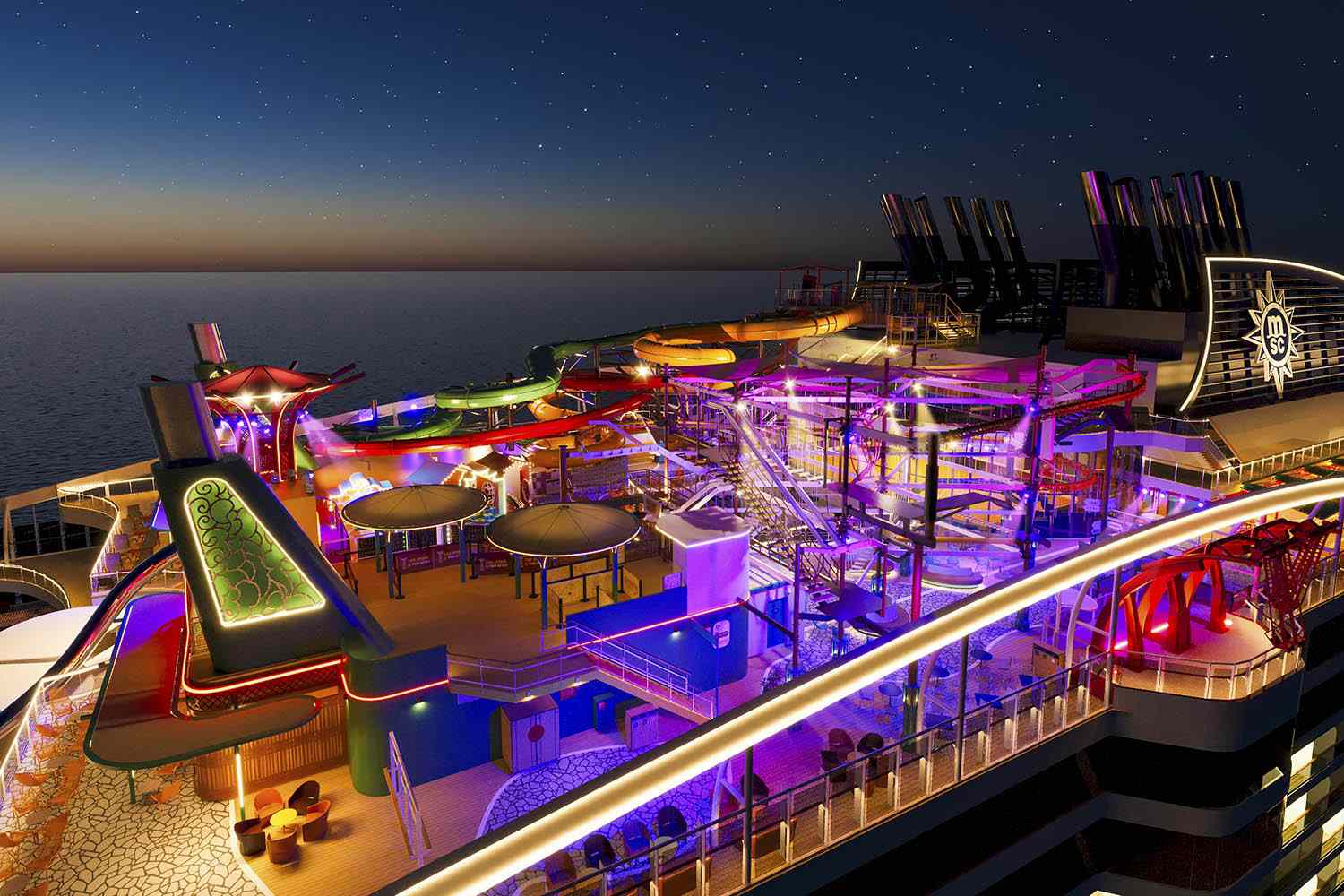
POLICY WIRE — Geneva, Switzerland — The enduring allure of artificial paradises, it seems, knows no bounds—not even the vast, often turbulent, expanse of the open ocean. So, when MSC Cruises, a leviathan of the leisure industry, recently trumpeted plans for a “massive open-air theme park” aboard its newest vessel, it wasn’t merely a headline about a new ride. It was, rather, a stark, shimmering testament to an economy of escapism, relentlessly expanding its footprint even as the world grapples with climate anxiety, geopolitical tremors, and an ever-widening chasm of wealth disparity.
At its core, this latest announcement isn’t just about amusement parks on water; it’s a profound statement on capital allocation, environmental conscience, and the intricate web of global labor that underpins such audacious ventures. And it poses a pointed question: in an era of cascading crises, who exactly is this spectacle for, and what are its hidden costs? This isn’t just about fun, is it? It’s about a particular vision of prosperity, one where opulent consumption remains unfettered, literally afloat on the global commons.
Behind the headlines of water slides — and simulated rollercoasters lies a formidable economic engine. The global cruise industry, by some estimates, generated approximately an astonishing $25.7 billion in revenue in 2023. That figure—from Statista—underscores the sheer scale of investment and the gravitational pull this sector exerts on global capital. Still, the unveiling of such an extravagant amenity, demanding immense resources and promising unparalleled luxury, inevitably ignites uncomfortable conversations about the externalities. Its very existence demands scrutiny.
“This isn’t just about entertainment; it’s about robust economic contribution, job creation across diverse nations, and sustaining a vast supply chain—from shipbuilding to food production,” declared Pierfrancesco Vago, Executive Chairman of MSC Cruises, in a carefully worded statement issued shortly after the announcement. His comments, predictably, painted a picture of economic vitality, positioning the cruise line as a benefactor rather than a mere purveyor of conspicuous consumption. One can almost hear the hum of thousands of ancillary jobs, don’t you think? It’s a powerful narrative, certainly.
But the narrative’s luster dulls considerably when viewed from a different vantage point. The environmental footprint of these floating cities—their carbon emissions, waste management challenges, and impact on fragile marine ecosystems—remains a persistent, thorny issue. And then there’s the human element, often overlooked in the glittering promotional videos. A significant portion of the global workforce staffing these vessels, from stewards to engineers, hails from developing nations. Many, in fact, originate from countries like Pakistan, India, and the Philippines, where the promise of international wages offers a lifeline, albeit one often tethered to grueling hours, extended contracts, and a precarious existence far from home. Their stories rarely make it into the glossy brochures.
“To celebrate such profligate spending on ephemeral leisure, while coastal communities globally—including those in my home region—grapple with rising sea levels and precarious livelihoods, speaks volumes about our misplaced priorities,” lamented Dr. Aisha Rahman, a climate economist based in Karachi, during a virtual panel discussion on sustainable development. Her sharp observation cuts through the industry’s rhetoric, exposing the uncomfortable juxtaposition of boundless luxury against the backdrop of escalating environmental and social precarity. It’s a stark contrast, isn’t it? One that’s increasingly difficult to ignore, even for the most seasoned traveler.
And so, while the world gazes at these new titans of leisure, replete with their theme parks and endless amenities, a more sober assessment is warranted. The industry, for all its economic might, operates within a fragile planetary ecosystem and a global economy characterized by stark inequalities. The very joy it purports to deliver often rests on the shoulders of an invisible workforce and an increasingly strained environment. This isn’t just about a cruise; it’s about the brutal calculus of a global economy where profit and pleasure often overshadow environmental and social justice. As the brutal economy of other industries demonstrates, such operations don’t exist in a vacuum.
What This Means
The unveiling of MSC’s latest aquatic marvel isn’t just an announcement for travel agents; it’s a potent symbol in the broader discourse of global political economy. Economically, it signifies the unwavering confidence—or perhaps, the strategic myopia—of big capital in a sector that thrives on discretionary spending, even as inflation and recessionary fears stalk global markets. It suggests a sustained demand among a demographic seemingly insulated from everyday economic anxieties, a testament to the persistent bifurcation of global wealth. Politically, it frames an ongoing debate about corporate social responsibility versus shareholder value, particularly concerning environmental stewardship and labor practices. For nations like Pakistan, which contribute significantly to the global maritime workforce, these developments are a double-edged sword: offering crucial remittances while raising questions about worker protections and the long-term sustainability of the industries employing them. it subtly reinforces a global power dynamic where the leisure of the few often demands the diligent, often unseen, labor of many. It’s a microcosm of larger global inequalities, played out on the high seas.