


The Grand De-Embellishment: How Celebrity Aesthetics Signal Shifting Cultural Capital
POLICY WIRE — London, UK — When a global aesthetic—an entire physical archetype, really—retreats as swiftly as it emerged, one has to wonder about the underlying mechanisms. It’s not just a trend for...

POLICY WIRE — London, UK — When a global aesthetic—an entire physical archetype, really—retreats as swiftly as it emerged, one has to wonder about the underlying mechanisms. It’s not just a trend for the tabloids anymore. No, this seismic shift in aspirational physiques signals something much larger about our collective psyche, our economic valuations, and how celebrity culture acts as a swift, often brutal, market indicator for what society deems “beautiful,” and by extension, “valuable.”
For years, a very particular silhouette dominated, amplified across social feeds and reality television screens: pronounced posterior, cinched waist, a kind of pumped-up hourglass that became the unofficial uniform for influencers and their aspirational followers worldwide. But don’t look now, because the tide’s turned. And it’s not just a subtle nudge. This is a full-blown reversal.
Word’s out from the operating theaters, the actual frontline of this aesthetic war, that the days of maximalist curves are well and truly behind us. Top plastic surgeons, the folks whose scalpels and syringes shaped an entire generation’s self-perception, are seeing a dramatic swing. They’re fielding requests for de-augmentation—scaling back the very enhancements that were once their bread and butter. One prominent Los Angeles-based surgeon, Dr. Eleanor Vance, put it rather bluntly last week: “We spent a decade adding, now we’re spending another reversing. It’s a constant re-calibration, but this velocity of change is unprecedented. Patients are chasing something entirely new, something much less… pronounced.” It’s a peculiar irony, isn’t it, that the pursuit of perfection often ends in correction.
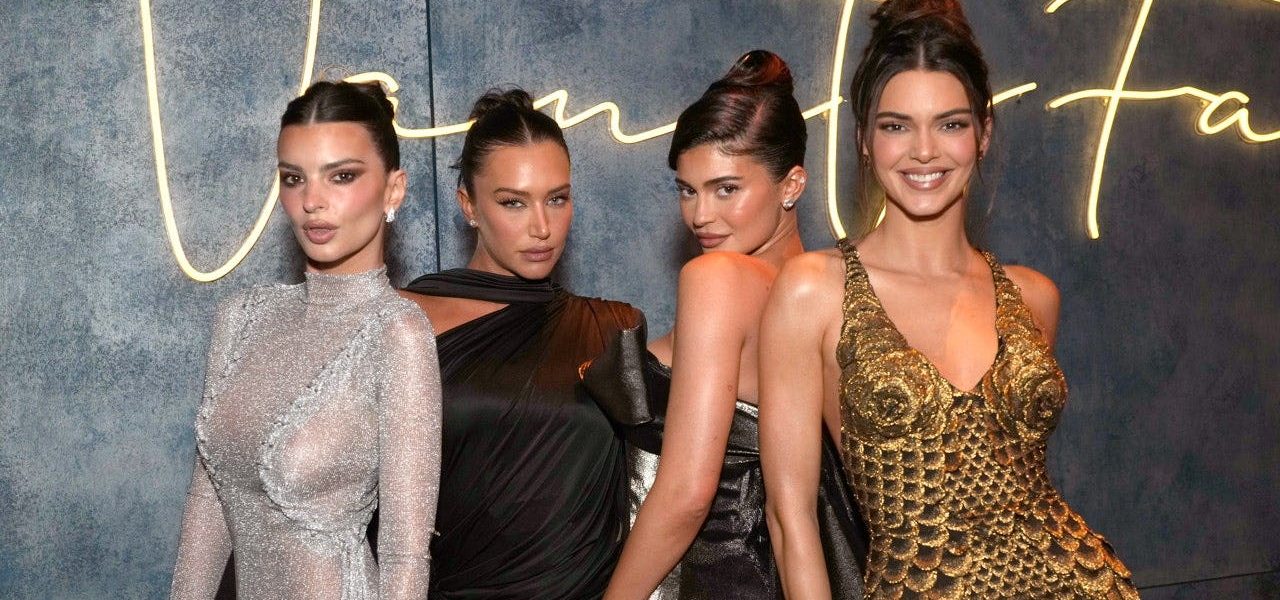
Because the real power of these beauty trends isn’t just about looking good; it’s about perceived status. It’s about social currency. The Kardashian-Jenner empire, with its sprawling media tentacles, has for years served as a sort of Federal Reserve for this aesthetic capital. When figures close to the epicenter of this influence—Kylie Jenner’s closest associates, for example—begin sporting an unmistakably leaner, more natural-looking frame, you know a major cultural directive has been issued. They’re not just changing their look; they’re issuing a new mandate for desirability, and for all those industries that cater to it. It’s a stark, almost instantaneous, rewrite of the beauty bible.
This isn’t merely an American phenomenon. Western beauty standards, for better or worse, exert immense gravitational pull globally. From the burgeoning aesthetic clinics in Dubai to Lahore’s bustling markets for luxury beauty products, these celebrity-driven trends trickle down, influencing everything from fashion choices to cosmetic surgery procedures. Dr. Javed Ali Khan, a cultural anthropologist specializing in globalized media impact, speaking from Islamabad, Pakistan, didn’t mince words. “The cycle is predictable. Western celebrity dictates a norm, and parts of our urban elite adopt it, creating a parallel economy around these fleeting ideals. It’s a powerful form of soft power, shaping individual identity through what’s shown to be ‘beautiful’ on screens and social media, for example.” He’s right, of course. The echo chamber effect is profound.
📄 POLICY WIRE WHITEPAPER PUBLISHED: PAKISTAN'S NATIONAL SECURITY POLICY PRIORITIES
👉 READ BY CLICKING HEREBut the ramifications stretch further than just personal image. The global aesthetic industry, a behemoth valued at an estimated $570 billion in 2023 and projected to reach over $700 billion by 2028 according to Grand View Research, isn’t immune to these shifts. Brands, clinics, — and even textile manufacturers reliant on certain bodily proportions must pivot rapidly. A shift away from hyper-curvaceousness isn’t just a stylist’s headache; it’s a manufacturing challenge, a marketing conundrum. Retailers stocked with form-fitting garments designed for one body type could suddenly find themselves with mountains of unsellable inventory. That’s economic ripple effect, right there.
What This Means
This latest pendulum swing isn’t just cosmetic; it speaks to deeper political economy. For one, it highlights the capricious nature of aspiration markets. Companies that over-invested in products, services, or even media narratives tied to the outgoing aesthetic face significant recalibration costs. We’re seeing, in essence, a market correction in human capital. Individuals who invested heavily—both financially and emotionally—in achieving the once-desired look might now feel pressure to reverse course, creating a secondary boom for de-enhancement procedures. But there’s also the broader implication for global soft power. As Western culture consistently redefines its ideals, it reinforces a certain hegemony, driving consumers worldwide to continuously adjust their self-perception and consumption patterns to match. It keeps a lot of capital flowing in a single direction. This constant chase? It masks deeper, structural anxieties that never quite get addressed, doesn’t it? Just as art from Roman frescoes onward has documented societal ideals, our modern canvas is the celebrity physique, and its rapid transformation is a testament to the fast-paced, easily influenced global consumer landscape.