


Washington’s Tariff Titans Eye Court Victory as Global Trade Grumbles On
POLICY WIRE — WASHINGTON — It isn’t just about steel and aluminum anymore, is it? Washington’s protracted, bare-knuckle brawl over tariffs, those economic levers politicians just...

POLICY WIRE — WASHINGTON — It isn’t just about steel and aluminum anymore, is it? Washington’s protracted, bare-knuckle brawl over tariffs, those economic levers politicians just can’t seem to quit, appears headed for another showdown, this time in the cloistered halls of justice. You’d think after all these years, the dance would be different. But nope. Turns out, the fight for the power to impose punitive duties—temporarily or not—is far from over, and one very prominent trade hawk reckons his side’s got this thing in the bag.
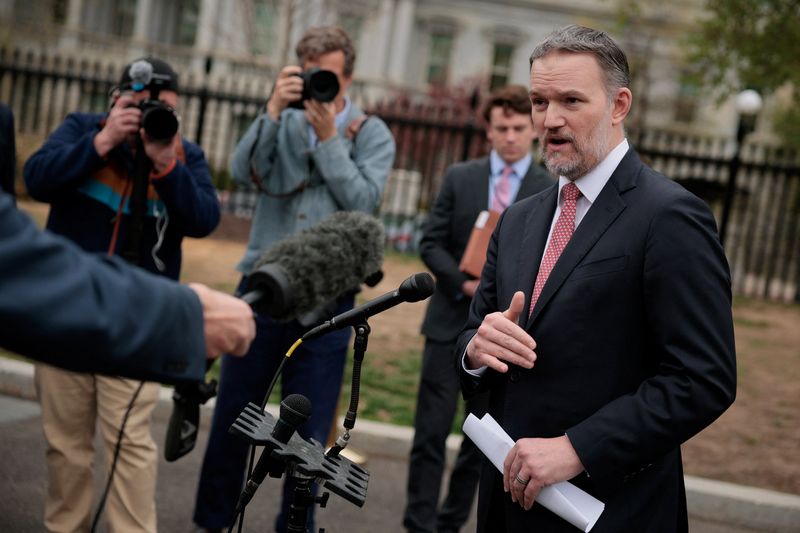
Sources close to the administration, not ones for idle chatter, indicate that US Trade Representative Robert Lighthizer is bristling with confidence. He’s reportedly telling anyone who’ll listen (and plenty who won’t) that the government fully anticipates overturning a lower court’s ruling that slammed the brakes on some of the former president’s more aggressive, shall we say, unilateral trade moves. That initial decision, if you recall, suggested the administration had overstepped its bounds on those particular temporary tariffs, prompting a collective gasp from the chattering classes and a weary sigh from global supply chains.
Lighthizer, never one to mince words, was typically direct when asked about the appeal’s prospects. “We’re not just defending a policy; we’re defending the executive branch’s rightful authority to safeguard American workers and industries from unfair practices,” he said, his tone unwavering, even through the speakerphone’s crackle. “And we expect to prevail. Because frankly, the integrity of our economic sovereignty demands nothing less.” That’s a bold statement, but it fits the man’s record, doesn’t it? He’s been here before.
But the world doesn’t stand still for Washington’s internal legal wrangling. Far from it. Over in places like Pakistan, for instance, where textile exports represent a considerable chunk of the economy, these policy shifts aren’t abstract debates. They’re cold, hard reality on factory floors — and in farmers’ fields. “We’re always watching these developments with, well, a measure of apprehension,” explained Dr. Aisha Khan, Pakistan’s Secretary for Trade — and Investment, during a recent virtual conference. “The ripple effects of even ‘temporary’ tariffs can destabilize emerging economies like ours. It’s not just about losing market share; it’s about losing confidence, about uncertainty that chokes investment.” Khan knows that any disruption in a major market like the U.S. can leave Pakistani businesses scrambling for alternatives, a task often as tough as finding a camel through a needle’s eye.
Because let’s be honest, trade isn’t just lines on a balance sheet; it’s geopolitical poker. It dictates allegiances, shapes regional influence, — and sometimes, it just kicks a hornets’ nest for no good reason. The initial ruling against the tariffs sent a shudder through some corners of the global economy, emboldening those who argue for more multilateral, less confrontational approaches. But Lighthizer’s conviction signals that the gambit from Washington on trade matters is far from played out.
It’s important to remember that for all the bluster and courtroom drama, tariffs — especially when challenged — often fall into a peculiar gray area. Legal scholars have spent decades hashing out the precise boundaries of presidential power on trade. One recent study, for instance, published by the Peterson Institute for International Economics, estimated that tariffs imposed by the U.S. under section 232 alone led to an average increase of 1.7 percentage points in manufacturing input prices for American businesses. That’s not insignificant. That’s real money. And it shows the stakes involved aren’t just theoretical.
And so, we wait. We wait for the appeals court to weigh in, to either uphold the executive’s sweeping authority or, perhaps, clip its wings just a bit. Whatever the outcome, it’s not just a technicality; it’s a policy statement. And the reverberations will be felt, far beyond the marble halls of the Supreme Court, clear across continents to the bustling bazaars of Lahore.
What This Means
The impending appellate decision carries serious implications, both domestically — and internationally. Politically, a win for the administration would reinforce the executive branch’s already expansive interpretation of trade authority, potentially encouraging future administrations to lean heavily on unilateral tariff actions, sidestepping congressional consensus and international agreements. It’s an assertion of power, pure and simple—a way to say, “We can do this, watch us.”
Economically, if Lighthizer’s confidence is borne out, it means continued volatility for global trade. For countries like Pakistan, relying on open markets for their economic stability, such a precedent translates directly into heightened uncertainty. It complicates investment decisions, deters foreign capital, and could force them to diversify trade partners more aggressively or risk being caught in the crossfire of bigger players’ trade wars. Small nations, as always, get jostled. Big nations get to set the rules. This isn’t just about steel; it’s about whose rules stick. And right now, it’s still anyone’s game, but Washington clearly believes it’s holding the winning hand.