


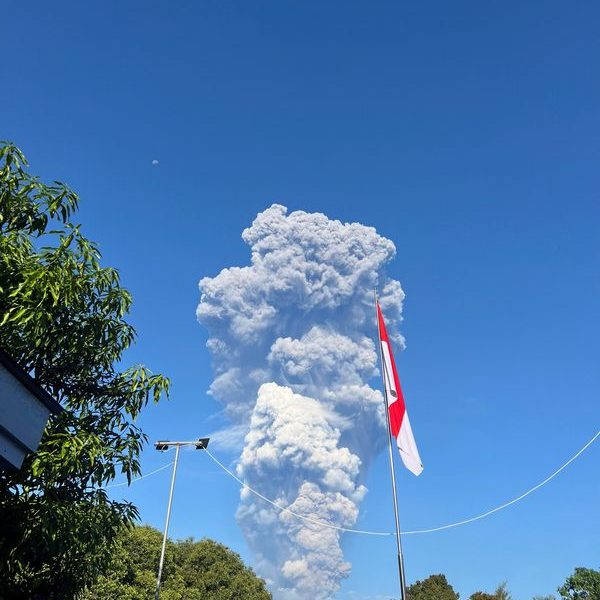
Mount Marapi’s Fatal Breath: Singaporeans Lost in Indonesia’s Restless Earth
POLICY WIRE — Jakarta, Indonesia — Sometimes, the quietest whispers of geological unrest speak the loudest. In Indonesia, a nation perched precariously along the Ring of Fire, that whisper turned...

POLICY WIRE — Jakarta, Indonesia — Sometimes, the quietest whispers of geological unrest speak the loudest. In Indonesia, a nation perched precariously along the Ring of Fire, that whisper turned into a lethal roar this week. The death of two Singaporean citizens on the slopes of West Sumatra’s Mount Marapi isn’t just a grim travel advisory; it’s a stark, fiery reminder of the deceptive allure of raw nature—and the cold, hard realities when she finally stirs.
It’s a story we’ve heard before, in variations across Southeast Asia. Tourists, drawn by the majestic contours of an active volcano, find themselves caught in its unpredictable, deadly tantrum. For Nur Hadiana and her travel companion Muhammad Faiz Abdul Rahim—their bodies painstakingly recovered from the ash-laden terrain—their adventure ended in tragedy, abruptly and brutally, nearly 1,900 miles from the glittering safety of Singapore. The local search and rescue teams, their faces grimed with ash and exhaustion, did what they could, often against their better judgment as the mountain continued its grumbling.
“We’re deeply saddened by the loss of our citizens. Our consular efforts have been relentless, working with Indonesian authorities to repatriate them expeditiously,” said a somber spokesperson for Singapore’s Ministry of Foreign Affairs, Mrs. Lena Lim, her voice a careful blend of protocol — and genuine grief. “But we’ve got to ask ourselves, as travelers and governments: are we doing enough to manage these risks?” It’s a fair question. Especially when the siren call of an Instagrammable vista sometimes drowns out common sense.
But how do you completely gate off nature? You can’t, not really. Indonesia, an archipelago of some 17,000 islands, hosts approximately 130 active volcanoes, a figure that makes any seasoned disaster planner—or casual tourist, for that matter—gulp. This latest eruption, spewing ash nearly two miles high, caught many unawares. Locals know the risks; for them, it’s just a part of life. Foreigners? Not always.
“We prioritize the safety of all, be they local or international visitors. Our alerts were issued; many chose to ignore them,” retorted Mr. Agung Laksono, a senior official with Indonesia’s National Disaster Mitigation Agency (BNPB), his tone reflecting both sorrow and a touch of frustration. “It’s an incredibly difficult balance, isn’t it? Promoting our country’s natural beauty while ensuring people understand its formidable power. Sometimes, sadly, Mother Nature makes her point undeniable.”
For Singapore, a nation acutely sensitive to the well-being of its citizens abroad, this incident reverberates beyond the immediate sorrow. It spotlights the global reach of its population and the diverse, sometimes dangerous, landscapes they choose to explore. Think of it as a micro-event reflecting larger currents of globalized leisure — and localized hazard. They weren’t fighting ISIS, mind you (see: The Ghost in the Homecoming for that kind of risk profile), but they found themselves in a similarly uncompromising environment.
📄 POLICY WIRE WHITEPAPER PUBLISHED: PAKISTAN'S NATIONAL SECURITY POLICY PRIORITIES
👉 READ BY CLICKING HEREThe shared seismic instability that cradles both Indonesia and extends closer to Pakistan’s geographical sphere highlights a broader regional vulnerability—a precariousness that doesn’t recognize borders, only geological fault lines. For many in these Muslim-majority nations, the awe for creation is intertwined with its sometimes destructive force. And you can’t really escape it, can you?
What This Means
This incident won’t cripple Indonesia’s robust tourism sector, not outright. Bali’s beaches remain pristine, its yoga retreats ever-serene. But it serves as a potent, if tragic, catalyst for reassessment. Authorities, both Indonesian — and foreign, will inevitably review safety protocols around active geological sites. There’s bound to be a renewed emphasis on clear communication, real-time alerts, and maybe even a crackdown on tour operators who knowingly lead visitors into danger zones. Economically, specific regions around high-risk volcanoes might see a temporary dip in adventurous tourists, but the broader industry usually bounces back with remarkable resilience. And why wouldn’t it? The planet’s wonders, dangers notwithstanding, have an enduring magnetism.
Politically, these unfortunate events sometimes prompt quiet diplomatic conversations between nations—Singapore and Indonesia, in this case—about shared responsibilities for tourist safety. It’s a reminder that even in an era of digital hyper-connection, the unpredictable might of the natural world can still carve out a very physical, very human cost. Governments grapple with securing their citizens whether they’re hiking a volcano or navigating the complex threats found in places like Pakistan’s contested borders; the stakes are always high. Because, well, people’s lives are. It’s not rocket science.