

Phantom Factions and Bloodied Borders: Pakistan’s Enduring Terror Test
POLICY WIRE — Islamabad, Pakistan — In the crucible of Pakistan’s northwestern frontier, where mountains meet a contested ideology, Sunday didn’t just bring a new dawn. It delivered another...

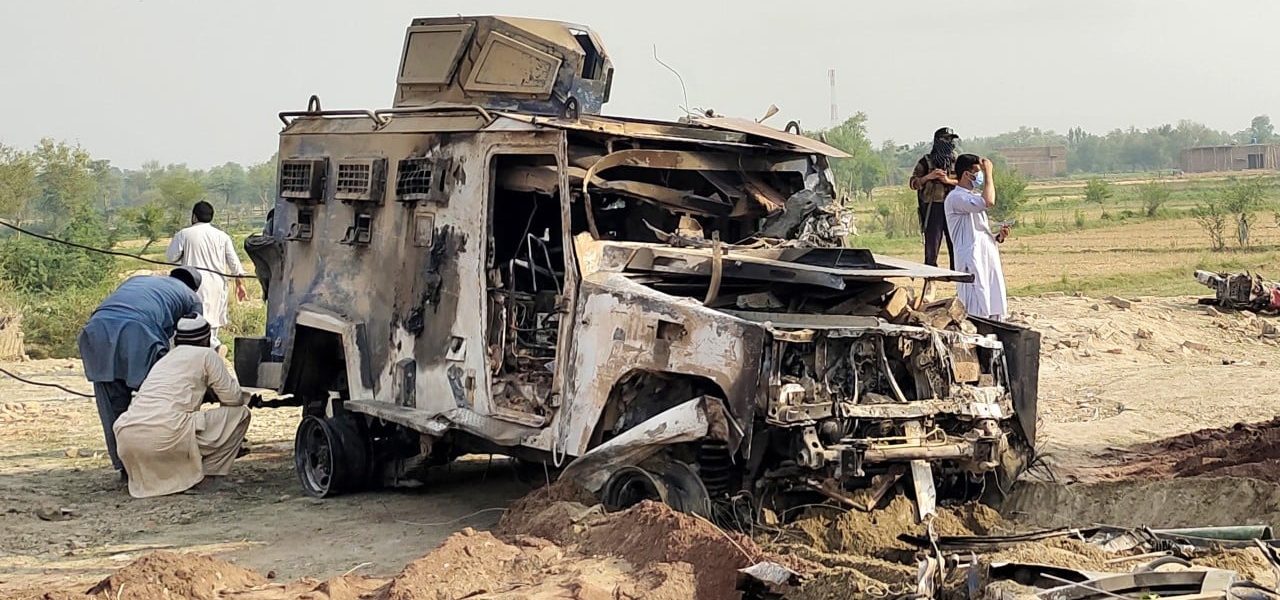
POLICY WIRE — Islamabad, Pakistan — In the crucible of Pakistan’s northwestern frontier, where mountains meet a contested ideology, Sunday didn’t just bring a new dawn. It delivered another installment in a wearying saga of bloodshed. For fourteen families, and for the security establishment tasked with an unwinnable peace, the sun rose over a security post obliterated, its defenders massacred, in Bannu. Not a novel development, mind you, just another brutal reminder that the ghost of jihad, once summoned, isn’t easily exorcised.
It wasn’t even the full TTP, not the big bad boogeyman, but a new splinter, a group styling itself ‘Tehrik-i-Jihad Pakistan’—‘Movement for Pakistan’s Holy War.’ The gall. They took credit for the Saturday night mayhem, which saw a suicide bomber drive an explosives-laden vehicle right into the security outpost. Gunmen, too, swarmed the ruins after the initial blast, eager to finish the grisly work. It left 14 police officers dead. A statistic. A number we hear far too often around here. And that’s before we even start talking about the sheer tactical audacity it takes to pull off something like this.
“They’re not just attacking. They’re mocking us,” said Tariq Kamal, an advisor to Pakistan’s Interior Ministry, his voice heavy with a frustration that’s almost palpable from here. “These are the insidious wages of regional instability. Every power vacuum, every political distraction in Afghanistan, it empowers these extremist fungi that feed on our peace. We won’t tolerate it. We simply can’t afford to.”
The geography tells a story all its own. Bannu, sitting there in Khyber Pakhtunkhwa province, kisses the Afghan border. That border isn’t some polite line in the sand. It’s porous. It’s historic. It’s where trouble tends to seep in—or out, depending on which way you’re looking. Analysts, of course, are quick to point out the direct connection. “You can’t disentangle this violence from the ongoing tumult next door,” explains Dr. Zahira Khan, a veteran regional security analyst at the National Institute of Public Policy. “The safe havens, the arms caches, the ideological oxygen—it all flows from Afghanistan’s current reality. We see this grim dance replay itself because the underlying conditions remain unchanged.” But she makes a salient point: this isn’t just about external influences. Pakistan’s own internal contradictions provide ample fuel. Its political divides, its economic struggles—they’re vulnerabilities terrorist groups are only too happy to exploit.
And let’s not pretend these are isolated incidents. According to data compiled by the Pakistan Institute for Peace Studies, violent attacks, primarily perpetrated by the TTP and its affiliates, surged by over 25% in the past year alone. It’s a sobering reminder that while the world worries about larger geopolitical chessboard moves—say, the battle for submarine cables or the power plays in the South China Sea—the raw, brutal fight for domestic security grinds on here, day in, day out.
What This Means
This latest act of barbarism in Bannu isn’t just another localized tragedy; it’s a stark geopolitical signal. For one, it amplifies the profound instability in the border regions, an instability deeply rooted in the post-withdrawal landscape of Afghanistan. The Taliban’s return to power next door, whatever its stated intentions, has demonstrably reinvigorated elements of the Pakistani Taliban, giving them breathing room and inspiration. This is a perpetual motion machine of insurgency.
📄 POLICY WIRE WHITEPAPER PUBLISHED: PAKISTAN'S NATIONAL SECURITY POLICY PRIORITIES
👉 READ BY CLICKING HEREEconomically, persistent insecurity bleeds the Pakistani state. Resources that could be directed towards development—hospitals, schools, infrastructure—are instead swallowed by an ever-expanding security budget. It’s a deadweight, pulling down growth, deterring foreign investment, and eroding investor confidence in a nation already teetering on fiscal brinkmanship. Who’s going to build factories when the risk of a mortar attack is part of the morning news cycle? such attacks test the fragile political consensus in Islamabad. Civilian and military leaders often find themselves at odds over counter-terrorism strategy, exacerbating an already tense relationship. These incidents provide fodder for critics who claim the state isn’t doing enough, or worse, is somehow complicit, even when its own police are being blown to bits.
Culturally, there’s a slow, agonizing erosion of trust. Trust in institutions, trust in each other. People get weary of war. They get cynical. And a cynical populace, beleaguered — and economically strained, can be a breeding ground for radicalization, not less. Pakistan’s fight against these splinter groups isn’t merely a law enforcement problem; it’s a civilizational challenge, a constant struggle to define the future of a major Muslim-majority nation against the corrosive influence of extremist ideology.
This latest attack—it just underscores the deeply entrenched nature of Pakistan’s predicament. No easy answers. No quick fixes. Just more bodies, more funerals, and the gnawing question: how many more until someone, somewhere, breaks this bloody cycle?