
As Wildfires Scorch Early, New Mexico Faces a Foretaste of America’s Blazing Future
POLICY WIRE — SOCORRO COUNTY, N.M. — The high desert sun hadn’t quite sharpened its summer teeth, yet the Magdalena Mountains already smoked. An unassuming date, March 8, marked not a...

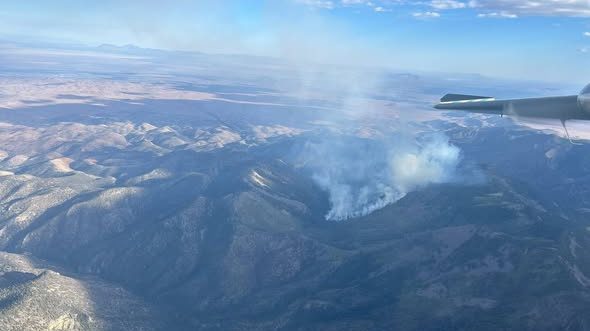
POLICY WIRE — SOCORRO COUNTY, N.M. — The high desert sun hadn’t quite sharpened its summer teeth, yet the Magdalena Mountains already smoked. An unassuming date, March 8, marked not a springtime awakening but the grim start of the Six Mile Fire, a blaze now gnawing at over 40 acres in the Cibola National Forest. But don’t fret too much, we’re told: no one’s fleeing just yet.
It’s an annual rite, this bureaucratic dance around a burning landscape. Officials quickly downplayed immediate risks, assuring the public there were ‘no evacuations in effect.’ Which, frankly, isn’t always the comfort it’s meant to be. It’s more like a preamble, isn’t it, a holding pattern before the inevitable panic of summer’s true onslaught?
Firefighters, God bless ’em, are at it again. Crews like the Smokey Bear and Santa Fe Hotshots—names that almost romanticize the relentless, grueling fight—have converged. Apache Kid and Pecos River Fire Modules, air attacks, even a Type 3 helicopter—they’re all deployed. And that’s before the thermometer really spikes. Because they’ve got to, don’t they? It’s their job, a never-ending Sisyphean task made worse by dry conditions — and a warming climate.
This early skirmish in New Mexico feels less like an isolated incident — and more like an opening act. Forest Service Chief Ranger Elena Petrova didn’t mince words during a rare moment of candor. “We’re fighting these infernos earlier — and earlier each year. It’s a relentless grind, and resources, well, they’re not infinite, are they? We patch, we pray, and we brace for the next one.” Her frustration hung heavy in the high desert air, a tangible thing like the wildfire smoke.
The incident report blandly states the fire showed “very active behavior” last Friday afternoon. You don’t say. And it’s not just a localized problem for New Mexico; the numbers scream louder. Data from the National Interagency Fire Center (NIFC) indicates that the average acreage burned annually in the U.S. from 2013-2022 (7.5 million acres) significantly outstripped the average from 1983-1992 (2.9 million acres)—a chilling 158% increase. We’re getting more efficient at fighting them, perhaps, but the fires themselves are getting bigger, bolder, and more frequent. And we’re watching communities, sometimes entire towns, become ghosts.
State Representative Julian Marquez weighed in, emphasizing the state’s supposed readiness. “New Mexico stands ready to assist its communities, of course,” he remarked with the practiced calm of a politician. “But the state budget for emergency services isn’t some bottomless pit. We need federal partners to step up their game, period. It’s a shared burden.” He didn’t elaborate on the political football this ‘shared burden’ often becomes, particularly when it comes to appropriating federal funds for state crises.
📄 POLICY WIRE WHITEPAPER PUBLISHED: PAKISTAN'S NATIONAL SECURITY POLICY PRIORITIES
👉 READ BY CLICKING HERESmoke, meanwhile, drifts like a somber promise, visible along Highway 60 — and even Interstate 25. People sensitive to smoke, the elderly, those with respiratory or heart issues—they’re advised to take precautions. AirNow offers interactive maps, a sort of grim real-time tracking of what humanity’s indifference (or sheer bad luck) has wrought upon our collective lungs. It’s all terribly modern, isn’t it? Tracking the creeping, invisible danger from a smartphone.
This situation in New Mexico isn’t some distant anomaly. It’s a microcosm of a global challenge, a fiery testament to the fragility of ecosystems grappling with extreme weather patterns. You see similar scenarios playing out across vastly different landscapes—from the parched outback of Australia to the forested peaks of the Himalayas, and even in regions like Pakistan, which annually contend with intense heatwaves, deforestation, and rapidly shifting monsoon patterns that leave vast areas susceptible to uncontrollable blazes. Just as communities here wrestle with securing adequate resources for remote operations, Pakistan’s frontline police and emergency services often face an equally daunting, sometimes impossible, task of response in geographically isolated, often unstable, terrains. They’re battling more than just fires, aren’t they? They’re battling resource deficits, political complexities, — and a relentless environment. The geography changes, but the struggle, tragically, remains eerily similar.
What This Means
This early wildfire season is more than just a local inconvenience; it’s a blaring siren for deeper systemic issues. Politically, it re-ignites perennial debates over federal land management policies, state budgetary constraints, and the ever-elusive funding for proactive fire mitigation, rather than just reactive suppression. How much is a preventative controlled burn worth when budget hawks eye every dollar? Economically, the impact stretches far beyond the charred acreage. Property values in fire-prone regions face downward pressure. Tourism, a lifeblood for many New Mexico communities, can vanish overnight, leaving hotels empty and small businesses gasping. Long-term health costs from chronic smoke exposure represent a hidden drain on public services, silently eroding budgets not directly earmarked for emergencies. It’s a complex, ugly calculus.
And then there’s the larger climate narrative, a politically fraught topic that finds undeniable evidence in early-season infernos. While individual fires might sprout from a careless spark or a lightning strike, their intensity and frequency are undeniably amplified by longer, hotter dry spells—a pattern driving policy shifts far beyond environmental agencies. The unspoken question hangs in the smoke-filled air: are we adapting quickly enough, or are we simply becoming experts at fighting fires in an ever-warming world, accepting the new normal even as it threatens to consume us?